


Wind: The Underestimated Hazard on Scottish Winter Hills
Ask a group what makes a Scottish winter day dangerous and you'll hear about avalanches, cornices, whiteout navigation, maybe a slip on hard ice. Wind rarely makes the list. Yet wind quietly shapes almost every decision you make up there. It decides how you walk in, whether the snow in that gully will stay put, and how fast your brain starts making bad calls. Here's why Scottish winter mountaineering hazards so often come back to wind, and how to stop underrating it.
Table of Contents
Quick Takeaways
Key Insight | Explanation |
|---|---|
Wind changes everything else | It makes the snow, the route and your own body harder at the same time, so it needs its own plan. |
Gusts matter more than the average | A steady forecast wind is a different day from the same wind with much stronger bursts. Check both before you leave. |
Spindrift is a warning sign | Snow pouring off a ridge means snow is being moved and piled up somewhere else. Watch where the plumes go. |
Windslab hides on the sheltered side | Wind packs snow onto lee slopes. The calm side you walk onto with relief can be the most dangerous ground. |
Exposure gets you before the route does | Cold, fatigue and being blown off balance on the walk in cause more trouble than the climbing itself. |
Set your turnaround before you start | Decide the conditions that send you home while you're warm and sitting in the car, not on the plateau. |
Why Wind Gets Ignored
Look, wind doesn't look like a hazard. It's not a cornice you can point at or a slope you can see breaking. It's just air moving. Mountaineering Scotland's wind guidance makes the point that wind is the one thing in the hills that can physically stop you, while rain, snow and cold, nasty as they are, won't do that on their own. That's a useful way to think about it, because wind is the variable that takes your choices away.

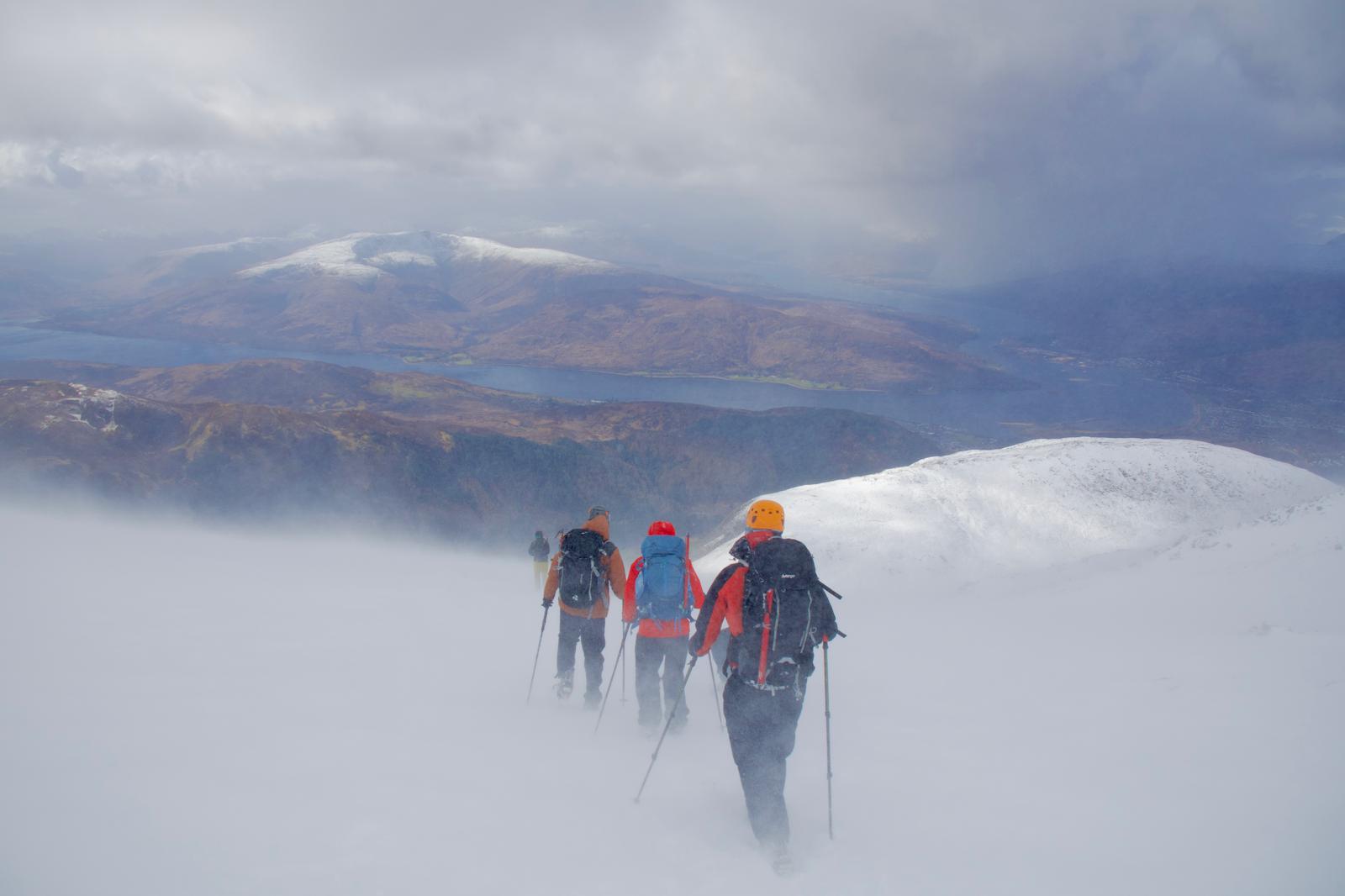
The trouble is that wind is easy to shrug off until it's already on you. You feel a bit of breeze at the car park, think "this is fine," then reach the crest and realise the whole day has changed. Most people pack for cold and snow because those are easy to plan for. Wind gets a shrug. That's the underestimation in a nutshell.
The Quiet Way Wind Wears You Down
Wind strips heat fast. Your gloves get soaked, your fingers stop cooperating, and suddenly your crampon straps feel like a puzzle. Honestly, fatigue is what gets people. Fighting a headwind on a long approach burns energy you were counting on for the descent.
In practice, I've watched groups feel strong at the bottom and fall apart on the ridge because they'd spent three hours braced against the wind. The legs were fine. The head was done.
Why Your Plan Breaks Down Last
Most route plans are built around the route itself. Which gully, which buttress, what grade. Wind changes the conditions that route depends on, so a plan that ignores it is only half a plan.
A common mistake is treating wind as a yes or no. It's really a set of questions. Where is it coming from? How strong are the gusts? What is it doing to the snow? Answer all three before you commit.
Pro tip: Write your wind turnaround down before you leave the car. Deciding it on the plateau, with cold fingers and a grumpy partner, is how groups end up in trouble.
Gusts Beat the Forecast Average
Forecasts usually give you a mean wind speed. That's the average, and the average is the number that lulls you into a false sense of security. The gust is what knocks you off your feet, and it's the number that should drive your decision.
A thread on a UK climbing forum shows this well. The original poster had planned a grade 1 gully but postponed after the forecast showed wind around 40 mph. The replies were a useful mix of experience. One poster said 40 mph at the top is unpleasant but manageable for someone who's done it before. Another said they'd managed a route in steady winds of 50 to 60 mph on a sheltered crag, but the walk in was brutal and they got blown over several times.
Wind doesn't need to knock you flat to ruin your day. It only needs to change what you're willing to do.
The lesson I take from that thread is that tolerance varies wildly. Your number has to be yours, based on how you actually move in wind, not on what someone else posted online.
Reading the Gap Between Mean and Gust
Look at the gap. A forecast with a modest average and much stronger gusts is a different day from one with steady wind and small bursts. A wide gap means the wind arrives in punches. Punches are what knock you sideways on exposed ground, and that's where people get hurt.
Use the gap to decide how much of the route you're willing to be on exposed ground. A big spread says keep the exposure short and keep your options open.
Why Terrain Makes Gusts Worse
Wind speeds up over ridges, squeezes through gaps and tumbles over crags. Forum replies pointed out that a southerly wind can pour over the rim and drop savage gusts down into a corrie, so the bottom of the bowl isn't the shelter you'd hope for. The forecast won't show you that. Your eyes and a bit of local knowledge will.
Pro tip: Check the forecast the night before and again at the car park. If the gust figure has jumped since last night, revisit the plan. Don't hope it settles.
Spindrift and Windslab: The Snow Is the Real Story
This is the bit that trips people up. Wind rarely hurts you directly on a Scottish winter route. What it does is move snow around, and moved snow is where the danger lives. Forum users kept coming back to this point: a windy day with lots of snow blowing about is a far more serious proposition than the same wind on bare rock.
Spindrift as an Early Warning
Spindrift is the fine, drifting snow that streams off ridges and tumbles across the surface. If you see it pouring off a crest above you, the wind is loading snow somewhere else. Watch where the plumes go. They show you where snow is piling up.
In practice, I'd take a clear sky with no spindrift over a sunny day with plumes pouring off the top. Spindrift is the hill telling you the snow is on the move.
Windslab on the Sheltered Side
Windslab is snow that's been pushed by wind and packed into a stiff layer, usually on the sheltered side of a ridge or just below a gully lip. That calm side is exactly why it catches people. You step out of the wind, feel relieved, and walk onto the thing that's about to break.
A common mistake is assuming shelter equals safety. Shelter often means snow has been dumped there. If the surface feels hollow, cracks run away from your feet, or you hear a soft collapse, stop and rethink the route. Don't push on to see what happens.
Pro tip: Treat cracking or a whumpf sound underfoot as a hard stop, not a curiosity. Back off to lower-risk ground and make your decision there, away from the slope.
Wind on the Approach and the Plateau
The walk in is where wind does its quiet damage. You're carrying a heavy sack, you're sweaty from the first climb, and then the wind hits your damp layers. Get that wrong and you're cold before you've touched a tool. The approach is where you find out whether the day is going to work.

Layering for Wind, Not Just Cold
Cold is what most people pack for. Wind is what you have to dress for. A proper windproof outer layer usually matters more than an extra fleece. Sort your hood and collar before you start so you're not fiddling with them while the gusts are hammering you.
Vent early, too. If you're soaked with sweat before the wind gets serious, you'll chill fast when you stop. Peel a layer off before you feel too warm, not after.
Staying Upright on Exposed Ground
Lean into the wind, keep your feet wide and your axe ready. In the big gusts, stop and face into them, low and steady. Move in short bursts during the lulls, and use your axe as a third point of contact when the wind tries to take you.
Where the ground allows, keep off the crest in strong gusts. Exposed crests are where wind gets its best shot at you, and a slip there is much harder to recover from than one on a sheltered slope.
Three Ways to Make the Wind Call
There isn't one magic tool. Most people lean on one of three approaches, and each has blind spots. Here's how they stack up when you're standing at the bottom of the route with the wind pulling at your hood.
Approach | What It Tells You | Where It Falls Short |
|---|---|---|
Checking the mean forecast wind only | A rough idea of how windy the day will be overall | Misses gusts, terrain effects and snow loading |
Gust and direction check before you go | Whether bursts are likely to knock you off balance on the route | It's still a forecast, so local shelter and loading can be different on the day |
Reading the snow and spindrift on the day | What the wind is actually doing right now, on your slope | Needs experience to read well, and by then you're already committed to the walk in |
My view is to use all three, but weight the last one most. The forecast gets you to the car park, the gust check gets you to the start, and the snow reading decides whether you actually go up.
Where the Forecast Stops Helping
Forecasts are good for the big picture. They don't know your gully, the lip above it or the way the wind bends around the crag. Use them to decide whether to go, not exactly what to climb.
Why Reading the Snow Takes Practice
Reading spindrift and the snow surface is a skill, and you build it on easier days. Our guide to Scottish winter climbing covers how we approach these days, and our piece on reading conditions goes deeper on the signs to watch for.
Reading the Wind Before You Leave the Car
Your day is mostly decided before you clip in. A quick, honest wind check in the car park saves a lot of grief. Here's the routine I'd use every time.
A Five-Minute Wind Check
Start with the gust figure and wind direction for the height you're heading to, not just the valley. Then look up at the hills. Are there plumes streaming off the tops? Is snow already moving across the road? If yes, you have your first answer, and it's not the one you wanted.
Next, think about direction. A wind from a particular quarter loads particular slopes and pushes gusts into particular bowls. Match that to the route you chose. If your line sits in the path of the loading wind, treat it as a red flag, not a detail.
Choosing a Route That Fits the Wind
When the wind's up, pick the line with an easy escape route and the shortest exposure. Some of the safety advice doing the rounds online says the same thing: be cautious with snow, avoid gullies, stick to ridges and buttresses. That's sensible on a windy, snowy day, but it's not a blanket rule. Read the snow on the day and decide.
If you're choosing between options, our guide to five Scottish winter routes for intermediate climbers and our piece on choosing between two winter routes are good places to start.
Turning Around Without Losing Face
The hardest part of wind isn't the wind. It's walking back down after you've already paid for the approach. Plan the turnaround now, while your head is clear.

Setting Your Turnaround Before You Start
Decide on two things. First, the conditions that make you stop on the approach. Second, the conditions that make you stop on the route. Say them out loud to your partner. Once they're agreed, a windy walk in becomes a decision you already made, not a debate you have while getting battered.
Also agree who calls it if one of you wants to keep going. That one conversation saves more days than any gadget.
Why Going Home Counts as a Good Day
Nobody gets a medal for battling a gale. The people who keep climbing for years are the ones who turn around early and keep the next weekend open. A wasted approach costs you a few hours and a bit of pride. A bad call in the wind can cost a lot more.
Frequently Asked Questions
What wind speed is too strong for Scottish winter climbing?
There's no single number that works for everyone, and I'd be wary of anyone who gives you one. Look at the gust figure, the wind direction and what the wind is doing to the snow. A number that feels fine to one climber can feel reckless to another, so set your own limit based on how you actually move in wind.
Is wind more dangerous than cold in Scotland?
Often, yes. Cold is the thing you pack for. Wind takes away your balance, chills you faster and moves snow around. It's the factor that turns a manageable day into a bad one, which is why it catches people out.
What is windslab and how do I spot it?
Windslab is snow that wind has packed into a stiff layer, usually on the sheltered side of a ridge or below a gully lip. Look for a smooth, hollow-feeling surface, recent spindrift deposits, cracks running away from your feet or a soft whumpf sound. Any of those means stop and rethink the route.
Should I avoid gullies on windy days?
Not automatically. The real question is what the snow is doing. If you see spindrift loading the gully or the surface looks unstable, a gully is a poor choice that day. On windy, snowy days, ridges and buttresses are often the safer option, but that's a judgement call made on the ground.
How can I learn to read wind and snow safely?
Start on easier days with someone who knows what they're looking at. Our winter skills courses are built around this kind of judgement, including how to read conditions and make turnaround decisions. Practice on terrain where a mistake is a lesson, not an emergency.
Do I need a guide to learn about wind in the mountains?
You don't strictly need one, but a guide speeds up the learning curve a lot. A good guide will show you what the wind is doing before you realise it yourself. If you want to talk through options, get in touch at climb@atlasmountaineering.com or through our contact page.
I'd love to hear about the windiest day you've turned around on and what tipped the decision, so tell us what you saw up there.


Comments