


Scottish Winter Mountaineering: What to Practise in November
Here's the thing about November in Scotland. Half the hill still looks like autumn, the top bit is dusted white, and everyone's itching to get on the ice. Most people wait until the routes fill in, then try to learn everything in one frantic weekend. That's where it goes wrong. The smarter move is to practise the dull stuff now, while the snow is soft enough to forgive you. Scottish winter mountaineering rewards people who turn up with the basics sorted, and November is when you sort them.
Table of Contents
Quick Takeaways
Key Insight | Explanation |
|---|---|
Start crampon work on easy ground | Flat-footing and rest steps feel boring, but they keep your calves alive on a long approach. Practise on grass or easy snow, not a steep face. |
Ice axe self-arrest is non-negotiable | Learn it on a gentle slope with a clear run-out. Repeat it until the movement feels automatic, not like a thought you have to remember. |
Build one snow anchor you trust | A single anchor you can build without thinking beats three you only half remember. Test every anchor by loading it gently before you commit. |
Set your turnaround time before you leave the car | Winter days are short. Work backwards from sunset and add a buffer for the slow descent. |
Check your kit at home, not in the car park | Frozen zips, dead head torch batteries and cracked boot soles cause more trouble than the weather does. |
Match your practice to your level | Self-practice is cheap and useful, but courses and guided days catch the mistakes you can't spot yourself. |
Why November Is Prep Month
November is the sweet spot for practice because the hills are cold enough to hold snow on the high ground, but the routes are not in full winter condition yet. That gap is useful. You get real cold, real wind and real snow without the crowds that show up once the Ben Nevis gullies fill with ice.

Think of it as a rehearsal. Nobody gets paid for a practice run, and nobody's watching you fumble an ice axe in a car park. That's exactly the point. You can make mistakes at the bottom of a gentle slope and learn from them, instead of making them on a steep pitch with a queue of people behind you.
What the Early Season Actually Looks Like
In a typical November you'll find patches of firm snow on the tops, thin ice on shaded faces and a lot of wet grass and rock lower down. That mix is ideal for learning. You can kick your crampons into something that holds, without facing the full winter build-up of hard ice and deep snow. The conditions are honest, and honest conditions teach you more than perfect ones.
Why Practice Beats Learning on the Day
The worst time to learn a new movement is when you're cold, tired and staring at a steep slope with your guide and two other climbers waiting behind you. Your brain goes into panic mode, and panic is terrible at remembering footwork. Do the drills on a park or a grassy hillside, and the movements become automatic. When the real thing arrives, you're just repeating what you already know.
Crampon Footwork Before You Need It
Crampons are the first bit of kit most people fall over in. Not because they're hard to use, but because people treat them like trainers with spikes. They're not. Your feet, ankles and balance all change the moment you clip them on, and that changes how you walk.
Flat-Footing and Rest Steps
Flat-footing is the bread and butter. Keep the whole sole of the boot on the snow, take short steps and keep your weight over the middle of your foot. Rest steps are where you straighten your leg, let the bone take the load and give your calf a break. Practise both on a gentle slope until walking up it stops feeling like a drunk waddle.
Keep your feet slightly apart, not in a tight line, and keep your hips over your feet. Most crampon falls happen because someone crosses their legs on a traverse. Walk with a relaxed, slightly wide stance and you'll feel the difference straight away.
Pro tip: Wear the boots you'll use on the hill, with the crampons fitted, and walk around a car park for ten minutes. If a strap loosens or a crampon starts to rotate, you want to find that out before you're halfway up a corrie, not after.
Front-Pointing on Easy Ground
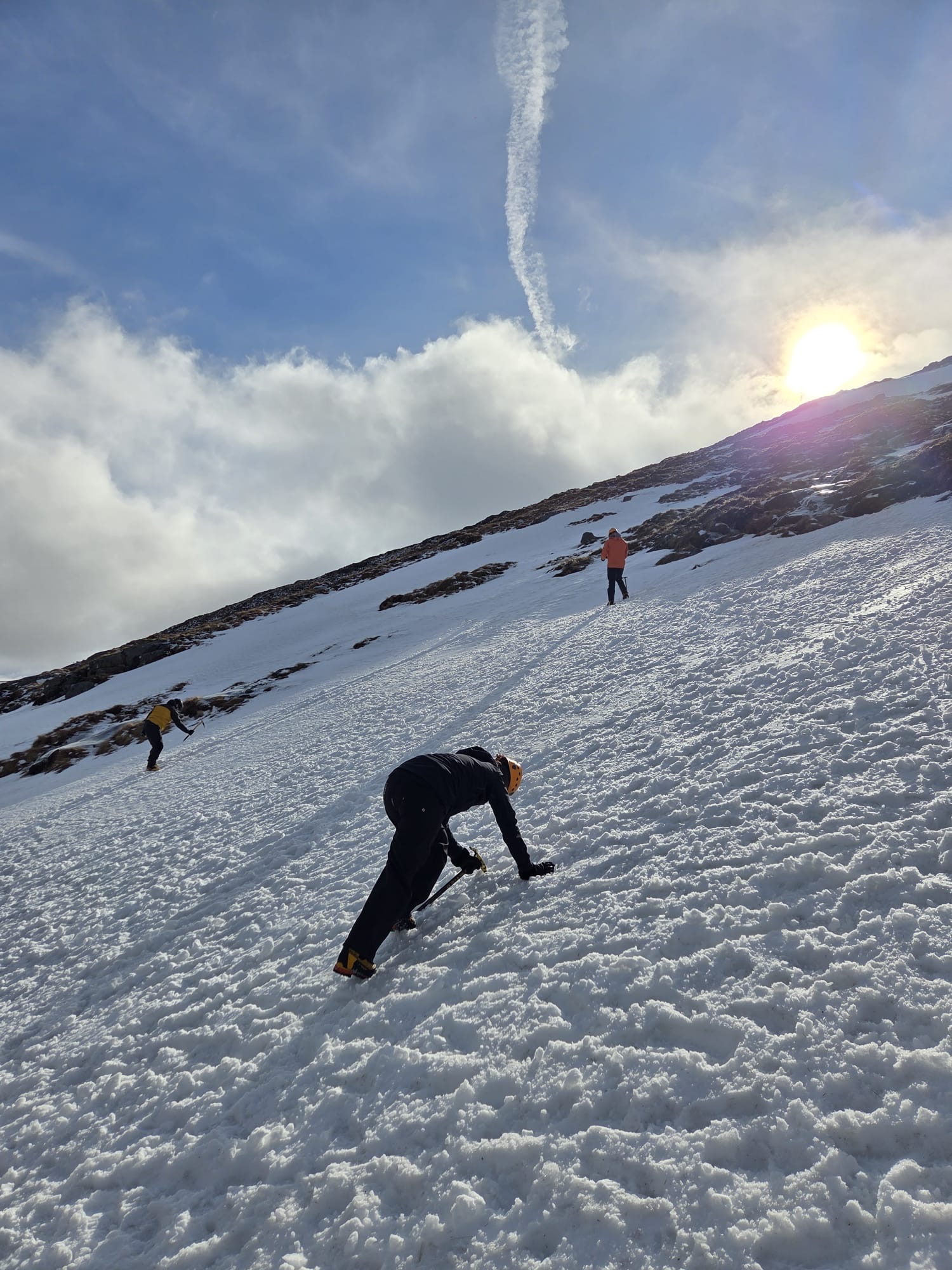
Front-pointing means kicking the front points of your crampons into steeper snow or ice. It feels awkward because your ankles want to bend the wrong way. Start on a slope you'd happily sit down on. Keep your weight over your toes, keep your heels low enough that the points bite instead of skidding, and kick with smooth, controlled movements.
A common mistake is kicking too hard. Gentle, precise kicks hold better than angry ones, and they save your legs for the walk back down. If your calves are screaming after ten minutes, you're probably tensing everything instead of letting the boot do the work.
Ice Axe Arrest and Self-Arrest
If you only practise one thing this month, make it the self-arrest. It's the skill that turns a slip into a stop. The goal is to roll onto your front, drive the pick into the snow and hold the head of the axe with your weight on the shaft. Simple on paper. Much harder when you're sliding faster than you'd like.
The skill you practise on an easy slope in November is the skill that saves you on a hard face later in the winter.
The Head-Down Position Nobody Likes
Most beginners stop their slide with their head up, which is exactly what you shouldn't do. Your head should be the last thing to drag. Keep it near the axe head, toes dug in, and back arched slightly so the pick stays put. Practise from a kneeling start, then a sitting start, before you try it from a standing slide. The movement is dull on purpose. Dull is what you want when your heart is going like a drum.
Practise on a Slope You Can Stop On
Find a gentle, snow-covered slope with a clear run-out and nothing nasty at the bottom. Rocks, drops and other people are the things to avoid. Do a few slides, get the feel of the axe, then do a few more. Honestly, the first handful will go badly. Keep going anyway, because the tenth one usually feels like it belongs to you.

A common mistake is practising only on the same slope every time. Change the angle and the snow surface, because firm ice behaves very differently from soft powder. If you can arrest on both, you're getting somewhere.
Belays, Anchors and Rope Work
Belaying in snow and ice is slower than on rock, and your anchor is only as good as the snow around it. The good news is you don't need a shelf full of gadgets. One dependable snow anchor, built carefully, covers most of what you'll meet on a first winter route. Get that right and the rest starts to fall into place.
Building a Snow Anchor You Trust
A deadman is the usual starting point. It's a flat piece of metal or a bar that you bury in the snow, with a sling or rope attached that sticks out above the surface. Dig a trench at right angles to the pull, bury the deadman in firm, undisturbed snow, pack the snow down, then test it by loading it gently before you commit. If it moves, it's not an anchor. Dig another one.
In practice, the snow matters more than the gear. Soft, wind-blown snow will let you down, and so will snow that's been churned up by lots of boots. Look for firm, layered snow that's been left alone. If the snow looks like a dozen people have been digging in it, move to a fresh patch.
Moving Together Without Losing Anyone
Moving together means you're roped up on terrain steep enough to slip on but not steep enough to need a full belay. The rope needs to be tight enough that a slip gets caught, not so tight that it yanks your partner off their feet. Practise the coil, the handover and your stop signals in a car park before you need them.
A common mistake is being too relaxed with the rope. A long, loose length is a trip hazard for whoever's behind you, and it's the sort of thing nobody notices until someone goes flying. Keep the rope managed, keep it visible, and talk through every change in terrain.
Navigation and Weather Reading When the Light Goes
Short days catch people out in November more than anything else. You can have a solid plan and still end up walking down in the dark because the clock beat you. Navigation and weather reading are the two skills that stop that happening, and both need practice before the hill gets serious.
Timing Your Day in Short Daylight
Set your turnaround time before you leave the car, not when you're halfway up. Work backwards from sunset, allow for the slowest person in the group and add a buffer for the descent, which always takes longer than you think. If your plan only works when everything goes right, it's not really a plan.
Pro tip: Carry a map and compass even if your phone has an app. Batteries drain quickly in the cold, and screens get wet and useless. Practise taking a bearing on a map at home, so it's not a fumble when the cloud drops.
Reading the Forecast for the Hill, Not the Valley
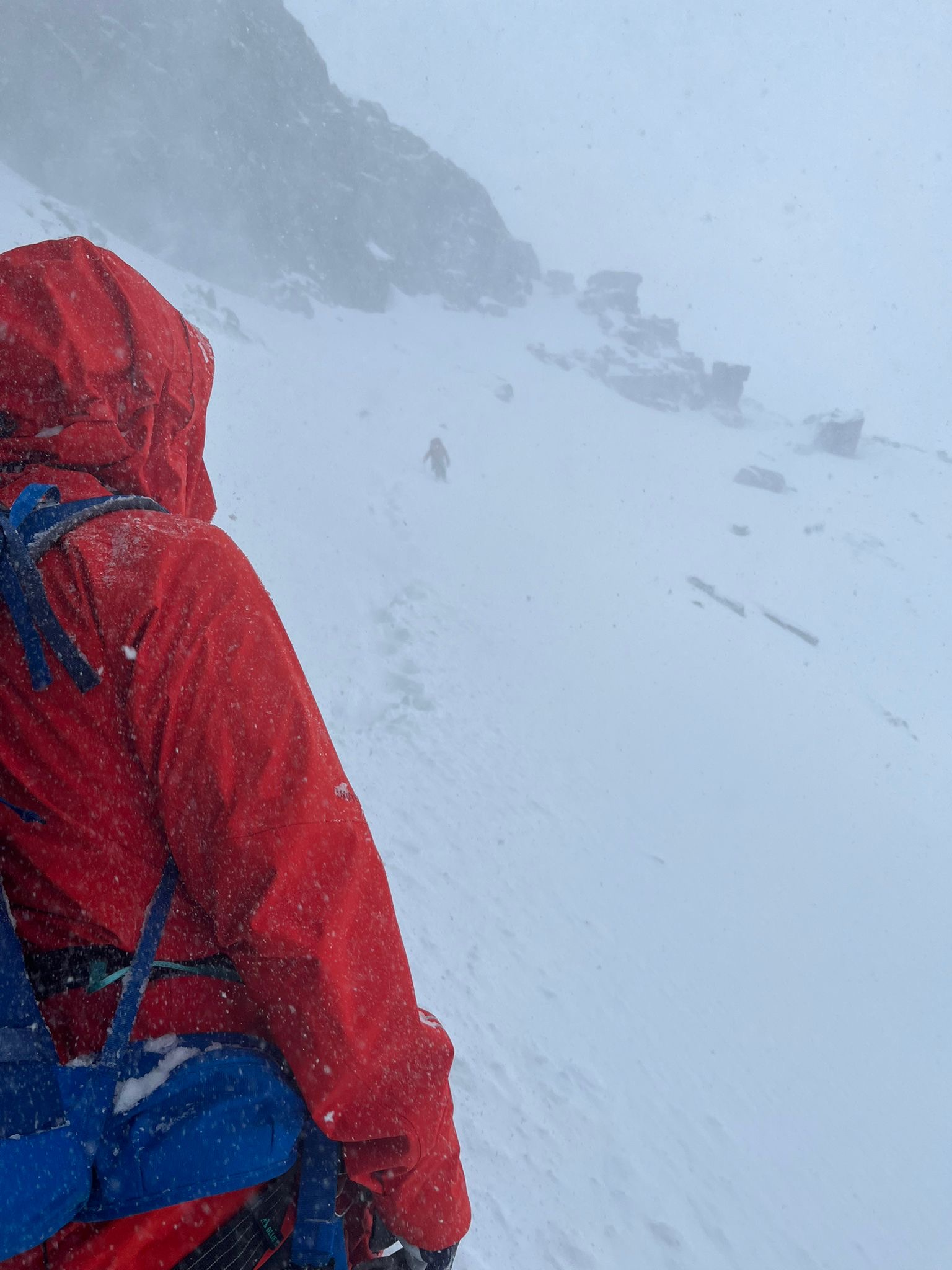
Look at wind speed and direction more than temperature. Wind loads snow onto the lee side of ridges and can turn a calm-looking slope into a hazard. Check the forecast the night before and again that morning. Watch for cloud coming down onto the tops, because whiteout can arrive fast and wipe out your sense of direction.
A valley forecast can look pleasant while the tops are a different world entirely. If the summit forecast looks grim, that's your answer, even if the car park is sunny. Walking away from a good-looking day is a skill too.
Fitness, Kit Checks and Your Winter Body
Winter kit fails in boring ways. A zip freezes. A head torch dies because the batteries were left in a cold car. A boot sole cracks along the flex line. None of it is dramatic, but any of it can turn a good day into a cold, miserable retreat.
Kit Checks That Actually Matter
Lay everything out at home, not in the car park. Check crampon bolts and straps, the leash on your ice axe, helmet fit, gloves, spare layers and a head torch with fresh batteries plus a spare. Put your boots on with a warm sock and crampons fitted, and make sure your toes still have room. Pack food you actually like eating cold, because your appetite goes strange on the hill.

Check your gear after every trip too, not just before. Dry out wet gloves, clean ice off crampons and look over straps for fraying. Gear you ignore in November is gear that fails you in January.
Fitness That Matches the Hill
Winter walking is mostly about calves, hips and core rather than peak cardio. Step-ups with a loaded pack, long steady walks on hills and balance work on uneven ground will do more for you than a month of spin classes. Start a few weeks before the routes come in, not the week you book a course. Your legs will thank you on a long approach.
Where to Practise Your November Skills
There are three realistic ways to get these skills sorted. Each suits a different kind of climber, and mixing them is usually the smartest move. Here's how I'd split them.
Self-Practice on Local Hills
Self-practice is cheap, flexible and great for repetition. The downside is that you can't see your own mistakes. Ask a mate to watch your self-arrest or your anchor build, because a second pair of eyes catches things you'll never notice from the inside. Solo practice works best once someone has shown you the correct sequence.
Structured Winter Skills Courses
A course is where you learn the sequence properly, with someone correcting you in real time. Our open courses on the Isle of Skye and our Ben Nevis winter skills days are built around the basics in this article, from crampon technique to axe work, anchors and moving together. If you're new to the hill, this is the quickest way to avoid building habits you'll have to undo later.
Guided Days With a Mountain Guide
If you already have the basics, a guided day is the fastest route onto a real winter route. Based in Fort William, we run guided days where the guide reads the snow, picks the line and lets you focus on climbing rather than guessing. It suits people who want to get onto Ben Nevis without the trial and error, or who want a steady introduction to Scottish winter climbing before going it alone.
Approach | Best For | Watch Out For |
|---|---|---|
Self-practice on local hills | Keen beginners who have already been shown the basics | Locking in habits nobody corrects |
Winter skills course | Beginners and intermediate climbers who want structured feedback | Booking late, when places are already gone |
Guided day with a mountain guide | Climbers ready for real routes who want efficient progress | Expecting one day to replace a full course |
My honest advice? Do a bit of self-practice, book one course to fix your habits, then go guided until you feel comfortable making simple route choices on your own.
Frequently Asked Questions
When do Scottish winter routes usually come into condition?
There's no fixed date, and anyone who gives you one is guessing. Snow and ice depend on temperature, wind and recent weather, so conditions can change from week to week. Check the forecast and recent reports before you travel, and expect routes to fill in gradually across the winter.
Do I need to practise before booking a winter course?
You don't need to be an expert, but a bit of basic practice makes the course far more useful. Walking in crampons and trying a few self-arrests on a gentle slope means you'll spend your time learning the next layer of skills instead of fighting the basics.
Can I practise winter skills on my own?
Yes, for the basics like flat-footing, rest steps and gentle self-arrests on safe ground. The problem is that you can't see your own errors, so get someone experienced to check your technique at least once. Anchors and rope work are where mistakes are hardest to spot on your own.
Is November too early for winter mountaineering?
Not for practice. It can be too early for full winter routes, which often need more snow and ice. November is a good time to learn movements on snow slopes and easy ground, and you'll be better prepared when the routes do come into condition.
What kit do I need before my first winter day?
At minimum you'll want winter boots that work with crampons, plus crampons, an ice axe, a helmet, warm layers, gloves, a head torch and a map and compass. Check the specific list with your guide or course provider before you go, because requirements can vary with the day and the route.
Which of these skills gave you the most trouble on your first winter day, and what finally made it click for you?

Comments