


Scottish Winter Climbing Builds Morocco Expedition Skills
Ask anyone back from a big trip in the Atlas what caught them out, and it's rarely the climbing. It's the small stuff. A snow slope that looked fine at breakfast, a pack that felt light in the car park, a turn-around call made too late because nobody wanted to be the one who said it. Scottish winter drills exactly those habits into you. If you're planning a Morocco mountaineering expedition, you don't have to wait until you're on a plane to start building them.
Table of Contents
Quick Takeaways
Key Insight | Explanation |
|---|---|
Reading conditions beats raw fitness | Most bad days in Scottish winter come from misreading snow, wind or visibility. Practise reading it on every trip. |
Train with the load you'll really carry | A light day sack teaches you nothing about expedition days. Load up with food, layers and spare gear. |
Set your bail-out plan before you leave the car | Pick the turn-around time and the fallback line while you're warm and calm, not halfway up a slope. |
Make self-rescue boring | Drill self-arrest and simple belays on easy ground until they feel automatic. Remote ground abroad has no quick help. |
Ask for a go or no-go as a group | Quiet doubts are the ones that bite. Make it normal to say you're not comfortable. |
Expect the unfamiliar in the Atlas | Snow and ice in Morocco won't match your home forecasts. Build extra time into the first few days. |
Why Winter Climbing Is a Dress Rehearsal
Here's the thing about Scottish winter. The weather changes fast, the snow is never quite what the forecast said, and the walk in can take longer than the climb. You learn to cope with all of that on hills you can reach most weekends. Morocco throws the same problems at you, just with bigger consequences and fewer easy bail options.

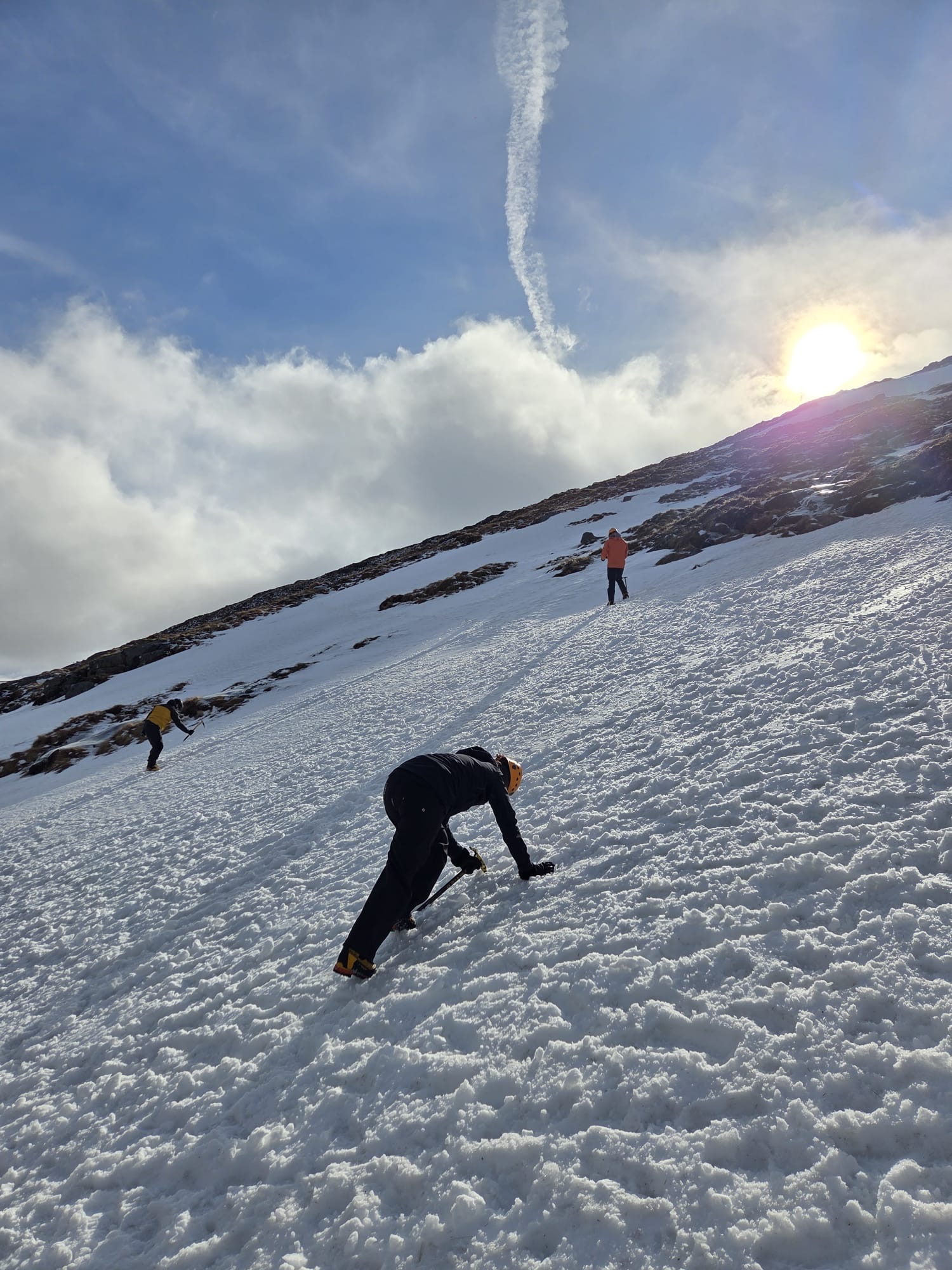
So think of a Scottish winter season as a rehearsal. Every trip to Ben Nevis or the Isle of Skye is a chance to practise what matters on an expedition, not just to tick a route. Pick the right days, make the calls, then look at how you felt at the end of them.
What Carries Over From a Winter Day to a Trip Abroad
Three things travel well. Your ability to read the ground, your routine for sorting kit with cold hands, and your willingness to turn around when the day stops making sense. Fitness matters too, but it's the easiest part to fix in a few weeks. The rest takes seasons of small mistakes.
In practice, people who've done a few winter seasons stop panicking about weather. They start planning around it. That shift is the biggest thing an expedition asks of you.
Why the Approach Matters More Than the Summit
On a lot of Scottish winter days, the hard part is the walk in. Snow-filled paths, deep drifts and a pack that gets heavier every hour. If you can't stay efficient on that, the climb itself turns into a mess. Atlas days ask the same question, just over longer hours.
Keep the approach honest. Time it, note where you slowed down, and fix that before the next trip.
Reading Snow, Ice and Weather Like a Pro
Most nasty surprises in winter come from misreading conditions, not from bad technique. A slope that's been fine all week can change overnight after a thaw and a freeze. Learning to spot that is the foundation for almost every expedition decision you'll make later.
Spotting Change Before It Bites You
Look for the small signs. Wind-loaded snow that feels like pudding on one side of a ridge. Ice that sounds hollow under the axe. A sudden drop in visibility that makes you lose the line. None of these scream danger on their own, but stacked together they're your cue to slow down.
A common mistake is treating the morning plan as gospel. Conditions shift, and a good day can turn bad by early afternoon. Keep checking, and say it out loud when something feels off.
Forecasts Are a Starting Point, Not an Answer
Check the forecast the night before and again before you leave the car. Then don't stop there. Compare what the forecast says with what the hill is actually doing, and trust the hill when they disagree. Scottish winter teaches you to hold forecasts loosely, which is exactly the habit you want when a screen can't tell you much about the mountain in front of you.
Pro tip: Write down two numbers before you start: the time you'll turn around and the landmark where you'll reassess. Set early, those numbers mean you aren't negotiating with yourself when you're tired and cold.
The hill doesn't care about your plan. Read it first, then decide what to do about it.
Moving Well Under Load on Steep Ground
Expedition days are long, heavy and often steeper than they look on the map. Scottish winter gives you plenty of chances to practise carrying weight up awkward ground. The lessons are cheap, too. Get them right on a ridge on the Isle of Skye and they'll still work for you in Morocco.
Packing for the Day You Actually Have
Most people train with a light sack, then wonder why their shoulders hurt by the second hour. Load your pack with what you'll really carry: spare layers, food, water, rope and the hardware you'd want if things went sideways. Then go up something steep and notice where the weight pulls you off balance.
Honestly, I'd rather see someone carry a slightly heavy pack well than a light one badly. Adjust the straps, keep heavy items close to your back, and keep your ice axe where you can reach it without fishing.
Pacing Yourself on a Long Approach
The biggest mistake I see is going too hard early. Fast starts feel brilliant until you're sweating through your base layer and your legs are gone. Settle into a rhythm you could hold for hours, and take short, regular breaks rather than long ones that let you go cold.
Pacing matters even more on steep ground, where calves and thighs take the punishment. A steady pace saves energy for the hard bit. It also keeps your head clear, which is what you need when the route gets tricky.
Pro tip: Do one winter day where you carry a full expedition load and finish with a short, steep climb. If you can still make good decisions at the end of it, your fitness is where it needs to be.
Self-Rescue and Making Calls When It Goes Wrong
Nobody heads out planning to need a rescue. But on an expedition, when help is hours or days away, you need to sort out a bad situation with the people you're with. Scottish winter is where most climbers first learn that rope and axe are only useful if you know how to use them under stress.

Practise the basics on easy ground until they feel boring. Self-arrest, a simple belay, and how to get a partner out of trouble on a slope. The point isn't to be a hero. It's to make sure your partner isn't the only one who knows what to do.
Turning Back Without the Ego Problem
Turning around is the hardest call, especially after a long drive and weeks of planning. The trick is to decide before you're emotionally invested. If conditions cross your line, go down. Nobody gets points for a summit that puts the group at risk.
Talking Through Decisions as a Team
Group dynamics are where expeditions fall apart. The quiet person with doubts often doesn't speak up. Ask everyone for a go or no-go at each key point, and make it normal to say you're not comfortable. It takes one sentence and saves a lot of grief.
Agree your bail-out plan at the car, not on the slope. Saying it out loud before you start makes it far easier to follow when you're cold and tired.
Pro tip: Ask each person to name one thing that would make them turn back. You'll hear the concerns you'd otherwise miss, and nobody has to be the one who starts the argument later.
Choosing Your Training Route, Compared
Not everyone needs the same preparation. A beginner building confidence on snow needs a different path than someone who already climbs and wants to step up to bigger, colder days. Here's how the main routes compare, based on what they actually build.
Structured Winter Skills Courses
Courses give you a clear progression. You learn the basics in a controlled setting, with someone checking your technique and your decisions. Ben Nevis Winter Skills suits you if you want that structure and a real winter mountain as your classroom.
Open Courses on the Isle of Skye
Open courses suit people who can pick their dates and want flexibility. Skye gives you varied terrain and conditions that can shift from one day to the next. That variety is gold for practising decisions, because no two days look the same.
Personal Guided Days
If you already have the basics, guided days let you work on what you're weakest at. A mountain guide can watch how you load your pack, how you read a slope and how you handle the tricky sections. It's the closest thing to an expedition rehearsal you can get on home soil.
The table below sums up what each route builds and who it suits best.
Approach | What It Builds | Where It Fits Best |
|---|---|---|
Winter skills course on Ben Nevis | Core technique, snow assessment and a clear step-by-step progression | Beginners and early intermediates who want structure |
Open courses on the Isle of Skye | Flexible dates, varied terrain and practice reading changing conditions | Climbers who can choose their own timing |
Personal guided days | Individual feedback on pack load, pacing and route decisions | Intermediate climbers preparing for a bigger trip |
Pick the route that fits where you are now, not where you hope to be in six months. Skipping a step usually costs more time later.
Taking the Skills Abroad to Morocco
Morocco isn't Scotland with better weather. Expect different snow, different rock and a different rhythm to the day. The Atlas Mountains do offer real winter ice, and some introductory ice climbing courses in the range run about four to five days. That tells you the ice is there, and that you'll want a solid base before you arrive.

What Scottish Skills Transfer Directly
Your snow reading, load management and decision making all travel. So does the habit of carrying a bail plan. The skills you build on Scottish winter days become the base for everything else on a Morocco trip, and they'll help on Nepal expeditions too.
What You'll Need to Adapt
Be ready for unfamiliar snow and ice, different ways of moving through the mountains, and conditions that don't match your home forecasts. Build in extra time for the first few days. A common mistake is matching your Scottish pace from day one, which usually ends with tired legs and a sour mood.
Getting Ready Before You Leave
Plan your fitness, kit and skills in blocks. Do a few long winter days with a loaded pack, practise self-rescue until it's automatic, and rehearse the bail-out plan with your partners. Then go in with a plan that doesn't depend on everything going perfectly.
Pro tip: Fit in a few winter days before you go, even if the weather is mediocre. Poor conditions teach you more about decision making than a perfect day does.
Frequently Asked Questions
Do I need Scottish winter experience before a Morocco mountaineering expedition?
You don't need years of it, but a few solid winter seasons make a big difference. They teach you to read snow, carry a load and make calls under pressure. If you're starting from scratch, a structured course is the simplest way in.
How fit do I need to be for an expedition in the Atlas Mountains?
You need to be comfortable with long days on steep ground with a loaded pack. Aim for regular hill days with weight on your back, and practise going steadily for hours rather than sprinting. Fitness helps, but judgement is what keeps you safe.
Can I learn expedition skills on a Scottish winter course?
Yes, the core skills carry over well. Snow assessment, self-rescue, navigation and route planning are all used on both. Courses on Ben Nevis or the Isle of Skye give you a solid base before you think about bigger trips.
What's the best way to prepare for ice climbing in Morocco?
Get comfortable with ice climbing at home first, ideally across a range of ice pitches. Then practise moving efficiently with your pack and rehearsing bail plans. Arriving with good ice technique means you spend your energy on the mountain, not on the basics.
Do I need a mountain guide for a Morocco mountaineering expedition?
Not always, but a guide with local knowledge is a big help, especially on your first trip. A good guide handles route choice, weather reading and group decisions, which lets you learn faster. Think of it as an investment in your confidence.
What was the first thing that caught you out on a winter day, and how did it shape the way you prepare for trips abroad?


Comments