


Scotland Winter Climbing Guide for International Climbers
If you're an international climber flying in to climb in Scotland this winter, you've probably already got a list of routes saved. Good. But most overseas climbers arrive with gear and plans that worked fine back home, then get humbled by the first proper winter day. Scottish winter is a different animal. The weather shifts by the hour, the daylight is short, and a route that looks like a neat morning on a map can swallow your whole day. Here's what to sort out before you land, from timing and gear to navigation and rescue, so your Scotland winter expedition starts with a plan.
Table of Contents
Quick Takeaways
Key Insight | Explanation |
|---|---|
Build spare days into your dates | Scottish conditions swing fast. Plan a window of three or four days so one bad forecast doesn't wreck the whole trip. |
Don't trust turf that isn't frozen | Climbing on soft turf is a classic mistake. Climb something else or come back another day. |
Pack a rope of at least 60 metres | Shorter ropes cause real trouble at belays and lower-offs. Don't save weight on the thing that keeps you tied to your partner. |
Sharpen your picks and check your screws | Blunt tools are a common fail. Sort them before you fly, not at the foot of the route. |
Navigate even when you can see | Whiteouts arrive quickly. Carry a map, compass and altimeter, and know how to use them. |
Check your insurance covers winter mountaineering | Many standard travel policies exclude winter climbing or mountain rescue. Read the small print before you book flights. |
Why Scottish Winter Is Not Like Home
Let's get the big one out of the way. Scottish winter climbing isn't like climbing back home with a bit of snow on top. On many mountains elsewhere, mixed routes come with artificial bolts and fixed gear. Here, you're mostly placing your own protection in turf, cracks and thin ice.

That's the charm, and it's also why people get caught out. Scottish mixed climbing depends on frozen turf, and turf is a moody friend. When it's properly frozen, the moves feel secure. When it isn't, you're basically hacking at mud. Viv Scott, in the BMC's list of winter mistakes, says to climb something else or come back another day if the turf isn't properly frozen.
Bad weather is also normal here, not a rare event. Plenty of overseas climbers arrive expecting a few grey days and a few blue ones. The reality is often more grey than you hoped, so the trick is adjusting your head rather than waiting for perfection. The good days tend to hide between the rubbish ones.
"If you wait for the bluebird day you will never do any climbing." Nik Goile, quoted in the BMC's list of winter mistakes.
Pack for wet. Your waterproofs are not an accessory, they're the main event. Damp kit that dries slowly can turn a grim day into a dangerous one. Ben Nevis is the big draw and where most visitors head first. It's worth the trip, but it's serious terrain with a long approach, so don't treat it as a warm up.
Timing Your Trip Around Real Conditions
Timing is where international climbers most often go wrong. A veteran poster on a long-running climbing forum put it simply: early season tends to suit mixed routes, the snowy rock and turf mix, while later in the season usually suits ice better. It's a rough rule, not gospel, but it's a solid place to start.
Early season versus late season
In practice, early winter often gives you the best turf and mixed days. Deep midwinter cold is when the ice tends to firm up. Don't guess from last week's photos online. Conditions change fast, and a picture from a good day three weeks ago can look nothing like what you'll face.
Building in spare days
Here's my honest advice. Book a window of three or four days you can flip between, not one fixed date. Greg Boswell's line in the BMC list is "Book a trip in advance. The conditions will be terrible, guaranteed." That's a joke, but it's also the reality of the sport. You'll pay for the flight, and the forecast will argue with you.
Daylight matters too. In midwinter you get around seven hours of usable light in the Fort William area, and the approach to a crag eats into that fast. Plan your start times around the light, not the other way round.
Pro tip: Ask your guide about recent conditions the night before. A ten minute chat can save you a day on the wrong face.
Reading the Weather and the Mountain Forecast
Scottish weather doesn't care about your flight times. Check more than one source and look for the story they tell together. Forum regulars point to the Met Office forecast alongside the mountain-specific MWIS and avalanche forecasts, and that's sound advice. No single app tells the whole story.
Using more than one forecast
Look at wind speed and direction, temperature around the freezing mark, and whether it's freezing or thawing overnight. Those three things decide if the ice is climbable and whether your crag will feel like a sauna or a fridge. Read the mountain forecast, not just the town forecast. Fort William at sea level and the top of Ben Nevis are two very different days.
Wind, whiteouts and sheltered gullies
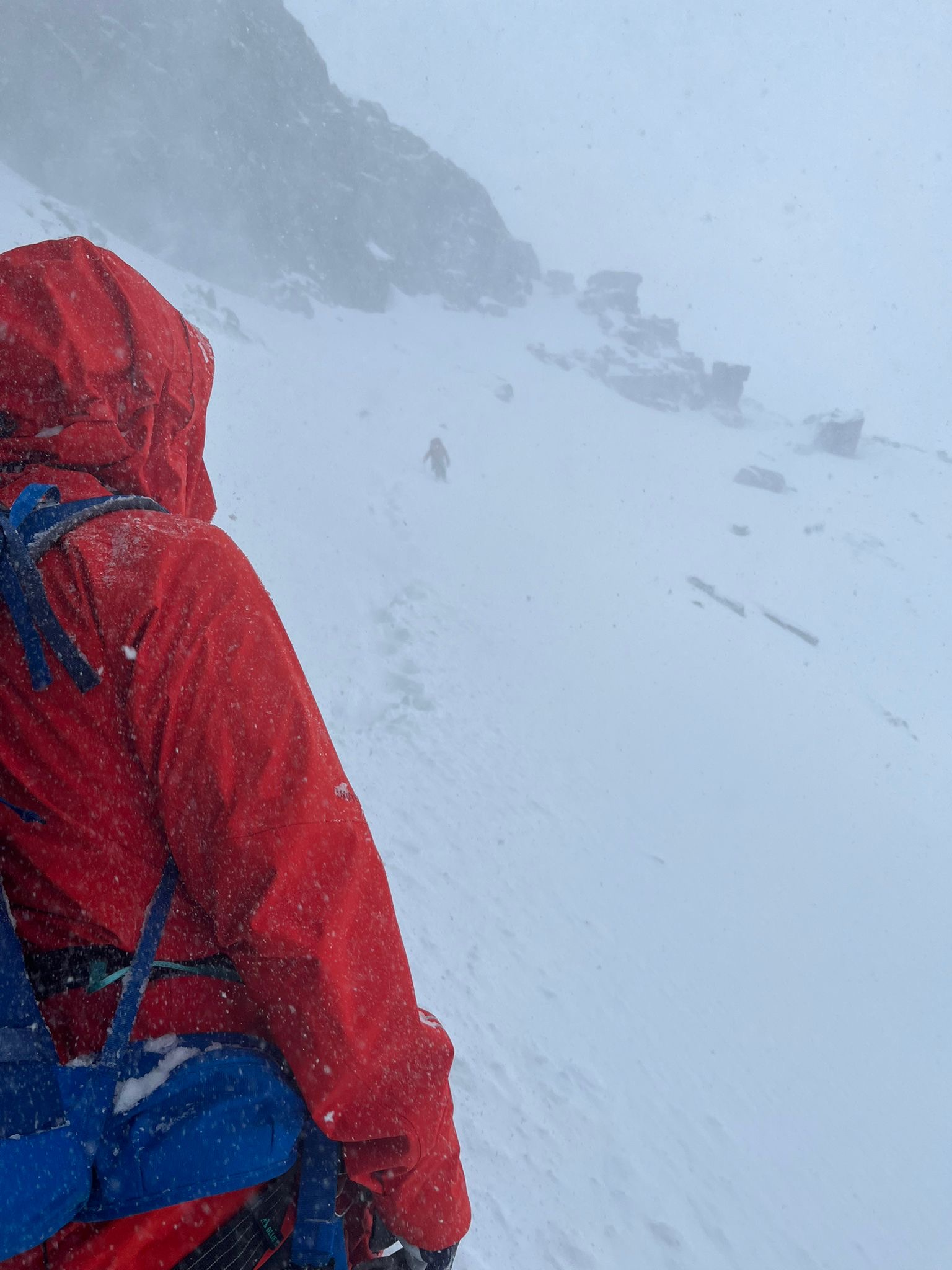
Wind is the sneaky one. A gully that looks sheltered from the bottom can funnel gusts near the top. Jonathan Miles lists underestimating wind speeds at the top of sheltered gullies as a mistake to avoid. Snow can also blow in fast, and a whiteout can turn a simple walk into a navigation test. Pack a spare warm layer and a hat you can pull down over your ears, and set a turnaround time before you leave the car.
Cornices are another trap. Jonathan Miles also lists being the first to bash through one as something to avoid. Stay back from the edge, and don't assume the lip is solid just because it looks it.
Gear You Actually Need
Scotland doesn't need your whole warehouse. It needs the right rack, kept sharp and sorted. The most common gear mistake I see from overseas visitors is packing for home and skipping the stuff that actually matters in Scottish snow.

Rope length and what to pack
Pack a rope of at least 60 metres. It's one of the warnings in the BMC list: cut yourself short and the belays, abseils and lower-offs won't work the way you planned. Fiddly, rushed belays are how small problems become big ones.
Picks, screws and blunt kit
Blunt ice screws are a classic. Nik Goile's warning in the same list is not to assume your blunt screws will be sharp enough. Sharpen your picks and check your crampon points before you fly. Bring a good mix of small to medium screws, because Scottish ice isn't always thick, and you'll use the short ones more than you'd expect.
Look up when you swing your axe. Natalie Berry's BMC entry is a reminder of why: a clump of ice hit her lip and needed stitches. Clip your gloves to you on the crag, too. Nik Goile warns they will blow away, and he's right.
Mixed-route rack and what to leave out
For mixed climbs, a regular trad rack of nuts and hexes works well, with a few cams if the cracks aren't too icy. Turf routes want a few specialist pieces for the turf, which your guide can talk through on the day. Pegs and pitons are generally fine to place if you remove them afterwards.
Leave the heavy kit you'd never use at home. Every extra kilo is a kilo you're carrying up soft snow on a long approach.
Guided Days, Courses or Going Solo
You've got three basic options, and each suits a different kind of climber. Going solo with a capable partner is the most flexible but also the least forgiving. A guide or course takes the guesswork out of the conditions and the terrain.
Where a guide earns its fee
A guide reads snow, wind and ice in real time, and knows which routes are in and which are a sad mess. That's the stuff that costs international visitors the most time. If you've got a short window, one day with a local guide can save you a week of bad guesses.
Where a course fits in
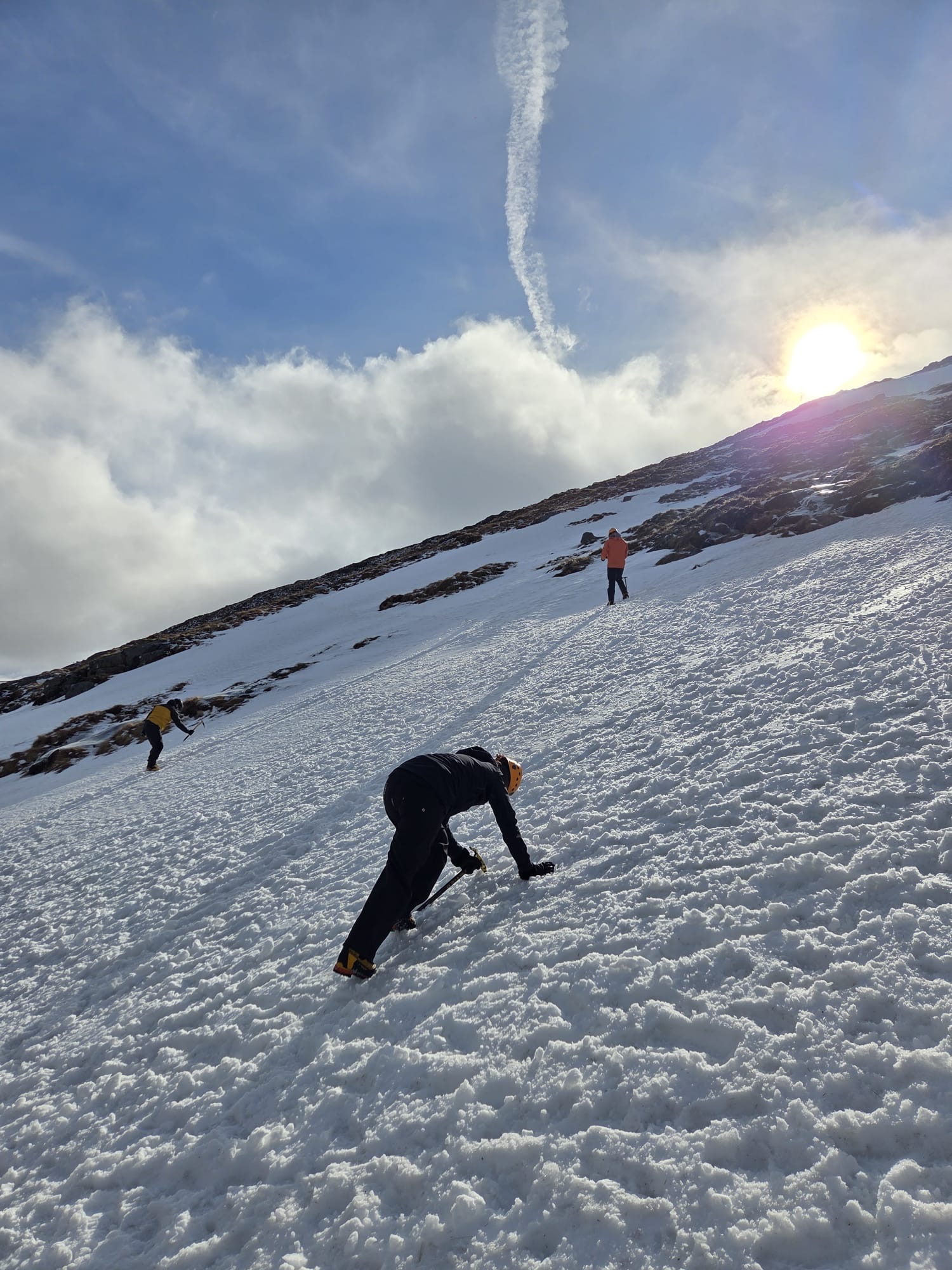
We run structured courses, including Intro to Winter Climbing and Ben Nevis Winter Skills, plus open courses on the Isle of Skye. For first-timers, a course is a smart way to learn the basics before you head onto a route with a partner. It also shows you how to use your kit properly, which beats reading about it.
Option | Best for | Watch out for |
|---|---|---|
Guided climbing day | Experienced climbers who want local knowledge and a clear plan for the day | You still need the fitness and kit for the terrain, and the guide can only work with the conditions you get |
Structured winter course | First-timers and climbers new to Scottish snow and ice | Takes time out of a short trip, so book early |
Self-guided trip | Climbers with proven winter experience and a capable partner | Navigation, reading conditions and rescue planning all fall on you |
Honest take: if you've never climbed in Scottish winter, don't self-guide your first trip. Book at least one guided day, then see how you feel on your own.
Navigation, Safety and Knowing When to Turn Around
Scottish mountains can look friendly from the road and nasty up high. Navigation is the skill that saves you when the cloud drops. Plenty of teams carry a map and compass but never really use them, and that's where trouble starts.
Navigation when you can't see your feet
Ross Hewitt's story in the BMC list is a good one. His team knew the area well, so they walked in during zero visibility without navigating, then realised they'd missed the crag. Familiar ground can make you lazy. Keep the map, compass and altimeter out on the approach, not buried in the bag.
Thinking you can just walk off the top without navigating is another classic error on that same list. Descent is where a lot of trouble happens, because you're tired and the cloud is down. Plan the way off before you top out.
Pro tip: Set your altimeter to a known height at the start of the day, and check it at every junction. It's a quick habit that catches navigation errors early.
Mountain rescue and insurance
Check your travel insurance says it covers winter mountaineering, including climbing on snow and ice, and mountain rescue. Lots of standard policies are vague or exclude it entirely. Read it before you book the flight, not after you need it.
In an emergency in Scotland, call 999 and ask for the police, who will coordinate Mountain Rescue if needed. Know roughly where you are before you call. A grid reference, a clear landmark or a description of your route all help the team find you.
Getting Around and Arriving Ready
The hills are only half the trip. Getting from your accommodation to the crag, finding somewhere to dry your kit and sorting out food can eat a big chunk of your time. Sort it before you land.
Basing yourself in Fort William or on Skye
Fort William works well as a base for Ben Nevis, and it's where many international climbers start. Skye has a different feel, with its own ridges and its own weather, and the open courses we run there suit people who want a broader mix of terrain. Pick one base for your trip rather than bouncing between areas, because travel eats the days you came for.
If you're thinking about our Nepal or Morocco expeditions down the line, a Scotland trip makes a useful shakedown. This guide sticks to Scotland, though, so the rest of the advice stays on home turf.
Staying warm and arriving ready
Dress in layers you can add or drop easily, not one big bulky jacket. Your hands and feet go first in Scottish winter, so pack spare gloves, a warm hat and dry socks. Sweat is your enemy when you stop, so vent early rather than late.
Pro tip: Keep a spare pair of gloves in an inside pocket. A wet glove on a cold belay can end your day.
Frequently Asked Questions
Do I need to be an experienced ice climber to visit Scotland for winter climbing?
No, but you do need to be comfortable moving on steep snow, using an ice axe and crampons, and belaying properly. If you're new to it, start with an introductory course such as Intro to Winter Climbing before you head onto harder routes.
When is the best time for international climbers to visit Scotland?
There isn't one perfect window. Early season is often better for mixed routes, while later in the season tends to suit ice. Build in a few spare days so you can move your climbing around the forecast.
Do I need a guide, or can I go on my own?
You can go on your own if you have solid winter experience and a capable partner. If it's your first time in Scottish conditions, book at least one guided day so you can see how the terrain and weather behave.
Is standard travel insurance enough for a winter climbing trip?
Often it isn't. Many standard policies exclude winter climbing, off-piste travel or mountain rescue costs. Read the policy carefully and look for explicit cover for mountaineering on snow and ice.
What should I do if the forecast looks bad when I arrive?
Don't panic and don't force it. Check the mountain forecast, pick a lower-level objective or a course day, and use the time to practise navigation and kit handling. A bad forecast can still turn into a useful day if you use it to build skills.
Can I rent gear in Scotland instead of flying with mine?
Ask your guide or provider what kit they supply and what you should bring. Flying with your own boots is often the safer bet, because fit matters more than most people think.
Have you already done a winter trip to Scotland, or are you planning your first one, and what caught you off guard?

Comments