


Open Climbing Courses Isle of Skye: Who They're For
Looking for open climbing courses on the Isle of Skye and wondering if one is actually for you? Fair question. Skye has some of the most striking climbing in Scotland, but it's not the easiest place to start, and the wrong course can leave you cold, bored, or stuck at the bottom of a crag with no idea what comes next. Open courses sit in a sweet spot between a one-off taster and a private guided day. They suit people who want proper skills, a bit of company, and a clear route into the mountains. Below, I'll cover who they're for, what a day actually looks like, and how to join one without getting tangled in the booking process.
Table of Contents
Quick Takeaways
Key Insight | Explanation |
|---|---|
Open courses run on shared dates | You book a place on a set date and learn alongside other people. It's a different deal to a private day, and the shared format suits a lot of learners. |
Beginners are the core audience | You don't need rope skills before you arrive. You do need reasonable fitness, sensible footwear, and a willingness to get cold and a bit wet. |
Skye's friendlier crags are often awkward to reach | Many easy climbs sit away from the big mountains and come with tricky approaches or descents. A local guide knows which ones are worth the hassle. |
Weather sets the plan, not the calendar | Expect the day to change. A good course has a plan B, and you'll learn more from switching objectives than from sticking to a script. |
Pick your dates before anything else | Choose the week that works for your schedule first, then check what the course covers for that time. Dates are what fill up. |
Ask questions before you pay | Find out the group size, the level, what kit to bring, and what happens if the forecast turns. Clear answers early mean fewer surprises on the day. |
Who Open Courses Are Really For
Let's clear something up first. Open courses aren't a watered-down version of the real thing. They're built for people who want to learn climbing properly, whether they're starting from scratch or from a shaky base, and who like learning alongside others. If you've never clipped into a rope, or you've only ever climbed indoors, you're exactly who these are for.

The catch is that open courses suit a certain kind of learner. If you want everything tailored to your exact goals from the first minute, a private day is probably a better fit. If you're happy to move at the group's pace and pick up tips from the person next to you, the shared format is a real strength. Honestly, it's often the more fun option.
Total beginners who want a proper start
Most people on a beginner course share one trait. They're keen, a bit nervous, and not totally sure what they don't know yet. That's completely normal. The early part of a course is about the basics, like tying in, understanding what your knots are for, and why checking your partner's setup matters more than owning the flashiest kit.
A common mistake is trying to rush past this stage. People want to get up a route on day one. In practice, the climbers who progress fastest are the ones who spend an hour getting their belay right before they touch anything steep.
Hillwalkers ready to get onto the rock
If you've been walking the hills for years, you already have the fitness and the map sense. What you're missing is the rope work and the confidence to climb ground that's steeper than a scramble. An open course bridges that gap without asking you to give up the mountain feel.
Indoor climbers who want the real thing
Plenty of people climb in a gym three nights a week and then freeze the first time they reach an outdoor crag. The rock is colder, the holds are less obvious, and nobody has chalked the route for you. Gym skills transfer well, but the mindset needs adjusting. A guided day sorts that out faster than teaching yourself ever will.
What Happens on an Open Course
Expect a day that's more practice and chat than you'd guess. You'll start with a briefing on the plan, the weather, and what the group is aiming for. Then it's usually out to the crag or the ridge, depending on conditions, with the guide setting up the first practice so nobody's standing around in the cold.
A typical day on the crag
Once you're on site, things move in short cycles. The guide shows a skill, you try it, you get feedback, and then you go again. Some people find this slow at first. It's deliberate. Repetition is how the movements stick, especially when you're tired and your hands are numb.
Breaks are part of it too. Eat something, drink some water, and let your forearms recover. The people who get the most from a course are the ones who speak up when they're confused instead of nodding along.
The best course day is the one where you're tired, cold, and still grinning when you clip the rope.
Rope work and belays you'll actually use
Rope work is where open courses earn their keep. You'll practise building a belay, which is the setup that catches a falling climber, along with handling the rope smoothly and communicating clearly with your partner. These skills sound dull, but they're the ones that keep people safe on rock. Get them wrong and nothing else about the day matters.
Anchors come up a lot. That's the point you tie into at the top of a climb, and you'll learn how to set one up, check it, and understand why you shouldn't trust a single piece of gear without thinking it through.
Why Skye Changes the Game
Skye is brilliant, and it's also a bit awkward for beginners. The island packs in big mountain ridges, sea cliffs, and weather that can flip in an afternoon. That mix is why a good guide matters more here than it would on a simple, easy-to-reach crag.
Friendly crags come with fine print
You'd think the easy stuff would be easy to find. It isn't. Many of the friendlier climbs away from the mountains come with complications, like an abseil to reach the base or a scramble to get back down. Some sit a short walk from the road, others need a longer walk in. A local guide knows which ones are worth the effort and which will eat your whole day.
In practice, that matters more than people expect. A beginner who spends half the session sorting out an awkward approach has less energy for the actual climbing. Good course planning is largely about choosing the venue that fits the group.
Big mountain days need extra commitment
The longer routes on the high ground are a different beast. Approaches are long, and the descents can be just as serious as the climbing. Those days suit people who already have some scrambling and route-finding under their belt. For most first-timers, shorter and well-chosen crag sessions are the right starting point.
The weather is the real instructor
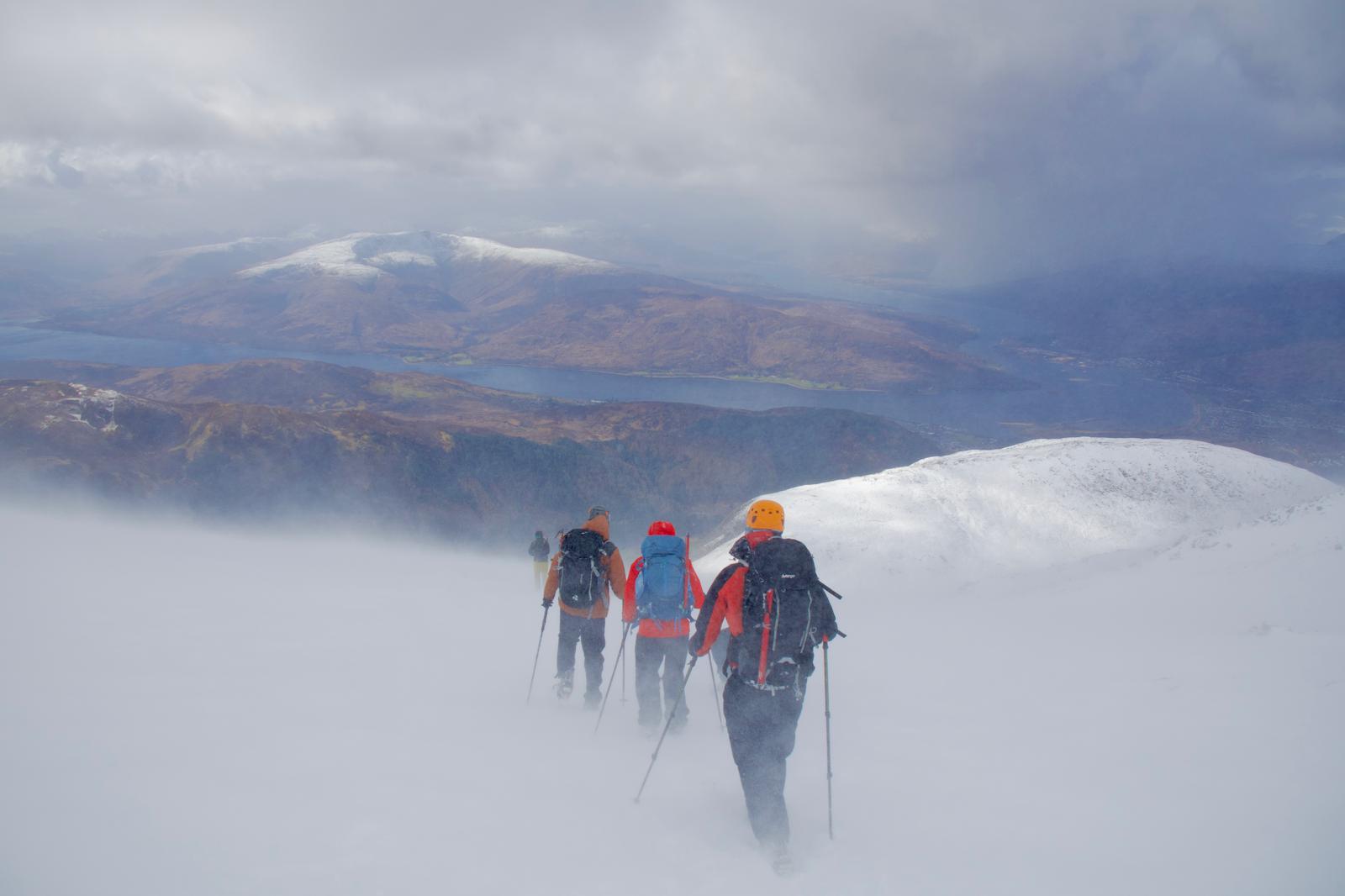
You can plan the perfect session and the wind will still rip it up. Our team is based in Fort William, so we know how fast a forecast can turn. Good guides keep a couple of options ready, from a sheltered crag to a different skill focus. That flexibility is part of the lesson. You learn how to read conditions and make a call, not just how to tie a knot.
How to Join an Open Course
Joining an open course is simpler than it looks, but people trip up in the same few places. The steps are straightforward: pick a date, read the course details, check the kit list, book your place, and ask about anything that's unclear. Do them in that order and you'll avoid most of the stress.
Start with the dates, not the destination
Your schedule should decide the course, not the other way round. Work out which weekend or week you can actually get away, then look at what runs in that window. Open courses run on set dates, so if your diary is flexible, you have more room to choose. If it's not, be ready to move quickly once you spot a date you like.
What to bring and what to leave behind
Check the kit list properly. Waterproofs, warm layers, sturdy footwear, and a small pack for food and water will cover most days. Bring a hat and gloves even in summer, because wind on the coast can make a mild day feel very different. Leave the brand-new gear at home. Breaking in boots on a course is miserable.
Booking and the questions to ask first
Before you pay, ask the team what the level is, how the group is made up, and what happens if the weather forces a change. Good providers answer those questions straight. If you get vague replies, take that as a cue to ask more. Clear answers early mean fewer surprises when you're standing on a wet slab with a rope in your hands.
Pro tip: Tell the team about any injuries, medical conditions, or fear of heights before the day, not on the morning. It lets them plan a safe, realistic session for you.
Open Course vs Private Day vs Going It Alone
Three routes get people onto the rock on Skye. Each one suits a different person, so it's worth being honest about what you want before you choose.
Option | Best for | Watch out for |
|---|---|---|
Open course | Beginners who like learning in a shared group and want a structured route in | Less tailoring, so you work at the group's pace on the day |
Private guided day | People with specific goals, tricky schedules, or a need for total focus | Usually a higher cost per person, and you miss the group energy |
Going with a mate | Experienced partners who already know the basics and want a day out | Gaps in skills are easy to miss, and it's hard to be honest with a friend about what you don't know |
Here's my take. If you're new to climbing, an open course is usually the sensible first step. Going with a mate can work once you have the basics, but you need to be honest about the gaps. A private day makes sense when you have a clear goal, like preparing for a specific route, and you want every minute tailored.
Some people skip formal teaching and pick things up from a mate who learned the same way. That's where habits go wrong. You often don't notice until something feels off on steep ground, and by then the lesson is expensive.
Mistakes People Make When Booking
Most booking problems come from the same few mistakes. People overestimate their level, underestimate the fitness side, or assume the forecast will behave. We see all three a lot, and each one is easy to avoid if you know what to look for.
Overestimating your starting level
Ticking "some climbing experience" on a form doesn't tell the guide much. An indoor wall is not the same as a cold sea cliff. Be specific about what you've done, what you've led, and what you haven't tried yet. Honesty here gets you into the right group, which is better for everyone.
Ignoring the fitness side
A course day often includes a walk in, long stretches of standing around, and a fair amount of hanging on to small holds. Plenty of people find the tiredness hits harder than the climbing. You don't need to be an athlete, but a few weeks of regular walking and some core work will make the day far more enjoyable.
Booking without a plan for bad weather
Skye weather changes fast. Don't book non-refundable travel to a course date without checking the cancellation details first. Ask how the team handles weather changes and whether a session can move to another day.
Pro tip: Write down two questions before you call or message. Keep them simple, like "What's the level?" and "What happens if it's windy?" You'll get far better answers than you would from asking "Can I come?"
Is an Open Course Worth It for You?
Here's the straight answer. An open course is worth it if you want structured learning, a safe way onto real rock, and a bit of company. It's less worth it if you want a bespoke plan built around one specific route, or if you already run your own trips with a solid skill set.
Ask yourself three things. Do you want to learn rope work properly? Are you comfortable taking instruction from someone new? Can you handle a day that's a bit cold and a bit slow? If the answer is yes to all three, book the course.

Signs an open course is the wrong fit
If you already lead routes, place your own protection, and build your own anchors without a second thought, a beginner course will feel slow. Look at a private day or a targeted skills session instead. Being honest about this saves money and frustration.
Next steps after your first course
Many people use a course as a stepping stone. From there, some move on to rock climbing days, winter climbing, or ice climbing, and others start planning a bigger trip later on. Plan your next step while you're still fresh from the course, because skills fade fast if you don't use them.
Frequently Asked Questions
Do I need climbing experience before joining an open course on Skye?
No, not for a beginner course. You don't need to arrive with rope skills, because learning them is the whole point. You do need basic fitness, sensible clothing, and a willingness to listen and try things.
Are open climbing courses on the Isle of Skye only available in summer?
Skye's conditions change across the year, so the type of day changes too. Check the dates you're interested in and ask what the course covers for that time. Don't assume a summer plan will work in every month.
Can I join an open course with a friend?
You can, but check how group places work before you both book. Ask whether you'll be grouped together or split up, so you know what to expect on the day.
What happens if the weather turns on the day?
Good providers plan for it. Expect the guide to switch to a different venue, change the skill focus, or adjust the timings. Ask how changes are handled and what happens to your booking before you commit.
Do I need to bring my own equipment?
Check the kit list for the specific course. Most people bring their own clothing and footwear, and it's worth confirming what technical kit is supplied before you arrive so you aren't caught out.
How do I know if I'm ready for the next level?
Look at what you can do without thinking. If you can build a basic belay, move on rock with confidence, and communicate clearly with a partner, you're probably ready for more. If you're still thinking hard about every step, another course will pay off more than pushing on.
Have you done an open course on Skye, or are you weighing one up right now, and what's the one thing holding you back or pulling you in?


Comments