


Layering for Winter Climbing Scotland: Base, Mid and Shell
Ask anyone who's been caught out on a Scottish winter route and they'll tell you the same thing. It wasn't the cold that got them. It was the sweat. You start the approach in a fleece, you're soaked by the time you reach the crag, then the wind hits on the top and you're shivering in a wet shirt. Layering for winter climbing in Scotland is about avoiding that exact loop. Get the base, mid, and shell sorted and you can stay warm, dry, and actually enjoy the day. Here's how I set mine up, layer by layer.
Table of Contents
Quick Takeaways
Key Insight | Explanation |
|---|---|
Think in three jobs, not three items | Base moves sweat away, mid holds heat, and shell keeps wind and wet out. One jacket can't do all three well. |
Cotton stays at home | Cotton holds water and goes cold fast. Leave the cotton tee in the car and wear merino or synthetic next to your skin. |
Carry a belay jacket for the stops | Belays are where you cool down fast. A warm insulated jacket goes on over everything the moment you stop moving. |
Open up before you overheat | Unzip, vent, or swap a layer at the first sign of sweat. A damp base layer ruins your warmth for the rest of the day. |
Match the shell to the forecast | Hardshell for wet, windy days. Softshell for cold, drier days when breathability matters more than full protection. |
Don't forget legs, hands, and head | Your core can be toasty while your fingers freeze. Spare gloves and a warm hat are cheap insurance. |
Why Scottish Winter Is Different
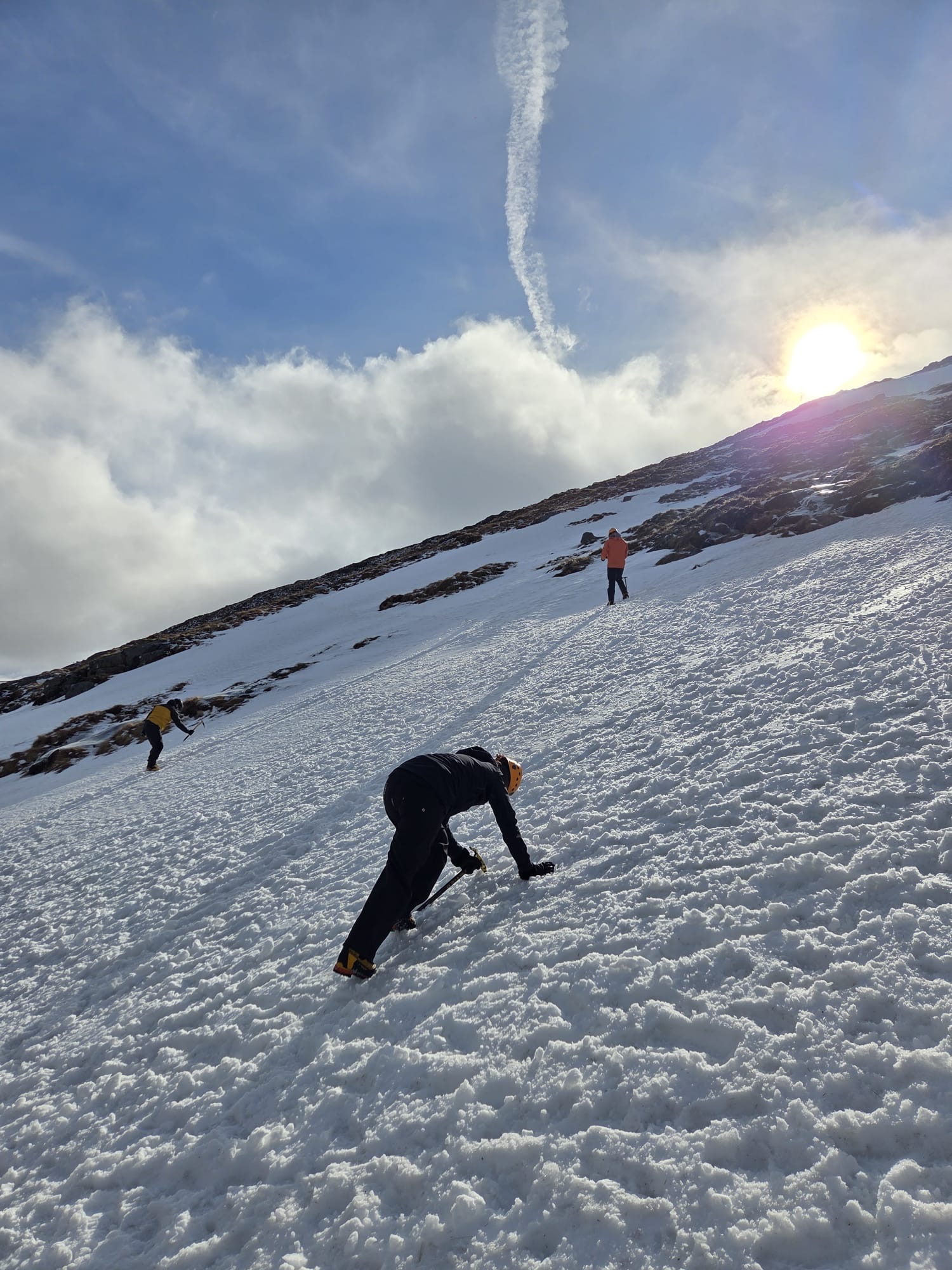
Scottish winter climbing doesn't play by the same rules as winter somewhere drier and colder. Conditions swing fast. You can start under clear skies, get rained on at the bottom, and hit spindrift and wind on the top. Honestly, the weather is the main event, and your clothing has to handle all of it in one go.

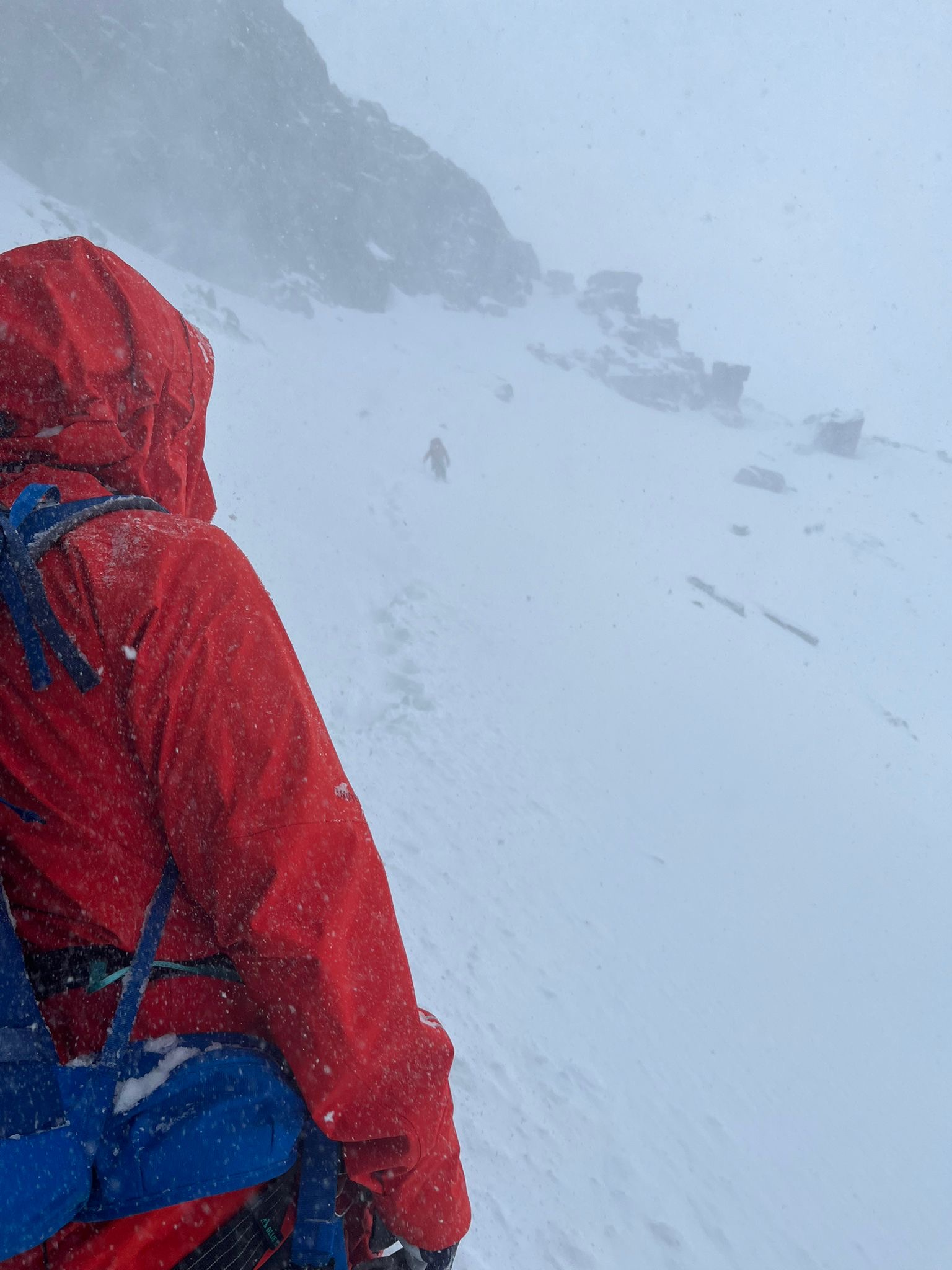
Most of the time you're not just cold, you're damp. Snow and drizzle hang in the air. Wind sneaks through any gap at your wrist or neck. A system built for dry, still cold will leave you shivering on Ben Nevis or on an exposed ridge on the Isle of Skye.
Here's the thing most people miss. Winter climbing is stop-start. You sweat hard on the approach, freeze at the belay, then sweat again on the next pitch. Your layers have to manage that rhythm, not just the average temperature. That's why I think of layering as a system where every piece has a job.
The classic three-part setup is base, mid, and shell. The base sits against your skin and moves moisture away. The mid traps warmth. The shell is the outer skin that blocks wind and wet. Every shop will tell you some version of this, and they're right. The trick is knowing what each piece should be and when to swap things out.
Base Layer: Next to Your Skin
Your base layer is the one nobody thinks about until it fails. Its only real job is moving sweat off your skin so it doesn't sit there cooling you down. Get that wrong and the rest of your system is fighting a losing battle, because wet fabric loses its insulating power quickly.
Merino or Synthetic?
Merino wool is my go-to for most Scottish days. It handles odour well, which matters on a multi-day trip, and it keeps a decent amount of warmth when it gets a bit damp. It's softer against the skin than many people expect. The downside is that it can be slower to dry and it costs more.
Synthetic base layers dry fast and cope well with the rubbing you get from harness straps and rock. If you're a sweaty climber or you know you'll be pushing hard up steep snow, a synthetic top can be the better pick. Plenty of people split it that way, and I agree with them. What I wouldn't do is wear cotton at all. Cotton holds water and then gets cold fast, so leave the cotton tee at home.
Fit That Actually Works
A base layer should be close fitting, not tight. If it bunches under your harness or rides up when you reach for a hold, you'll get cold spots and sore patches. Loose fabric traps air but can't pull moisture away from your skin. Aim for snug, with enough give to lift your arms overhead without the hem coming out of your trousers.
Pro tip: Carry a spare base top in your bag. Swapping into a dry one at the first stop is the cheapest way I know to fix a cold afternoon.
Mid Layer: Your Warmth Engine
The mid layer is where the warmth actually comes from. It traps the air your body heats up and holds it close. On a typical Scottish winter day you want one solid mid layer rather than a pile of thin ones. A single good piece adds warmth without turning your torso into a sauna.
Fleece, Synthetic Insulation, or Down?
Fleece is the simple workhorse. It breathes well, dries quickly, and doesn't mind being a bit wet. Synthetic insulated jackets do a similar job with a little more warmth for the weight. Down is lighter and warmer for its size, but it hates getting wet and loses much of its loft if it does. In Scotland, that's a real problem, so I keep down for dry days and belay duty only.
The Belay Jacket for Stops
This is the piece people leave out, and it's the one I'd fight for. When you stop at a belay or wait on a route, your body cools fast. A warm, packable insulated jacket goes on over everything else the moment you stop moving. Keep it at the top of your pack, not buried at the bottom, so you can grab it without unpacking your whole kit.
A common mistake is treating the mid layer as something to strip off on the approach and forget about. You end up cold on the crag with nothing warm to put on. Set the mid layer up for the stops, and the approach takes care of itself.
Layering isn't about buying more kit. It's about making a few pieces work together and changing them before you feel the problem.
Shell Layer: The Weather Filter
Your shell is the outer barrier against wind, rain, and spindrift. It doesn't add much heat itself. Its job is to stop the warmth you've built up in the base and mid layers from blowing away. When the shell is wrong for the day, nothing underneath can save you.

Hardshell or Softshell?
A hardshell is fully waterproof and windproof. It's the one you want when the forecast says wet, or when you know you'll be standing around in a gale. It's noisier, less breathable, and can feel clammy if you're working hard. A softshell is more breathable and stretchy, and it's great on cold, drier days when you're moving a lot. It won't keep out a sustained downpour, though.
My rule is simple. If there's any real chance of rain or sleet, take the hardshell. If it's dry and cold with a light breeze, the softshell does the job and stops you overheating. Plenty of climbers carry both, which is a fair call if you've got the pack space.
Hood, Zips, and Fit
The hood has to fit over your helmet, because you'll be wearing one on most routes. A hood that only works with a bare head is useless when the wind picks up. Pit zips are worth looking for. They let heat escape without taking the jacket off, which saves you from stripping at the belay. Make sure the shell is long enough to cover your harness and sit over the top of your trousers.
Pro tip: Try the shell on over your mid layer and harness at home. If you can't reach the zips with gloves on, you won't use them on the hill.
Legs, Hands, and Head
You can be toasty in the core and still have miserable extremities. Legs, hands, and head are where a lot of winter days go wrong, so don't treat them as an afterthought. Small changes here make a big difference.
Legs and Trousers
Most people wear a thin baselayer under a softshell or hardshell trouser. Tights or thin base bottoms work well under waterproof trousers on steep snow and ice. Make sure your trousers can be pulled on over boots, because you won't want to take your boots off every time you need to add a layer. Sweaty legs cool quickly, so open the zips when you're working hard.
Gloves and Hands
Plan on at least two pairs. A thinner pair gives you the dexterity you need for climbing, and a warmer, more waterproof pair handles belays and the walk out. A damp glove gets cold fast, so carry a dry spare to swap in. Don't push on in soaking gloves just because you're tired of changing them.
Hats, Buffs, and Neck
A warm hat is non-negotiable. Heat escapes fast from your head, so a hat under your hood or helmet is a good move. A buff or neck gaiter stops wind from sneaking down your collar and is far easier to deploy than fiddling with a zip. Too warm on the approach beats too cold on the belay, so wear a hat you can pull on and off without thinking.
Layering While Moving
Gear that works on paper can still fail on the hill if you don't use it right. The skill is changing layers before you're cold or overheated, not after. Think of it as a rhythm rather than one decision made at the car park.
Warming Up on the Approach
Start the approach feeling a bit cool. If you're warm when you leave the car, you'll be soaked by the first steep bit. Keep the mid layer off until you stop, and open the shell or vent the pit zips as you go. Stopping every few minutes to fiddle with layers wastes time and lets you cool down in the wrong way.
Changing Layers at the Belay
The belay is where you do your swapping. Get the belay jacket on before you feel the chill, while your body still has heat to trap. If you're leading the next pitch, adjust the shell or mid layer before you move off. Fumbling with a zip while your fingers are dead is no fun, so practise your layer changes at home with gloves on.
Descending Without the Sweat Trap
Descents are when a lot of people get cold, because the work stops but the wind doesn't. Put your insulated layer back on before you start walking out, and keep the shell zipped if it's windy. Tired people forget this, so make it a habit to dress for the descent before you set off. Walking out sweaty into a cold wind is one of the most miserable feelings in the hills.
Three Layering Setups Compared
Not every Scottish day calls for the same kit. Here's how three common setups stack up in practice. Use them as a starting point, then adjust for your own body and how hard you push. Most people run hotter than they think on steep ground, so err toward the lighter option and carry the extra piece.
Setup | Best Conditions | Where It Falls Short |
|---|---|---|
Merino base, synthetic mid, hardshell | Wet, windy days and long approaches in changeable weather | Can overheat on steep, sustained climbing, so vent early |
Synthetic base, fleece mid, softshell | Cold, drier days with lots of movement and sweat | Not enough protection in a sustained downpour or wind-driven sleet |
Merino base, thin mid, softshell plus belay jacket | Hard cold days with steady conditions and frequent belays | Stops working once everything gets properly wet, so keep a hardshell in the bag |
Look, the first setup is my default for most Scottish winter days. It handles the nasty stuff and gives you a clear way to adjust. The second is my pick for a cold, dry day on a big approach. The third is what I reach for on a hard, steady day when the belays are long and the wind is nagging at you.
Mistakes That Cost You the Day
I've watched plenty of people make the same few errors. None of them are dramatic. They just add up to a long, cold day. Fix these and you'll be ahead of most of the crowd.
Too Many Thin Layers
Stacking three thin fleeces sounds sensible, but it traps sweat between the layers and fills your pack. One proper mid layer plus a belay jacket works better and gives you a cleaner way to adjust. Thin layers also bunch under the harness, which is miserable after a few hours.
Waiting Too Long to Adjust
The biggest mistake is waiting until you're sweating or shivering. By then you've already lost heat or built up damp. Adjust early, even when it feels like overkill. You'll stay more comfortable across the whole day.
Pro tip: Keep a small dry bag in the pack with a spare base layer and dry gloves. Pull it out when you stop for lunch, not when you're already freezing.
Frequently Asked Questions
What should I wear as a base layer for winter climbing in Scotland?
Most people do best with a merino or synthetic base top and bottoms. Merino is comfortable and handles odour well, while synthetic dries faster when you're really sweating. Skip cotton completely.
Do I need a hardshell or a softshell for Scottish winter climbing?
If the forecast shows rain, sleet, or strong wind, take a hardshell. On cold, drier days with lots of movement, a softshell is more comfortable. Many people carry a hardshell as a backup even when the forecast looks good.
How many mid layers should I bring?
One solid mid layer plus a warm belay jacket covers most days. Adding several thin layers tends to trap sweat and bunch under your harness, so one good piece is the better choice.
Can I use a down jacket in Scottish winter conditions?
Down is warm for its weight, but it loses much of its insulation when wet. In changeable Scottish weather, it's best kept for dry days and belay stops, with a synthetic insulated piece for wetter days.
What should I wear on my legs for ice climbing?
A thin baselayer under softshell or waterproof trousers works well. Make sure the trousers fit over your boots so you can add layers without taking your boots off.
How do I stop getting cold on the descent?
Put your insulated layer back on before you start walking, and keep your shell on if it's windy. Stopping to dress for the descent, rather than walking out sweaty, makes a big difference.
Tell us what your Scottish winter layering setup looks like and what you'd change after your last cold day out, because we'd love to hear it.
We would love your feedback and any insights you would share with others. What perspective would you add?

Comments