


Last-Minute Winter Climbing Scotland: Step-by-Step Plan
Planning a last minute winter climbing Scotland trip sounds easy enough. A cold snap hits the forecast, you clear your diary, and you're off. Then reality shows up. The routes you had in mind are plastered in rime, the one guide you trust is fully booked, and the drive is longer than your Google Maps estimate said it would be. This guide walks through the steps we'd take with a client who rings on Tuesday asking about Friday. Keep it flexible, lock down the hard-to-get bits first, and you'll get out on the hill.
Table of Contents
Quick Takeaways
Key Insight | Explanation |
|---|---|
Pick your venue on the morning | Scottish conditions can flip overnight. Shortlist two or three areas and decide once you've seen the latest reports. |
Read the wind, not just the snow depth | Wind speed and temperature decide whether a route is climbable. A pretty forecast in town can mean something very different up high. |
Book the guide or course first | Good slots go fast when conditions look right. Lock in the date before you sort flights, cars or accommodation. |
Pack for warm when wet | Insulation that still works when soaked matters more than a fancy shell on most Scottish days. |
Always have a plan B route | Choose a lower-angle option and set a turnaround time before you leave the car park. |
Budget extra travel time | Winter roads and short daylight eat hours. Allow more time than the map app says, and start early. |
Why Last-Minute Scottish Winter Trips Can Actually Work
Here's the thing most people don't want to hear. Scottish winter is so unpredictable that the people who do best are often the ones who don't commit too early. A plan booked a month out can fall apart in one warm spell that strips the ice off every route you wanted. Being able to move at short notice is a real skill, and it's one you can learn.

The upside is big. When a good cold snap hits, plenty of people are waiting for it, and the folks who can jump on a short window get the best days. You don't need a three-week holiday. A long weekend with a clear, cold forecast can beat a full week of grey drizzle.
The catch is that short notice cuts both ways. Guide slots and course dates get snapped up when conditions look right, and your kit, travel and accommodation all need sorting in a hurry. So the steps below focus on order. Lock down the things that are hard to get, and keep the things that are easy to change until the last moment.
In Scottish winter, flexibility is the real skill. The trip you end up having is usually the one you chose that morning, not the one you pinned to the calendar a month earlier.
Step 1: Check the Conditions Before You Commit
Before you book anything, check what the hills are actually doing. The first question isn't "is there snow?" It's "is there the right kind of snow, is the wind going to pin me to the ground, and will the temperature hold?" Those three answers matter far more than the total depth.
Reading the mountain forecast
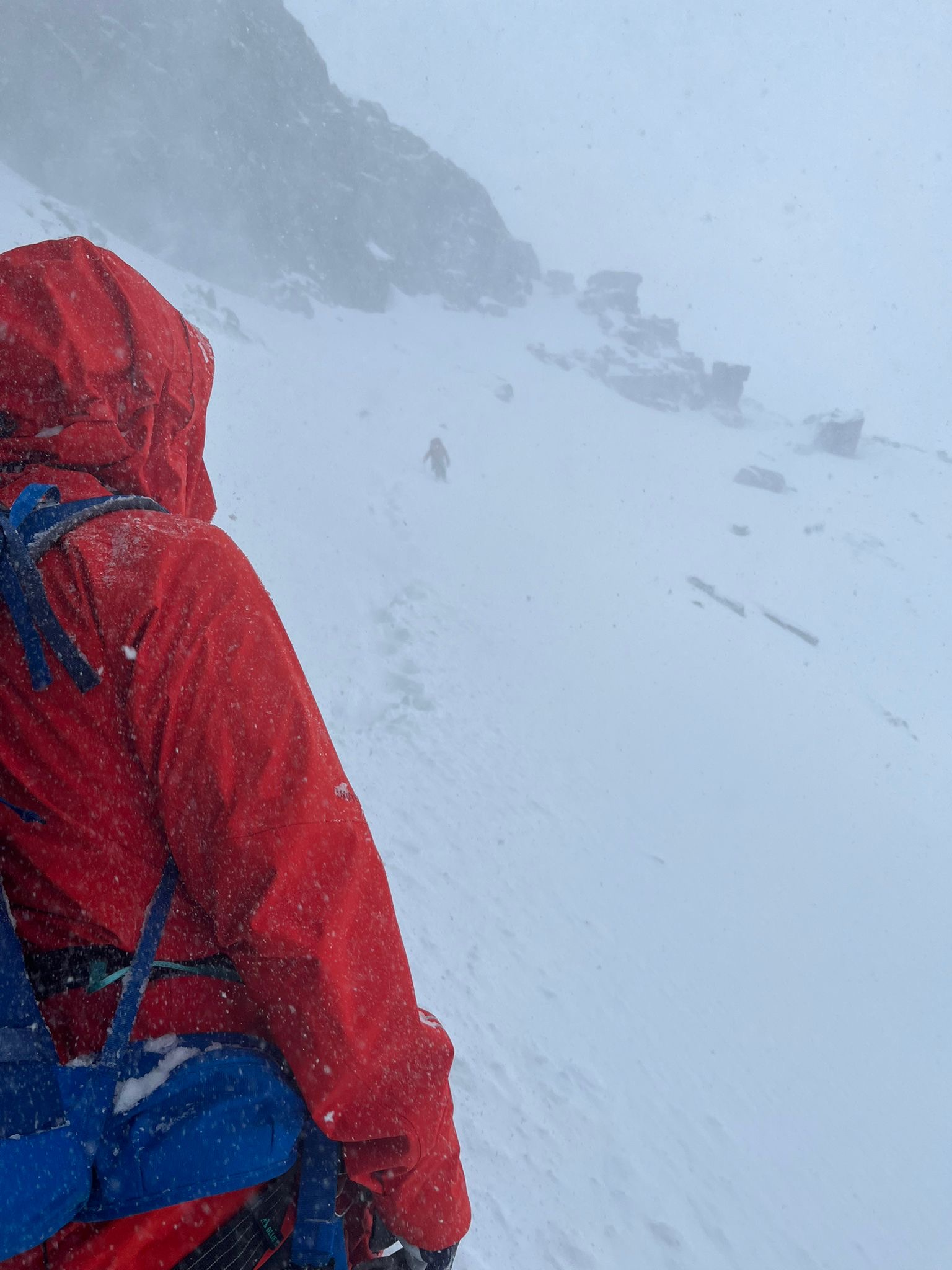
Valley forecasts are almost useless for winter climbing. You want the summit or plateau forecast, because the wind and temperature up high can be a completely different story from what's happening at the car park. Look at wind speed first, then wind chill, then cloud base. If the wind is gusting strong enough to knock you off your feet, the route doesn't matter.
Check the forecast the night before and again early the morning you leave. In practice, a forecast that shifts from cold and settled to mild and wet is a warning sign. A freeze-thaw cycle can wreck ice and make snow sugary and unstable in a matter of hours. If the trend is going the wrong way, move your plan to a different aspect or a different area.
Snow and ice reports that tell you something
Recent reports matter more than old ones. A photo or note from the last day or two tells you far more than a guidebook written years ago. Look for people describing what they actually climbed, not just "good conditions" in general.
Be honest with yourself about what you can read. Scottish winter doesn't hand out guarantees, so you're reading patterns, not promises. If you're not sure how to interpret a report, that's a good reason to pick a guided day over a solo mission.
Step 2: Pick a Flexible Venue
Choosing one place is the biggest trap for last-minute trips. If your whole plan depends on one corrie or one island, a single bad forecast ruins the trip. Pick a primary area and a backup, and be ready to swap between them on the day.
Why Ben Nevis is the easy default
Ben Nevis is the obvious starting point for many trips, and it's the one we run most often from Fort William. It has a huge range of routes, from straightforward gullies to proper technical lines, so you can match the day to the conditions. The town is also close enough that you're not burning half the day in the car before you even reach the snow.
The downside is popularity. On a good weekend, the main routes can get busy, so an early start isn't optional. If you want a quieter day, look at the routes away from the obvious lines or pick a weekday.
Skye as the trade-off
The Isle of Skye offers some of the most dramatic winter ground in Scotland, and that's a big draw. The trade-off is travel time. Getting to Skye takes longer than most people expect, especially when the roads are icy or a weather system is moving through. Pick Skye when you have a bit more slack in the schedule and a clear weather window to aim for.
In practice, Skye works best as a deliberate choice, not a fallback you throw in at the last minute. Check the forecast for the specific area you're heading to, not just for "the Highlands" in general.
Pro tip: Set your backup area before you leave home. If the primary forecast turns bad at 6am, you'll make a clear decision in two minutes instead of arguing in a car park for an hour.
Step 3: Sort Your Kit and Clothing
Kit is where last-minute trips often go wrong. People grab whatever's in the cupboard, realise halfway up the hill that their boots don't fit their crampons, and spend the day cold and miserable. Do a proper check at least two days before you travel, while you still have time to fix problems.
Layers that stay warm when wet
Scotland has a habit of making you wet even when you're trying hard to stay dry. That's why insulation matters more than the outer shell on many days. Traditional fleece and fibre pile are hard to beat for staying warm when damp, and they dry reasonably quickly. Fancy windproof fleece with complicated membranes often takes ages to dry and doesn't insulate as well once it's soaked.
Think in three layers. A base layer that wicks sweat, a warm mid layer, and a waterproof shell that you can get in and out of quickly. Pack a spare warm layer in your bag, because the one you're wearing will not stay dry.
Hire or bring your own
If you're travelling light, hiring technical gear can save luggage space. Hire is usually fine for crampons, axes and helmets, but check fit and sharpness before you head out. Boots are the item you really want to own or test before the trip, because a poor fit will ruin a day faster than anything else.
Before you book a course or guided day, ask exactly what's included and what you need to bring. A surprise gap in your kit list is the sort of thing that's easy to avoid with one message.

Step 4: Book a Guide or Course
This is the step that decides whether your trip happens at all. If you're new to winter, or you're coming back after a long gap, booking a guide or a structured course is the fastest way to get good, safe days out. It also means you're not guessing at routes in the dark.
How to book a winter climbing course in Scotland fast
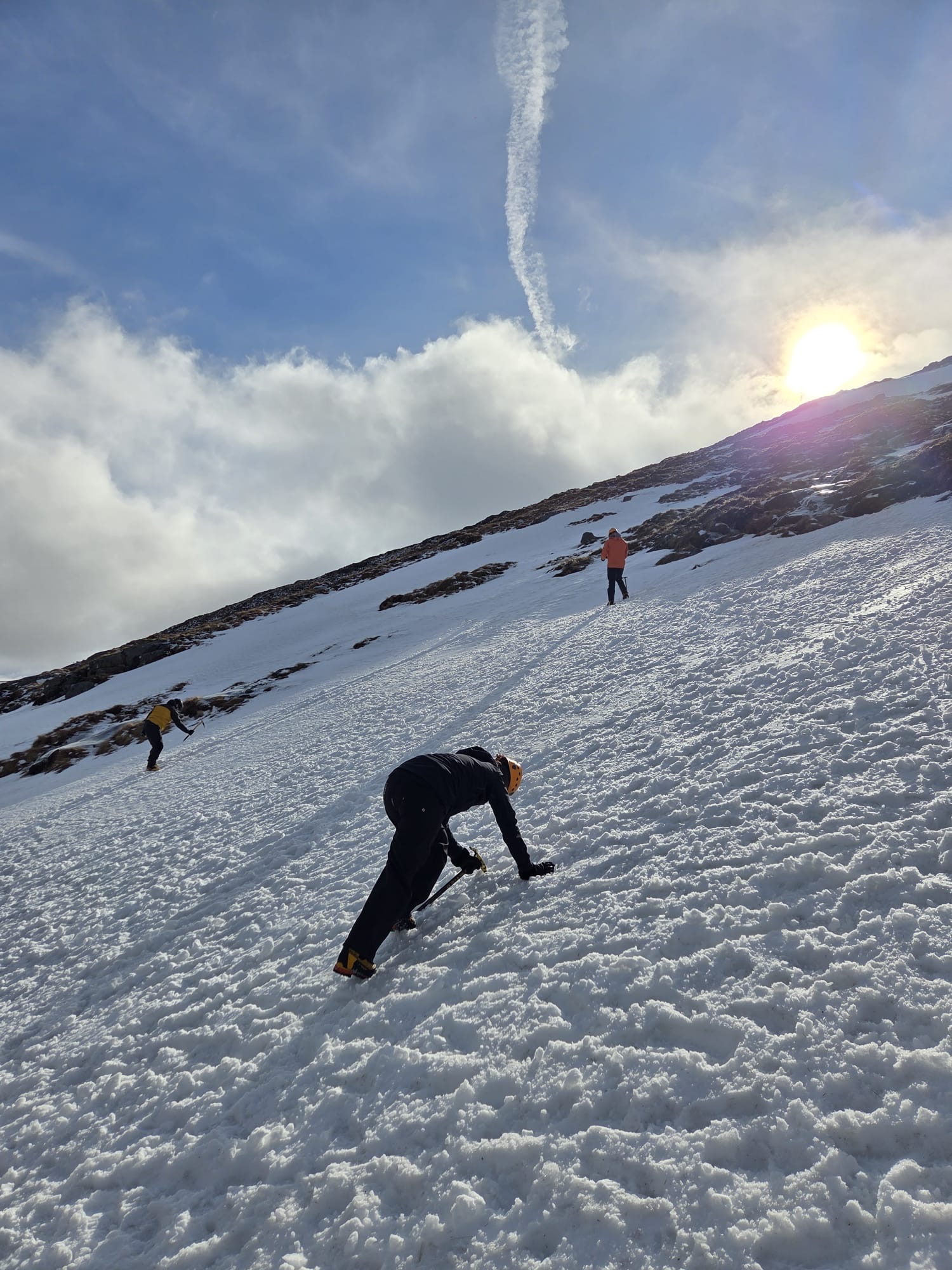
Start with the courses that match your level. Our Intro to Winter Climbing course suits people who are new to the hills in winter, while the Ben Nevis Winter Skills and Winter skills courses build on that foundation. If you want to learn to ice climb or pick up Scottish winter climbing properly, the open courses on the Isle of Skye are another option.
Send your preferred dates along with a couple of backup options. Short-notice bookings are often possible, especially midweek, but popular weekends fill first. Ask about cancellation spaces too, because they can open up when the forecast changes. You can check what's available at the Atlas Mountaineering website.
Questions to ask before you pay
Ask what the group size is, what ratio of guides to clients you'll have, and what happens if conditions change on the day. A good provider will explain the plan B options without you having to drag it out of them. Ask whether the day can switch venue if the forecast turns, too.
Also check what level you need to be at. A day on easy ice is a different beast from a mixed route with long pitches. Be honest about your fitness and experience. Nobody gets marks for pretending.
Pro tip: Book the guide or course first, then sort travel and accommodation around the confirmed date. Working the other way round often means paying for a hotel room you never sleep in.
Step 5: Get There and Get Back
Travel is the part of the plan that quietly eats your day. Winter driving is slower, roads can be icy, and daylight is short. A route that looks like an easy couple of hours on a summer map can turn into a long, tense drive in the dark.
Winter driving in Scotland
Check road conditions before you leave, and carry a basic winter kit in the car. That means a warm layer, a torch, water, food and a shovel if you have one. If you're driving onto a rural road in snow, be ready for slow going and sudden stops. Snow chains can help in some situations, but only if you know how to fit them and have practised beforehand.
Fuel up before you head into the hills. Remote areas don't always have services nearby, and running low on fuel in the cold is a bad surprise you can easily avoid.
Start times and daylight
Winter days are short, so plan your start time around daylight. Aim to be at the base of the route with time to spare, not rushing to get your boots on as the light goes. A late start is one of the most common reasons people end up descending in the dark.
Set a turnaround time before you leave the car park. Decide the time you'll head down no matter how close the top feels. It's an easy rule to agree on at home and a hard one to stick to halfway up a cold face.
Common Mistakes That Wreck Last-Minute Trips
Most last-minute trips don't fail because of bad luck. They fail because of a few predictable decisions. The good news is that they're easy to avoid once you know what to look for.
Chasing the hardest route
The classic mistake is turning up with a target route that's far too hard for the conditions or your level. If you've only got a short window, you want routes that match what you can climb in the snow you actually have. Pick something a notch below your ceiling and enjoy the day. You'll learn more from a solid, controlled day than from a rushed epic.
Watch out for routes that look good in photos from a different season. Ice that looked fat in a picture can be thin and brittle on the day, and mixed lines can be much harder when the snow is poor.
Skipping the bail plan
Every trip needs a plan B, and it needs to be decided before you're cold, tired and under pressure. Know the descent routes for your objective, and know where the escape options are. If the weather turns, the right answer is usually to back off early, not to push on and hope.
Tell someone your plan and your expected return time, even if you're on a course. It takes two minutes and it matters a lot if something goes wrong.

Three Ways to Plan Your Last-Minute Trip
There's no single best way to plan a last-minute winter trip. It depends on your experience, how much you want to be told what to do, and how much flexibility you have. Here's how the three most common routes stack up.
Approach | Best for | Main downside |
|---|---|---|
Guided day with a mountain guide | People with some experience who want to make the most of a single good day | Fewer days to choose from if the forecast is tight, and you'll need to fit around the guide's availability |
Structured course, such as Intro to Winter Climbing | Beginners and intermediates who want to learn skills and build confidence | Takes a few days rather than a single outing, so it needs a slightly longer window |
Self-led trip with a competent partner | Experienced climbers who can read conditions and manage their own risk | Mistakes are harder to spot in the moment, and there's no one to call the turnaround for you |
In practice, the guided day is the quickest way to get on the hill with a good chance of a worthwhile route. The course takes longer but pays off if you want to keep coming back. Going solo is a fine choice only if you're honest about your level and you've got a clear plan for when the day goes sideways.
The best last-minute plan is the one that still works when the forecast changes. Build in a second option from the start, and you'll rarely have to cancel.
Frequently Asked Questions
How far ahead should I book a winter climbing course in Scotland?
Short notice is often possible, especially on weekdays, but popular weekends fill quickly during good weather. Message the provider with a couple of date options and ask about cancellation spaces. The sooner you ask, the more choice you'll usually have.
Do I need previous climbing experience to book a winter course?
Not always. Intro courses are designed for people who are new to winter climbing, but you should be comfortable walking in the hills and moving on steep ground. Be honest about your experience when you book, so the course is pitched at the right level for you.
Is a last-minute winter trip safe for beginners?
It can be, as long as you go with a guide or on a structured course and you let the conditions set the plan. The risk comes from rushing, not from the trip being last-minute. If the guide says the day isn't right, take that call seriously.
What should I check on the morning of my trip?
Look at the summit forecast, the wind speed, the temperature trend and any recent snow or ice reports from the last day or two. Decide your primary and backup areas, set your turnaround time and make sure someone knows your plan. A quick check takes ten minutes and saves a lot of frustration.
Can I combine Ben Nevis and the Isle of Skye on one short trip?
You can, but it's usually better to pick one area per trip. Both places involve significant travel, and cramming two into a short window tends to leave you tired and rushed. Choose the area that best matches the forecast and your goals.
Planning a trip like this is easier when you've got a few reliable options lined up before the cold snap hits. Got a last-minute trip story or a tip that worked for you? Tell us what you did and what you'd change next time.

Comments