


Ice Climbing Mental Game: Beat Fear and Build Confidence
Here's the thing nobody tells you about ice climbing. You can have decent footwork, a clean swing, and plenty of fitness, and still lock up halfway up a pitch. I've watched strong climbers hang off their tools, breathing hard, unable to make the next move. The ice wasn't the problem. The ice climbing mental game was. In this guide, I'll walk you through what fear actually does on steep ice, how to tell useful caution from useless panic, and the habits that build real confidence over time.
Table of Contents
Quick Takeaways
Key Insight | Explanation |
|---|---|
Fear is a signal, not a verdict | It tells you to pay attention. It doesn't tell you to quit. Sort the signal before you act on it. |
Freezing usually means no plan | Most freezes happen when your brain has no clear next move. Pick the next two moves before you commit. |
Practice easy ice until it feels boring | Repeated swings on forgiving ice teach your body that the tools will hold. |
Breathe out on the hard moves | Holding your breath tightens your body and speeds up the forearm pump that feeds panic. |
Climb the ladder, don't leap it | Step up in angle and length in small chunks, and bank each win as proof you can handle more. |
Retreating is a skill | Downclimbing or lowering off is a smart call when the hazard is real. Come back fresher. |
Why Your Brain Panics on Ice
Ice is weird. Your hands are cold, your toes ache, and every swing feels like it could skate off into nothing. Your brain reads all of that as danger, even when your gear is solid and your placements are good. It doesn't care about your technique. It just wants you safe, and the quickest route to safe is to stop moving.

The freeze response on steep ice
That freeze you feel is old survival wiring. Fight, flight, or freeze, and on a vertical wall of ice, running away isn't really an option. So your body picks freeze. Your grip tightens, your breath gets shallow, and your feet stop trusting the front points. It's not a character flaw. It's your nervous system doing its job at the wrong time.
The trouble is that freezing feels like a decision when it's really the absence of one. You stop because nothing clear is next. Your brain has no move queued up, so it defaults to hanging on. That's why the fix usually isn't "be braver." It's having a plan for the next two moves before you get stuck.
Why the pump makes everything worse
Forearm pump on ice is brutal, and it feeds the panic loop. Your forearms burn, you start counting how long you can hang on, and suddenly the climb becomes a countdown. Fear and pump feed each other. A tired arm feels like a failing arm, and a failing arm feels like a fall.
In practice, most people notice the pump before they notice the fear. That's useful. When your forearms start screaming, that's your cue to shake out, reset your feet, and check your tool placements rather than white-knuckling through the next swing.
Real Danger vs. Noise Fear
Not every scary feeling is telling you something useful. Some fear points at a real hazard, like hollow-sounding ice, a bulging curtain, or a sketchy belay setup. Other fear is just your brain being dramatic about exposure. Your job is to figure out which is which, because treating them the same way causes trouble.
Hazards you should actually respect
Some things deserve a full stop. If your tool sinks in with no resistance, or the ice sounds hollow when you tap it, don't push through. The same goes for ice that's visibly cracked, dripping heavily on a mild day, or pulling away from the rock behind it. Fear aimed at these things is doing its job. Listen to it.
Gear checks count too. If your crampon points look dull, your rope isn't clipped right, or your belayer is distracted, that's a real problem to fix before you leave the ground. Fear that points at a gear issue is not something to talk yourself out of.
Noise fear you can work with
Noise fear shows up even when the ice is solid. Your heart pounds at the sight of a steep bulge. You picture a fall that would never happen on a good top rope with a solid anchor. You feel exposed, even when the terrain is easy underfoot. This kind of fear doesn't mean stop. It means slow down and gather information.
Ask yourself one question: "What specifically am I afraid of right now?" If you can name it, you can usually do something about it. If you can't, you're probably reacting to the general feeling of being high off the ground. Name it, then pick one small action that addresses it.
Building Confidence One Swing at a Time
Confidence on ice doesn't arrive from one heroic day. It builds from a pile of boring, repeated swings where your body learns the tools will hold. The people who look calm on steep ice usually spent hours on easy ground getting bored. That boredom is the point.
Start with the easiest ice you can find
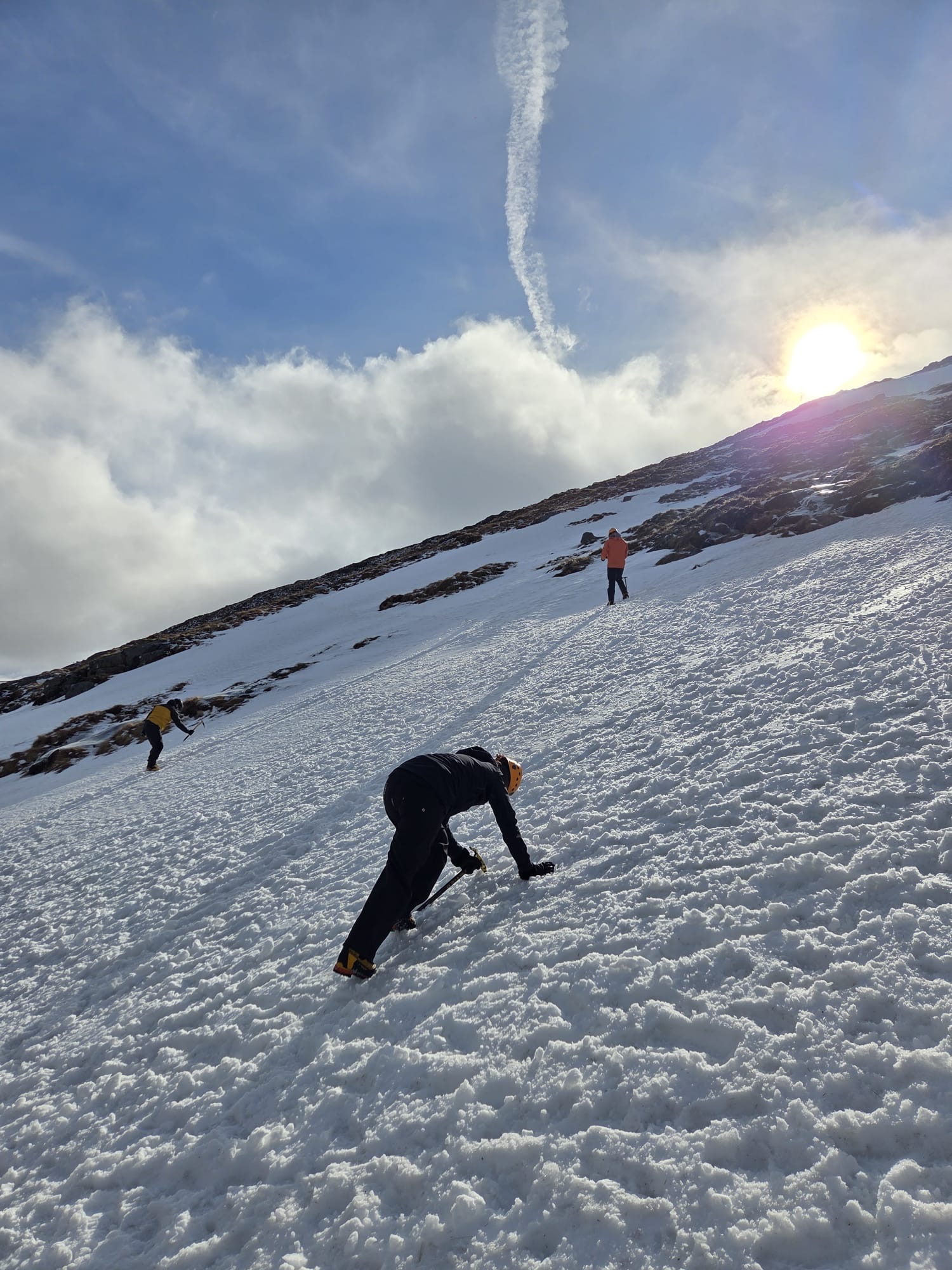
Pick ice that's low angle and forgiving, and spend real time there. Practice placing both tools, moving your feet with intent, and standing tall rather than hanging off your arms. Make each swing a little more deliberate. You want the movement to feel dull, because dull movement is what holds up under pressure.
Look, it can feel like a waste of a good day. It's not. Every clean placement on easy ice is a deposit in your confidence account. You'll need that balance the first time a steeper line puts your heart in your throat.
The pendulum and tool traverse drills
Two drills are worth building into every session. The pendulum is about letting your arm and body swing through a relaxed arc instead of muscling every placement. The tool traverse is about moving sideways while keeping your weight over your feet and letting the tools do the work. Both make your movement quieter, and quiet movement feels safer.
Keep the drills slow. Speed hides mistakes, and sloppy placements are what create fear in the first place. If you rush through a pendulum, you'll just learn to flail faster.
Fear doesn't leave because you feel ready. It leaves after you've done enough hard things to trust the next one.
Pro tip: Film nothing, but record your own voice after a session. Two sentences about what felt steady and what felt shaky will show you patterns your memory misses.
Breathing and Self-Talk on the Wall
Two of the cheapest tools you've got are your breath and your inner voice. Neither costs a penny, and both change how you move. The catch is that they only work while the pressure is on, not just at the bottom of the route.
Controlled breathing matters on ice more than people think. When you hold your breath to swing, your body tenses, your forearms fill up faster, and panic creeps in. Try a simple rule: breathe out on the swing, breathe in while the tool is set. Steady breathing is a cheap way to keep your head in the game.

Swapping the negative voice for a useful one
Your inner voice on ice usually sounds like "this is going to hurt" or "I'm not good enough for this." Those thoughts pull your body away from the ice before your tools even move. Replace them with short, specific instructions. "Tool high, hips in, kick the left foot" works far better than "don't fall."
Positive self-talk isn't about pretending you feel great. It's about giving your brain a job. A calm, boring instruction beats a pep talk you don't believe.
Visualizing the next two moves
Before you leave the belay, picture the next two moves in detail. Where does the tool go? Where do your feet land? What does a good placement feel like? This kind of mental rehearsal gives your brain a plan, and a plan is the best antidote to freezing.
Comparing Mental Techniques
Different tools suit different kinds of fear. Some calm your body fast, while others help you plan a hard section. Here's how the main options stack up on steep ice days, based on what we see with climbers on our courses.
Technique | Best For | Common Pitfall |
|---|---|---|
Controlled breathing | Calming your body fast during a pump or a sudden freeze | Forgetting it entirely until you're already gripping hard |
Visualization | Planning the next two moves before a hard section | Imagining a perfect climb you can't actually execute |
Breaking it down | Making a long or steep pitch feel manageable | Stopping too often, which drains momentum and nerve |
Positive self-talk | Swapping panic thoughts for simple, physical instructions | Using empty hype instead of specific cues |
The honest answer is you need all of them, just at different moments. Breathing for the freeze, visualization for the plan, breaking it down for the long haul. Use the tool that matches the problem you're actually having, not the one you read about last week.
Pro tip: Pick a reset point on every pitch, like a good rest stance or a bomber tool placement. Aim to reach it before you think about anything else, and treat it as the top for that section.
Building an Exposure Ladder
Exposure is how you teach your brain that scary things are survivable. The trick is to climb the ladder in small rungs. Jump too high and you'll reinforce the fear. Take small steps and each one becomes evidence that you can handle more.
Steps that actually work
Start with a short, low-angle section and climb it with a guide or a partner who knows what they're doing. Next, try the same section with a bit more angle or length. Only move up when the last step felt controlled, not just survivable. A simple test: could you describe what happened without your voice shaking?
Track your wins. After each session, jot down what you climbed, what felt hard, and what you handled better than last time. Confidence is built on evidence, and your notes hold the evidence your brain tends to forget.
When to stop and go down
Backing off is a skill, not a defeat. If your fear points at a real hazard, or your breathing won't settle after several attempts, downclimb carefully or lower off. Coming back the next day with fresh legs and a clear head beats forcing a bad move while your heart is pounding.
A common mistake is treating every retreat as failure. The climbers who progress fastest tend to retreat cleanly and often, then return to the ice with one specific goal.
Working With a Guide When Fear Takes Over
This is where a good guide earns their keep. A guide can read your body language faster than you can read your own, and they can spot the moment before you freeze. A lot of what we do on a course is just noticing that moment, then calmly giving you the next move.
Guided days also give you a safe place to face fear. Someone else is managing the anchors and the wider risk, so you can focus on the mental side. That freedom is why many climbers finally break through a plateau they'd been stuck on for seasons.

What to expect from an Intro to Winter Climbing course
Our Intro to Winter Climbing course mixes skills with confidence work. You'll practice tool placements, footwork, and movement on forgiving ice, then build toward steeper terrain at a pace that suits you. The mental side gets as much attention as the technical side, because they're tangled together from the first swing.
Why open courses on the Isle of Skye help
Some climbers prefer a more flexible setting. Our open courses on the Isle of Skye suit people who want focused sessions and a bit of freedom in how they plan their days. Whether you're working through fear or sharpening your movement, a guide's eye on your technique makes a real difference.
Mistakes That Keep Fear Alive
A few habits quietly keep fear in charge. None of them look dangerous, which is why they stick around. Spot them early and you'll save yourself a lot of frustration.
Avoiding every scary moment
Skipping steep ice because it scares you feels sensible. It isn't. Avoidance teaches your brain that the steep stuff really is unmanageable, so the next time you face it, the fear is louder. Small, planned exposure beats avoidance every time.
Chasing the top instead of the process
Some climbers fixate on reaching the top, so every placement becomes a test of whether they'll make it. Shift your focus to the next good swing. Process goals keep you present, and present climbers make better calls.
Pro tip: After every session, write down one thing you did well and one thing you'd change. Keep it to two lines. Reading your own notes over a few weeks is more convincing than any pep talk.
Frequently Asked Questions
Is it normal to be scared on ice climbing?
Yes. Almost everyone feels fear on steep ice at some point, including experienced climbers. What matters is whether the fear is pointing at a real hazard or just at exposure, and whether you can keep moving with a clear plan.
How do I stop freezing halfway up a pitch?
Breathe out slowly, shake out one arm at a time, and check your feet. Then pick the next single move and commit to it. Freezing usually comes from not having a clear next step, so give your brain one.
How long does it take to build confidence on ice?
It depends on how often you get out, but expect a few months of regular sessions before the shift feels obvious. A single good weekend rarely does it. Steady practice on easy ground, plus notes to track progress, gets you there faster.
Should I practice falling on ice?
Be careful here. Deliberate falls on steep ice carry real injury risk, so leave that work to controlled settings with proper protection and a qualified instructor. Put your early effort into movement and placements instead.
Can a guide help with fear on ice?
Yes. A guide can spot the warning signs before you do, set up practice terrain that fits your level, and give you clear cues when your head gets loud. Many climbers find a few guided days make their own decisions much clearer.
What's the difference between healthy caution and fear that holds you back?
Healthy caution makes you check things, slow down, or retreat for a clear reason. Fear that holds you back makes you avoid terrain you could handle, or stops you before you've even tried. If you can name the reason, it's caution. If you can't, it's probably fear.
I'd love to hear which moment on the ice still gets your heart racing, and what finally helped you get past it.

Comments