


History of Mountain Guiding in the Scottish Highlands
Ask most climbers who first started taking paying clients up Scotland's mountains and you'll get a shrug. The history of mountain guiding in the Scottish Highlands is patchy, but it's a good story. It starts with a handful of stubborn pioneers, a letter in a newspaper, and a lot of wet boots. I've spent plenty of days on Skye and Ben Nevis, and every route there has a name, a first ascent, and somebody's grumpy opinion attached. Here's how we got from those early days to the guided courses and expeditions running today.
Table of Contents
Quick Takeaways
Key Insight | Explanation |
|---|---|
Guiding grew from individuals | Professional guiding here began with a few named people, not big companies. Judge a guide by time on the hill, not by how polished the website looks. |
The club record is still useful | The Scottish Mountaineering Club was formed in 1889, and its journal has been published continuously since 1890. Old journals are still handy for checking route history. |
Early guidebooks were built in pieces | Guides grew out of members' reports, section by section. Use a current guidebook, then check recent conditions before you head out. |
Famous routes set the standard | Skye and Ben Nevis were the benchmarks, and post-war climbers proved other ranges could match them. Don't assume the famous lines are the only good ones. |
Skills courses came from shared standards | The national body for Scottish mountaineers has nearly 16,000 members as of 2022 and runs subsidised skills courses. Take a course before you chase a big objective. |
Old knowledge still matters on the hill | The classic Skye and Ben Nevis routes carry a century of lessons. Learn them with a guide before you try them solo. |
Where Guiding Started in Scotland
Local people knew the hills better than anyone, long before a single climber arrived with a rope and a plan. The idea of a professional mountain guide, someone paid to lead a client to the top and back down again, took a while to catch on. It grew out of that local knowledge, not out of an organised industry.

John Mackenzie and the first paid climbs
Local accounts describe John Mackenzie as the first professional mountain guide in Scotland. His first recorded guided climb came when he was just 14, and he kept guiding for around 50 years. Whatever the exact details, his story shows the shape of the job: one experienced person, one client, and a lot of judgment about weather, rock and nerves.
In practice, that's still the job. A good guide spends more time reading the hill than showing off technique. If your guide is spending the whole day talking about their own climbs, that's a red flag.
Why early guiding ran on reputation
Early guiding was a word-of-mouth business. People hired whoever got them up safely last time, and bad news travelled just as fast. There were no online reviews, so reputation moved through pub talk and club gossip.
The same thing still happens today. Our booking forms look a bit more polished, but the real test is still whether you come home happy and in one piece.
The Club Era and the SMC
Scottish climbing got organised in 1889, when the Scottish Mountaineering Club was formed. It came out of a set of letters in a newspaper, started by William W. Naismith. Older clubs existed, but they had local membership and fairly modest technical goals.
A letter that started a club
The founders weren't just keen walkers. Many of them already had Alpine experience and wanted to put those skills to use in their own country. That mix of ambition and experience is what pushed the club into serious exploration.
From the start, the club kept a record. The SMC Journal has been in continuous publication from 1890 to the present, which is a pretty remarkable run for a club of hill people.
Munro, guidebooks and a helpful grant
Hugh T. Munro described and classified the mountains, and his work fed straight into the club's guidebooks. William Douglas edited Volumes 2 to 10 of the Journal and pushed the guidebook material into print as soon as it was ready.
A grant from the Gaiter Club, a group of aristocrats and political leaders that has since disbanded, helped turn those sections into separate guides to the various mountain areas. Honestly, it's a reminder that money and connections have always shaped who got to explore the hills.
Old guidebooks are a record of what people were brave enough to write down. Treat them as a starting point, never as the whole plan.
Pro tip: Old club journals are a goldmine for route history. Read the description, then check current conditions and access before you commit to a line.
The Golden Age of Exploration
After the First World War, the club went quiet. Losses hit hard, and some of the pioneers were in poor health. The club was rebuilt when new members arrived, including a group of bold climbers from a junior mountaineering club, among them Bill MacKenzie, Bill Murray, Alex Small and Hamish Hamilton.
Patey, Brooker and the new lines
After the Second World War, exploratory climbing picked up speed. Bill Brooker and Tom Patey, along with their many associates, showed that other ranges could offer high quality climbs to rival the traditional stamping grounds of Skye and Ben Nevis. That was a big shift. It meant the best climbing in Scotland wasn't just in two famous places.
Technical advances and the final gaps
An Edinburgh group led by James Marshall and Robin Smith then pushed technical standards further. By the late 1960s, this second golden age was almost complete. Most traditional major lines on the major crags had been accounted for, with a few neglected corners of the Highlands still waiting for attention.
In practice, the lesson is simple. Nearly every line that looks new on a map has been climbed by someone, and a good guide will know who. Ask your guide about the history of a route, because that story often explains why the route is done the way it is.
Skye and Ben Nevis: Where Guiding Got Real
Skye and Ben Nevis were the proving grounds. They were the places where the climbing standards were set, and they're still where most of our work happens. If you want to understand Scottish mountaineering, you have to spend time on these hills.
Why the classic routes still matter
The classic routes are a kind of teaching tool. They show you how weather, rock and snow behave in the same place over and over again. A route you've climbed five times will teach you more about judgment than a route you've climbed once.
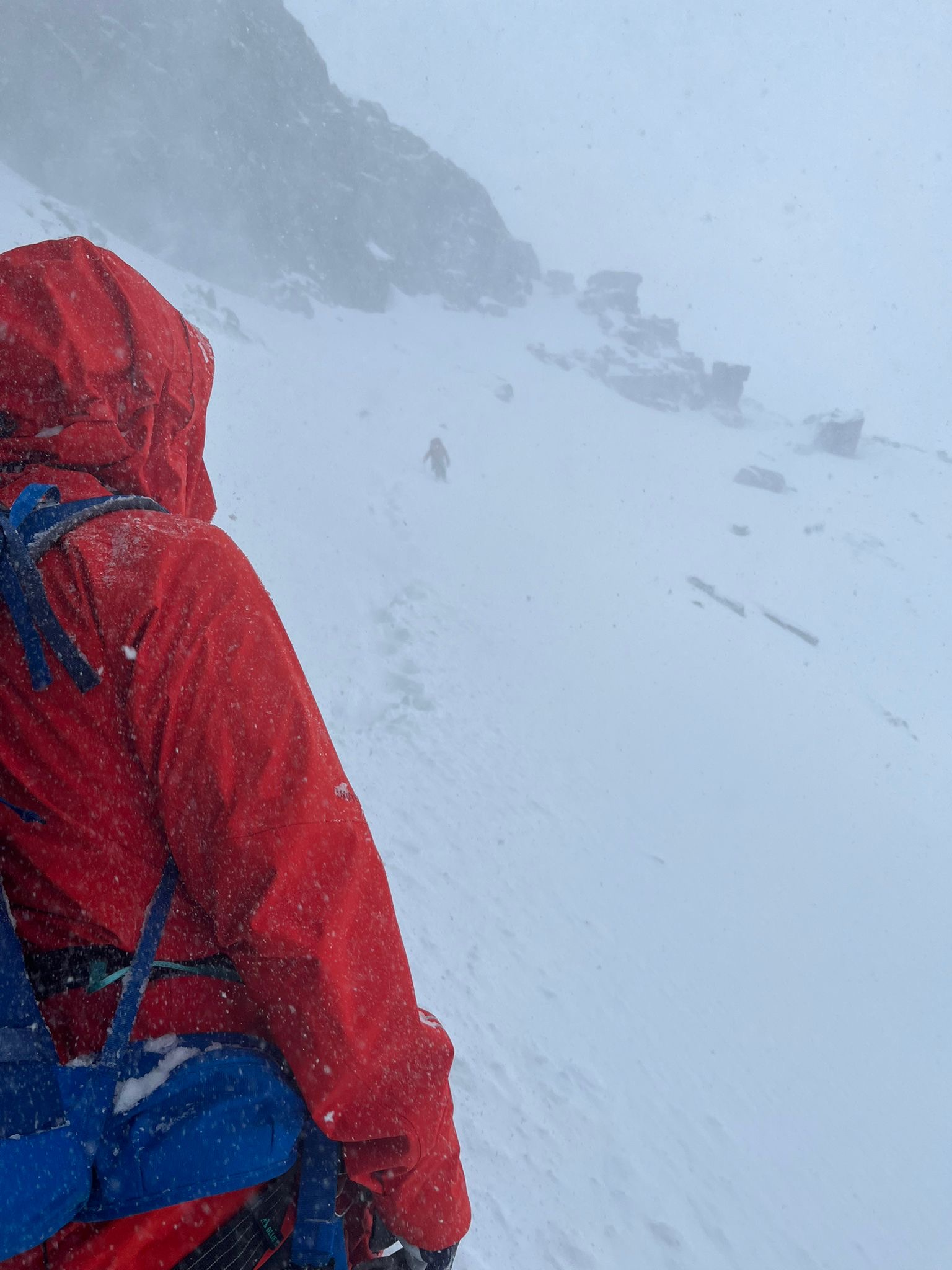
Don't rush into them, though. Many of these lines have a reputation for being straightforward in summer and quite different in winter, so respect the season you're in.
What a guided day looks like now
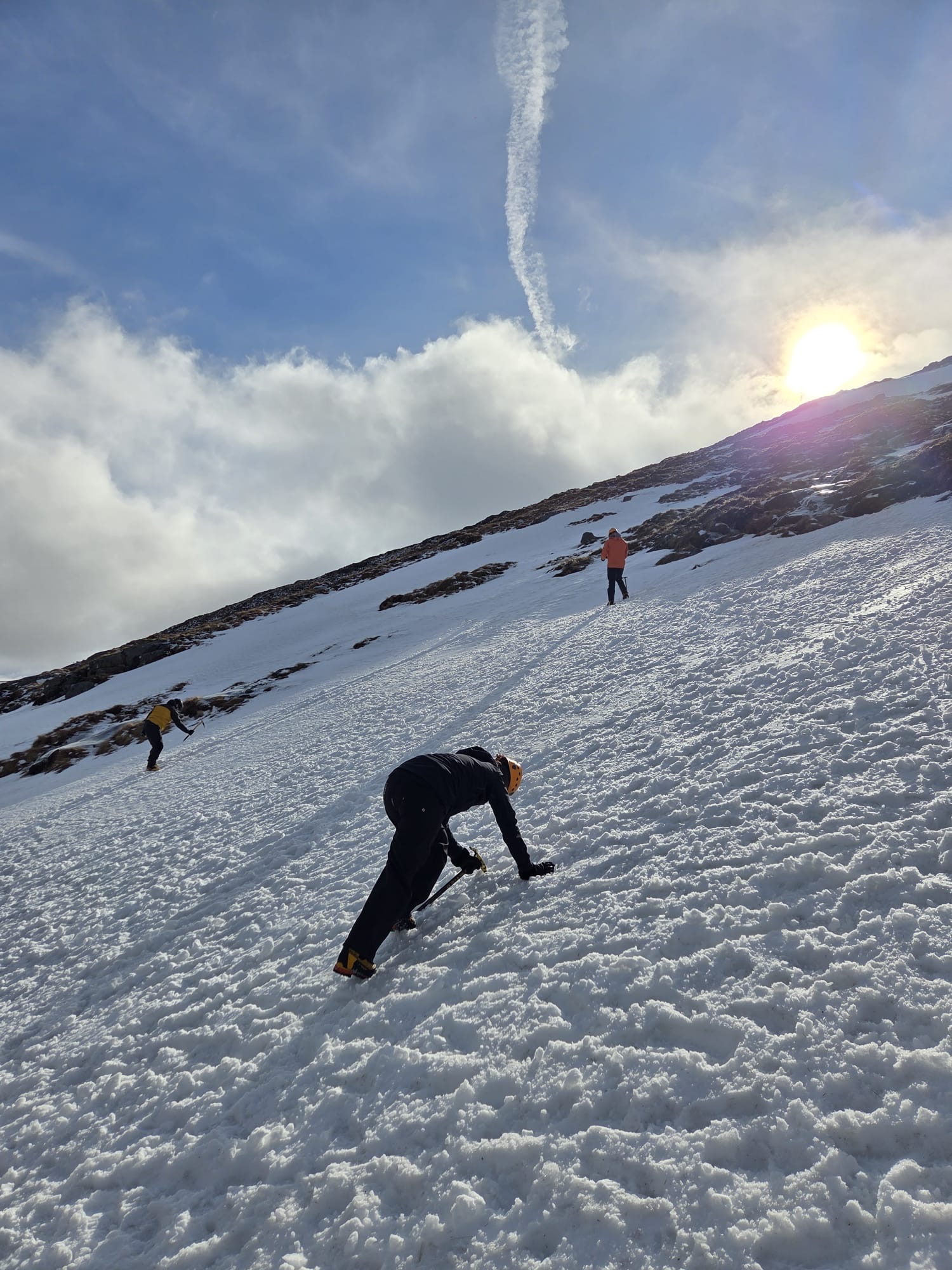
A good guided day starts well before the car park. We check the forecast, talk through the route, and agree on a turnaround time before anyone clips in. That plan is the bit most people skip when they go it alone.
On the hill, the guide's job is to keep the group moving, keep the rope work tidy, and make the calls nobody wants to make. Those calls are the heart of guiding, and they're the part that has barely changed since the first paid climbs.

How Guiding Has Changed Over Time
Guiding in Scotland has never been one thing. The way people were led up hills has shifted with the climbers, the gear and the expectations of clients. Here's a rough comparison of three approaches that show that shift.
Three ways people have been led up hills
Approach | How it worked | What it means for you today |
|---|---|---|
Club-led exploration (the SMC model) | Members shared discoveries through journals and guidebooks, and the group set the standard. | Club journals and guidebooks are still the best place to check route history before you go. |
The lone professional guide | One experienced guide, one client, and a lot of judgment made on the day. | Your guide's day-of decisions still matter more than any gear list. |
Structured courses and guided days | Skills are taught step by step, then applied on real routes with a guide watching. | Our courses on Skye and Ben Nevis build the skills you need before the big objectives. |
What the table doesn't show
The three approaches overlap more than the table suggests. Club members still guide each other, and professional guides still share what they've learned in the journals. The difference is mostly about who carries the risk and who makes the decisions.
Look, the best approach is the one that leaves you more capable at the end of the day. Whether that comes from a club, a guide or a course, the aim is the same.
Mountaineering Scotland and Safety Today
The national representative body for Scottish mountaineers started life in 1970 as the Mountaineering Council of Scotland, and it was formed alongside the Association of Scottish Climbing Clubs. Today it promotes safety and skills, campaigns for access, and has nearly 16,000 members as of 2022.
Where the national body fits in
The body offers advice for getting started, a quarterly magazine called The Scottish Mountaineer, and subsidised mountain skills courses. Members also get liability insurance and access to a network of mountaineering huts. Those perks matter more than people think when you're planning a trip on a budget.
A guide and a national body do different jobs. The body helps you build knowledge over time, while a guide helps you apply it on the day. The best plan is usually both.
Why skills still beat bravado
Plenty of people arrive on the hill keen but under-practised. The early clubs wrote careful reports because they knew the cost of getting it wrong. That same caution is what we teach in our winter skills and intro courses, starting with navigation, rope work, and reading snow and ice.
Pro tip: Before you book a big objective, spend a day on a skills course. Most mistakes on the hill come from small gaps in basic technique, not from a lack of courage.
Frequently Asked Questions
Who was the first professional mountain guide in Scotland?
Local accounts describe John Mackenzie as the first professional mountain guide in Scotland. He reportedly began guiding at 14 and kept going for around 50 years.
When was the Scottish Mountaineering Club founded?
The Scottish Mountaineering Club was formed in 1889, after a set of letters in a newspaper started by William W. Naismith. Its journal has been published continuously since 1890.
Do I need to know this history before I go climbing with a guide?
No, you don't need a history lesson to climb. But knowing where the routes came from helps you understand why the rules on the hill exist, and it makes the day more interesting.
Are the classic routes on Skye and Ben Nevis still climbed today?
Yes, and many of them are still popular. They remain excellent teaching routes, but winter conditions can change them quickly, so always check the current picture before you go.
Can I rely on an old guidebook alone?
No. Old guidebooks are a useful starting point, but rock, snow and access can all change. Pair any guidebook with current conditions and a plan you're comfortable with.
What's the best way to start learning mountain skills in Scotland today?
Start with a structured course. Options such as an intro to winter climbing, learning to rock climb or learning to ice climb build the basics before you take on bigger routes.
Have you ever hired a guide or learned a route from an old guidebook? I'd love to hear what it taught you, so share your experience below.

Comments