


From Fort William to Nepal: Building Expedition Foundations
Here's the thing most people get wrong about a Nepal mountaineering expedition. They figure the hard part starts when the plane touches down. Honestly, the real work starts months earlier, usually in a cold car park at the foot of Ben Nevis with numb fingers and a rope that won't coil properly.
We run our winter season out of Fort William, and we've watched plenty of strong, fit climbers struggle on their first big trip abroad. Not because they lacked fitness. Because they'd never spent real time being cold, slow, and thinking clearly in bad weather. That gap is what a Scottish winter fills, and it's the foundation this article is about.
Table of Contents
Quick Takeaways
Key Insight | Explanation |
|---|---|
Winter is a skills test, not a fitness test | Cold, wet, short-daylight days force you to move well when you're tired. That's the part that carries over to a Nepal mountaineering expedition. |
Navigation in cloud is non-negotiable | On Ben Nevis, the path can vanish under snow or cloud. Learn to trust your map and compass before you need them for real. |
Steady beats heroic | At altitude, small efforts leave you gasping. Find a pace you can hold all day, not a burst you can only hold for ten minutes. |
Drink on cold days too | Dry air and faster breathing dehydrate you quietly. Thirst shows up late, so sip regularly. |
Ice and rock technique builds efficient movement | Learning to ice climb and rock climb teaches precise footwork and a calm body position on steep, awkward ground. |
Test your kit on winter days, not on the trip | A wet glove or a failing headtorch in Scotland is a cheap lesson. The same problem on a high mountain is not. |
Why Fort William Winters Matter for Nepal
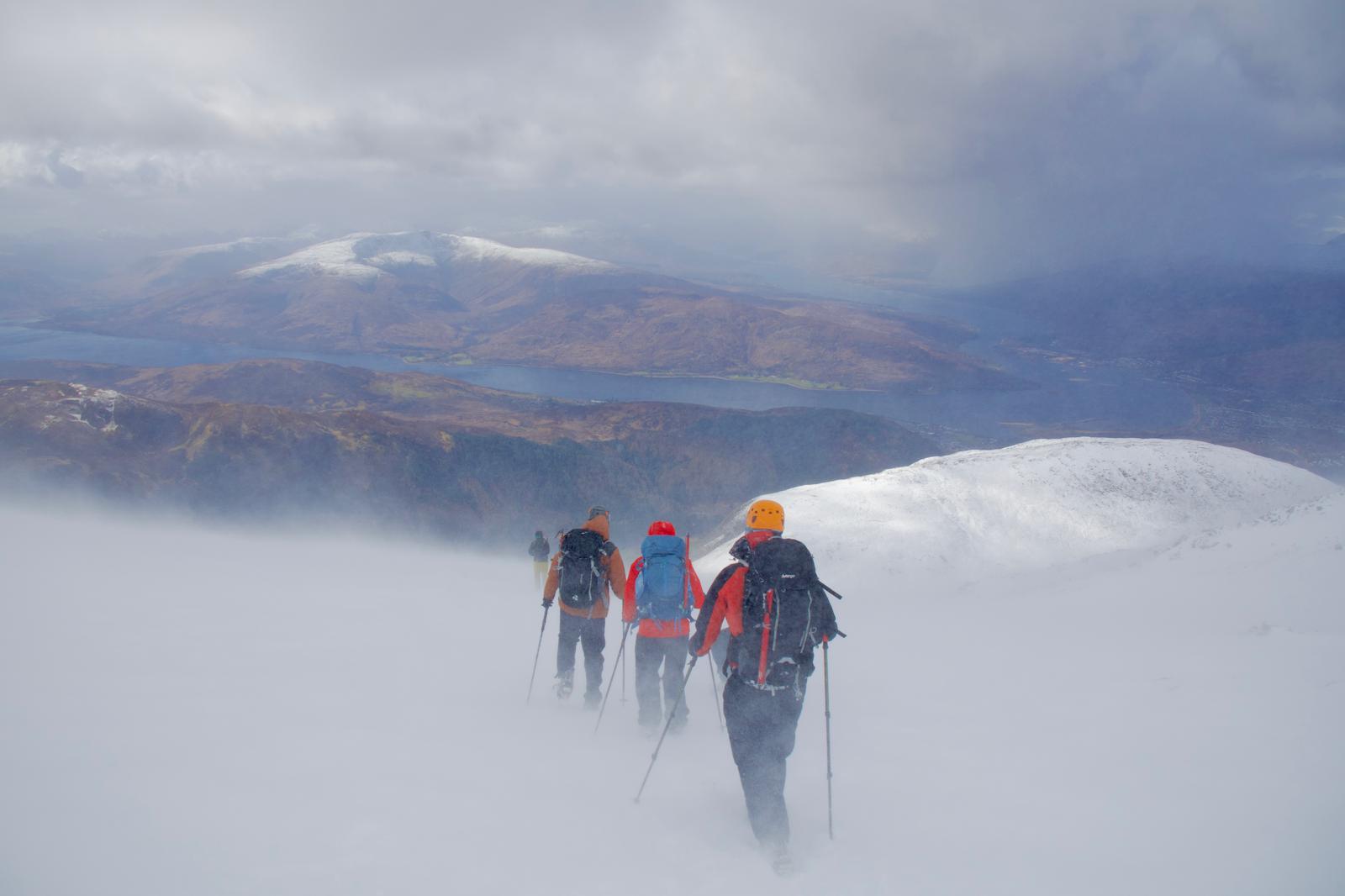
Fort William is a good place to get your head straight about mountains. It sits at the foot of Ben Nevis, and the ground around it gives you everything from steep snow gullies to frozen rock. You don't need to fly anywhere to get a real taste of hard, cold, serious mountain days.

Here's what I tell people on their first course. A Scottish winter isn't about big, dramatic summits. It's about the boring stuff: getting your layers right, eating on the move, and keeping your hands working when they want to quit.
That boring stuff is exactly what carries over to a Nepal mountaineering expedition. Once you're high up, nothing feels dramatic anymore. It's just a long day, a heavy pack, and a stack of small decisions you need to get right while your brain runs slow.
What a Scottish Winter Actually Asks of You
Cold changes everything. Gloves get soaked, ropes freeze stiff, and a five-minute stop turns into a proper shiver. Every small problem takes longer to fix than it should.
In practice, you learn to manage body heat before you feel cold. You open your jacket before you start sweating, swap gloves early, and eat before you're hungry. These cold-weather habits matter even more higher up, where a small mistake costs far more energy.
Why Scotland Works as a Stepping Stone
Scotland gives you short, sharp learning curves. A single winter day can throw cloud, wind, and a load of snow at you, and you'll still be back at the car by dark. That's a safe way to practise being uncomfortable.
Look, you won't get thin air here. What you do get is a reliable place to make the mistakes that are cheap near sea level and expensive higher up. Better to make them on a Saturday in Fort William than halfway up a mountain in Nepal.
Pro tip: After every winter day, jot down three things: what made you cold, what slowed you down, and what you forgot. Those notes become your own expedition checklist, and they beat any generic packing list you'll find online.
Ben Nevis Winter Skills That Carry Over
Ben Nevis is the big draw for most of our winter groups. On a clear day it's a fine objective. In cloud, it's a completely different mountain, where paths disappear and cairns hide under snow. That's where the real learning happens.
We spend a lot of time on Ben Nevis Winter Skills days because the mountain forces good habits. You can't lean on the obvious line when you can't see the line. You have to read the ground, check your bearings, and keep moving with a plan.
Navigation When the Cloud Drops
Map and compass work sounds dull until you're standing in a whiteout with no features in sight. The trick is to slow down before you need to. Take a bearing at a known point, count your paces on a leg, and note the time so you know how long you should be walking.
A common mistake is trusting your gut over the compass. People feel sure they're heading the right way, then find out ten minutes later that they're not. Check your position often, even when it feels obvious.
Moving Efficiently on Snow and Ice
Crampons and an ice axe change how you walk. Short, controlled steps use less energy than big strides, and they keep your balance when the surface is hard. It feels slow at first, but it saves a huge amount of effort across a full day.
The skill that carries straight over to a Nepal mountaineering expedition is the rest step. You straighten your back leg for a second on each step so your bones take the weight instead of your muscles.
Ice and Rock Technique You Can Trust
Technical skill is the bit people tend to underestimate. You might be fit enough to walk all day, but if your footwork is sloppy, you'll burn energy on every awkward move. Good technique makes the mountain feel smaller.
That's why we put ice climbing and rock climbing right next to the walking days. Each one teaches you to place your footwork with intent and keep your body calm and balanced. Those are the habits you'll lean on when the ground gets loose and steep.

Learning to Ice Climb Without Burning Out
Ice climbing looks like pure arm strength from the ground. It isn't. Most of the work comes from your legs and your posture, so the real lesson is to stand tall, keep your hips close to the ice, and let your feet do the job.
In practice, beginners tire out their forearms by gripping too hard. Relax your hands between swings, breathe out on each strike, and rest on your tools whenever you can. That's the same breathing and pacing you'll need on the approach to a big peak.
Rock Climbing on Skye as a Base
Skye is a brilliant place to learn rock climbing because the terrain runs from sheltered to properly committing. The rock tends to reward careful footwork more than muscle, which is exactly what you want to train. Our open courses on the Isle of Skye let you practise that without the pressure of a deadline.
Rock work builds trust in your feet, and trust in your feet keeps you calm on loose ground at altitude. You stop staring at every hold and start reading the rock as a whole. That shift takes a few seasons, so start early.
Breathing and Pacing for Long Days at Altitude
Here's something nobody tells you until you're gasping: the lungs aren't the enemy. Your pace is. Most people go too hard in the first hour, then spend the rest of the day paying for it.
Long days at altitude reward a steady rhythm. You're aiming for a pacing level you could hold for hours, not one that feels great for ten minutes. If you can't talk in short sentences while walking, you're probably going too fast.
Pacing for Long Days Out
Start with your longest training walk and build from there. Aim to finish your longest training day roughly an hour shorter than the longest walking day you expect on the expedition, and carry a pack close to your real weight.
Schedule your longest walks at least a couple of weeks before you travel. That gap gives your body time to recover, so you show up fresh rather than flat. Hill training on Ben Nevis paths does the job nicely, and you don't need a mountain abroad to get it.
Breath Control When You're Gasping
When your breathing spikes, slow it down on purpose. Try breathing in through your nose for a count of three, then out for a count of four, using your belly rather than your chest. It sounds too simple, but it works when you practise it on steep ground. That's the core of good breath control.
The point is to know the drill before you need it. If you've practised on a Scottish hill, you won't panic the first time the air feels thin. You'll just slow down, sip some water, and carry on.
Pro tip: Drink before you feel thirsty, and keep a bottle where you can reach it without stopping. Dry air and fast breathing dehydrate you quietly, and by the time your mouth is dry you're already behind.
Ski Touring and the Endurance Base
Ski touring is one of the best ways to build the kind of endurance a big expedition demands. You climb under your own power on skins, then ski back down with everything you carried up. The whole day is a workout, and you get to make route decisions as you go.
Our ski touring Scotland days are built around that loop. You're not racing anyone, and you're not stuck in a gym. You're learning to manage your energy across hours of effort in cold, changing conditions. That's a big part of what a Nepal mountaineering expedition really tests.
Cold days teach what no training plan can: how you behave when you're tired, wet, and a bit wrong about the weather.
Ski Touring Days as Endurance Work
Uphill skinning is steady, rhythmic work that suits a sustainable pace. Keep your effort even, and take small breaks before the strain builds. Short, frequent stops often beat one long rest because they keep your body temperature and energy more stable.
Layering matters just as much on tour. You'll heat up fast on the climb, then cool down in minutes when you stop. Learn to vent, add layers, and refuel before the cold bites.
Route Choice and Knowing When to Turn Back
Turning back is the hardest skill to learn, and ski touring teaches it well. Conditions change through the day, and the plan you made in the car park might not suit the snow you find. Honestly, the best tourers I know are the ones who turn around early and never make a big deal about it.
Build that habit now. On an expedition, the decision to descend is often the one that keeps everyone safe. Practise setting a clear turnaround time and sticking to it, even when the top looks close.
Comparing Three Ways to Prep for Nepal
Plenty of people ask whether a winter season in Scotland is really necessary. You can get fit in other ways, so it's worth comparing the options side by side. Each route builds something useful, and each leaves a gap.
The honest answer is that they work best together. Gym work and summer hill walking build a good base, but they don't teach you how to behave when the weather turns nasty. The table below breaks down what each approach does well and where it falls short.
Approach | What It Builds | Where It Falls Short |
|---|---|---|
Fort William winter season (Ben Nevis, ice, rock on Skye) | Cold-weather judgment, technical movement, navigation in poor visibility | Doesn't give you thin air or multi-day load carrying at altitude |
Summer hill walking in Scotland | Aerobic base, pacing, long days on your feet | Mild conditions and snow-free ground don't prepare you for winter technique |
Indoor climbing wall and gym work only | Strength, finger endurance, general fitness | Doesn't teach you to read weather, use a map, or decide when to turn back |
Read that table as a stack, not a menu. The winter season sits at the top because it's the only option that tests all three things at once. Summer walking and gym work are great support, but they don't replace the cold days.
If you can only fit one thing in, make it the winter days. You can fix a shaky squat in a few weeks, but you can't rush a season of learning how to behave in bad weather.
Common Mistakes Before You Fly Out
I've seen the same few mistakes over and over. None of them are exotic. They're just easy to slip into when you're excited about the trip and keen to get on with it.
The good news is they're all fixable before you leave. Fix them in Scotland, where the cost of getting it wrong is a cold afternoon and a bad story.
Skipping the Cold Days
The biggest one is treating winter as optional. People book a summer trip, do a few hill walks, and assume that's enough. The first cold, wet, dark day on the trip then comes as a shock, and that shock eats energy they needed for the climb.
Spend real time in bad weather before you go. Head out when the forecast looks grim and learn what your body does. You'll be far less surprised when it happens for real.
Buying Kit Before You Know What You Need
Expedition shops are full of shiny gear. Buying all of it before you've used it is a classic mistake. You end up with a pack that's too big, boots that don't fit your crampons, and gloves that fail in the first hour.
Use your winter days to test everything. Note what works, what annoys you, and what you wish you'd brought. Then buy only what your own experience tells you to buy. Overtired bodies also make bad gear choices, so build rest days into your season rather than stacking every weekend back to back.
Frequently Asked Questions
Do I need Scottish winter experience before a Nepal mountaineering expedition?
You don't strictly need it, but it helps a lot. Winter days build cold-weather habits and navigation skills that are hard to pick up on a trip abroad. If you've never been out in Scotland in winter, that's the gap to close first.
How early should I start preparing for a high altitude expedition?
Ideally you want a full winter season before you travel. Start with an intro course, then build up to longer days on Ben Nevis and ski touring. Give yourself at least a few months so the skills stick.
Is one winter skills course enough on its own?
One course is a good start, but it's not the finish line. Repeat days through the season let you practise the same skills in different conditions, and that's where real confidence comes from. Think of the first course as the door, not the house.
Can ski touring count as training for a Nepal mountaineering expedition?
Yes, and it's one of the better options. Ski touring builds endurance, pacing, and decision-making in one package. Pair it with navigation practice and you'll cover a lot of the ground that matters.
Do I need to be a strong rock climber before I start?
No. You don't need to be a strong climber to start learning. What helps most is a willingness to learn technique and move carefully, and our learn to rock climb sessions on the Isle of Skye are a good way to build that from scratch.
Tell me in the comments what surprised you most about your first winter season, because I'd love to hear how your own build-up went.
We would love your feedback and any insights you would share with others. What perspective would you add?


Comments