


Cuillin in Summer vs Winter: The Head Game on Isle of Skye
Ask anyone who's done both and they'll tell you the same thing. The Cuillin in summer and the Cuillin in winter are not the same mountain. Same ridges, same peaks, but your head runs a completely different game. In summer, Isle of Skye climbing feels friendly enough to make you careless. In winter, everything feels hard enough to make you freeze. Here's how that plays out on the hill, and what we actually work on with people before they step onto a winter ridge.
Table of Contents
Quick Takeaways
Key Insight | Explanation |
|---|---|
Summer's main danger is comfort | Long light and dry rock make you push your turnaround time and skip small checks. |
Winter's main danger is overload | Cold, wind and short days stack up fast, and your brain starts dropping decisions. |
Set turnaround times before you leave the car | Decide the time now, not on the ridge when you're tired and the sun has gone. |
Commitment feels heavier in winter | Retreating from a winter line is slower and colder, so make your bail decision earlier. |
Check your position every 20 to 30 minutes | In cloud, regular map checks stop small drifts from turning into a real problem. |
Practise winter skills on easier days first | When the basics feel automatic, your head has room for the hard calls on the big day. |
The Summer Head Game
Summer on the Cuillin looks like the easy option. The light lasts for ages, the rock is usually dry, and the walk in feels like a holiday. That's exactly the problem. When everything seems to be going your way, you stop checking. You stop asking whether the weather is still holding, whether your group is still warm, and whether you're still climbing at the level you think you are.
Honestly, I've seen more summer days go sideways from overconfidence than from anything the mountain threw at people. Nobody sets out to be reckless. They just get comfortable, and comfortable quietly turns into careless.
Long Light Pushes You Past Your Plan
In June you can start late, wander a bit, and still be walking out in the evening. That's a gift, but it's also a trap. Your brain sees the daylight and moves your turnaround time back an hour, then another hour. By the time you notice, the afternoon's gone and the easy descent has turned into a tired scramble on tired legs.
Here's what I actually do. I write the time we need to be off the main ridge on the back of my hand before we leave the car. It sounds silly. It works, because the number is already decided before the sunshine starts talking you out of it.
Dry Rock Breeds Overconfidence
Dry rock feels grippy, and grippy rock makes you trust your feet a bit too much. People who would never pull on a loose hold in the rain will happily trust a flake that looks solid in the sun. Rock climbing on Skye in summer is brilliant fun, but the rock can still be loose in places you'd least expect.
Pro tip: Before you commit to a move, tap the hold and listen. A hollow sound means you test it again, not that you hope for the best.
Winter Changes the Rules Before You Start
Winter doesn't ease you in. The moment you step off the path, the mountain is asking more of you. Cold fingers fumble knots, wind steals your concentration, and getting a spare layer on can take five minutes. Everything takes longer, so every decision costs more energy.
That's the big mental shift. In summer you're managing a route. In winter you're managing a whole day, and the route is just one part of it.
The Clock Runs Faster in Winter
Winter days in Scotland are short, and the mountains don't care about your schedule. Light fades earlier than you expect, and a route that felt doable at noon can turn into a headtorch job before you're off the descent. The brain doesn't handle that squeeze well. It starts to rush, skip small checks, and make calls in a hurry.
A common mistake is planning the route to the summit and forgetting the walk back. The descent is where tired people make bad decisions. Plan your timings for the way down first, then work backwards to the start.
Reading Snow and Ice Takes Nerve
In summer, the rock tells you a lot. In winter, the ground can change every few metres. Firm snow in the morning can turn soft by the afternoon, and a patch of ice hidden under a dusting of powder can be the most important thing you meet all day. Learning to read those surfaces takes time, and the uncertainty itself wears you down.
Summer forgives the small mistakes. Winter keeps score.
Fear, Commitment and the Point of No Return
Fear is normal on the Cuillin. Anyone who says they never feel it is either not being honest or not paying attention. The real question is what fear does to your decisions, and that changes a lot between seasons.
In summer, fear usually shows up as a bit of nerves on exposed ground, and you can often back off without much fuss. In winter, the same nerves can tip into a full freeze, especially when the terrain is steep and the snow is hard.
Why Commitment Feels Heavier in Winter
Once you're committed to a winter line, the escape routes are slower, colder and harder to find. A summer retreat might mean a few awkward moves and a walk down. A winter retreat can mean kicking steps back down slopes you thought were fine on the way up, with numb hands and a wind that never quite stops.
So the commitment point moves earlier. In practice, that means asking "would I start this now?" before the first step, not halfway up when changing your mind costs a lot.
Turning Around Is a Skill, Not a Failure
Plenty of people feel like turning back means they've failed. That feeling is one of the biggest reasons groups push into conditions they shouldn't. Turning round early is what experienced people do all the time. It's the choice that gets you home to climb again.
Pro tip: Agree on one simple go or no go check at the bottom of the route, then repeat it at the first major decision point. Two small checks beat one heroic decision made in the wind.
Navigation and Decision Fatigue
This is where a lot of people underestimate the Cuillin. On a clear summer day the ridges look obvious. Pick a line, follow the rock, done. Cloud and winter change that completely, and the mental load rises fast.
Decision fatigue is real. After a few hours of cold, wind and constant small choices, your brain starts running on autopilot. You stop checking the map, you follow the person in front, and you assume the route is still the one you planned.
Whiteout Brain Is Real
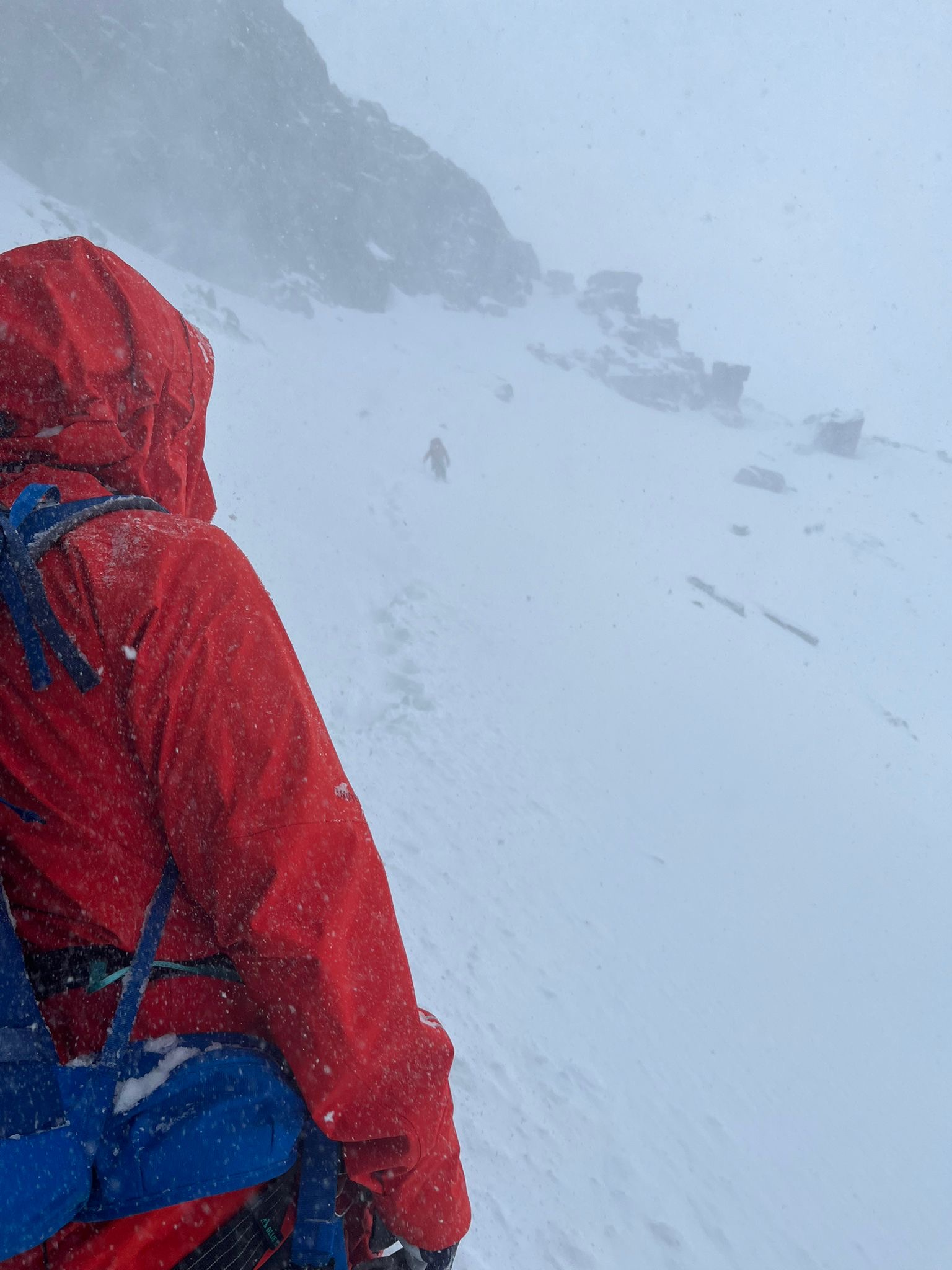
When visibility drops to a few metres, the world shrinks to your boots and the next marker you can see. Your sense of direction gets fuzzy, and small slopes start feeling like big ones. People describe it as being inside a bubble, and that's an honest description. You stop thinking clearly about where you are, and you start guessing.

The fix is boring. Check your position at regular intervals, not only when you're lost. If you can't point to where you are on the map within a few seconds, you've already drifted too far from your plan.
Simple Plans Beat Clever Ones
Clever plans fall apart in the cold. A route with six variations, three bail-outs and a complicated timing sheet looks smart on paper, but nobody can hold that in their head at two in the afternoon in a gale. Keep it to one main line, one alternative and one clear turnaround time. Write it down, and make sure everyone can say it back to you.
Summer vs Winter: How the Cuillin Compares
Sometimes it helps to see the differences side by side. The table below sketches how the mental game usually plays out for the same group on a summer rock day and a winter mixed day. It's a generalisation, but it matches what we see on the hill.
Factor | Summer rock climbing | Winter mixed climbing |
|---|---|---|
Main mental trap | Overconfidence and pushing on too long | Overload and freezing up |
Time pressure | Feels loose, but sneaks up on you | Tight from the start, with little slack |
Speed of decisions | Relaxed, and you can pause to think | Quicker and colder, with every pause costing warmth |
Cost of a wrong call | Usually a tough scramble or a long walk out | Can mean a serious retreat in poor conditions |
Best defence | Set a turnaround time and stick to it | Plan the descent first and agree bail points early |
Reading the Table Honestly
The table looks neat, but the real lesson sits in the middle rows. Summer makes time pressure feel soft, which is why people run late. Winter makes every decision expensive, which is why people freeze. Both lead to bad calls, just from opposite directions.
What I want people to take away is that the core skills don't change much. Route reading, timing and communication matter in both seasons. What changes is how loudly your brain argues with you.
Mixed Days Are the Trap
The most dangerous days aren't the clearly good ones or the clearly bad ones. They're the mixed days, when the forecast looks decent and the morning feels fine. You commit on a good start, then the weather turns and you're stuck with a plan designed for a different day. Treat mixed days as winter days until proven otherwise.
Group Dynamics and the Quiet One
Most of the trouble I've seen in groups isn't about one person being a weak climber. It's about a group that stopped talking. On the Cuillin, where conditions shift and the terrain is serious, communication is a safety tool, not a nice extra.
Groups fall into patterns. Someone sets the pace, someone follows, and the person at the back often has the most important information but says the least. The mental load is different in summer and winter, and that changes how the group behaves.
The Quiet One Is Usually the Problem
The quietest person in the group is often the one who's cold, scared or unsure. In summer they might just be tired. In winter they might be losing feeling in their fingers and not want to slow everyone down. Build a habit where everyone reports one thing at each stop: how they feel, what they can see, and whether they're warm enough.
A common mistake is assuming silence means everything is fine. Silence on a winter ridge usually means someone is working hard to keep up, and that's when mistakes slip in.
Agree on Bail Points Together
Set your bail points before you leave the car, and make sure everyone knows them. If the decision to turn round belongs only to the leader, the rest of the group feels pressure to keep going. If the plan is shared, anyone can call a stop without it turning into a debate.
If nobody in your group can tell you the turnaround time without checking, the group doesn't have one yet. Fix that before the first step.
Building Confidence Step by Step
The good news is that the mental side is trainable. You don't become calm on the Cuillin through sheer willpower. You get there by practising the small stuff until it stops taking up brain space, so the big day has room for the hard decisions.
Based in Fort William, we see the same progression again and again. People who build up through structured days tend to handle bigger objectives with a lot less drama.
Start With Winter Skills Days
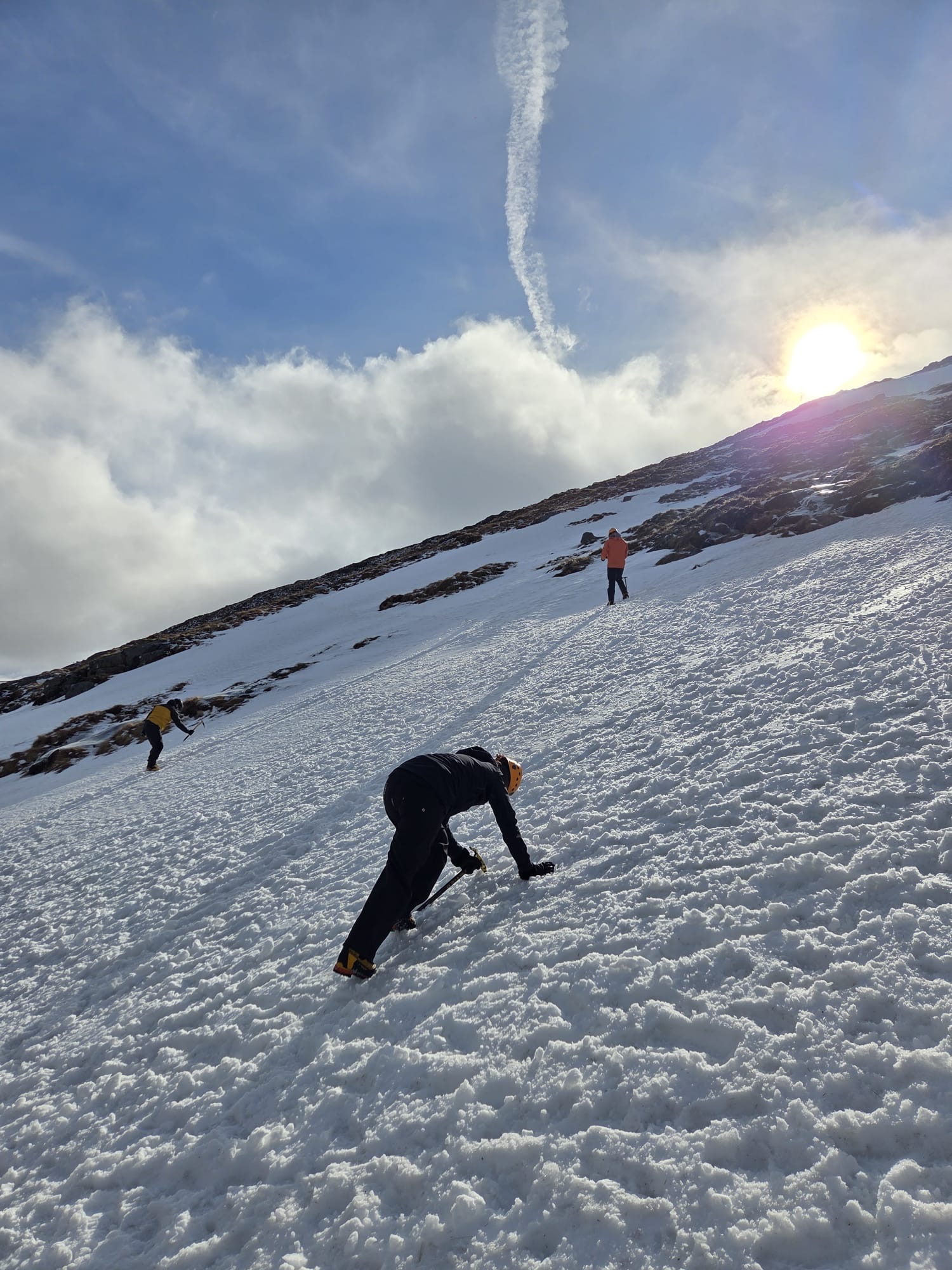
Before you go anywhere serious in winter, spend time on the basics. Stopping a slide with an ice axe, fitting crampons properly and reading snow should feel boringly normal. When they're automatic, your head is free to read the weather, the terrain and the group. Our winter skills courses are built around exactly that kind of progression, from first steps on snow to more complex ground.

Open Courses on Skye as a Bridge
If you're coming from summer rock and want to understand what the Cuillin feels like in colder months, an open course on the Isle of Skye is a good middle step. You get the terrain, the company and proper feedback without carrying the whole responsibility for the day yourself. It's a low-stakes way to find out how your head behaves before you're the one making every call.
Pro tip: Keep a short debrief after every day out. Ask one question: which decision did I make because I was tired, not because it was right? Write the answer down. You'll spot your pattern faster than you think.
Frequently Asked Questions
Is Cuillin winter climbing much harder than summer?
Not always harder in technical terms, but harder to manage. The skills are different, the margins are smaller, and the mental load is heavier. Plenty of people find a winter day tougher than a summer route they could comfortably handle.
How long should I build up before attempting winter on the Cuillin?
There's no fixed number of days. Work through winter skills, then a few easier days with a guide, then bigger objectives. Be honest with yourself about how you felt after each trip, because that tells you more than any checklist.
Do I need to be a strong rock climber to enjoy Skye?
Not necessarily. Rock climbing on Skye covers a wide range, and an experienced guide can match the day to your level. Being honest about your comfort on exposed ground matters more than what grade you think you're climbing.
What's the biggest mistake people make on summer days?
Letting the long daylight set the plan. Choose a turnaround time before you start, write it down, and treat it as fixed even when the evening still looks bright.
Can I learn winter skills by myself?
You can read about them, but learning on steep snow alone is a bad idea. Mistakes in winter are much harder to undo, so practise with a qualified guide or on a structured course first.
Have you noticed your head change between a summer day and a winter day on the Cuillin, and what did you do about it?

Comments