


Mountain Guide Scotland: Planning a Safe Winter Ascent
Look, the forecast says light winds and the snow looks fine from the car park. That's exactly when a lot of people get into trouble on a Scottish winter day. A qualified mountain guide in Scotland plans the route long before boots hit the snow, and most of that planning is unglamorous. It's reading wind, snow, daylight and the people you're with. If you're looking for a mountain guide Scotland can rely on, whether on Ben Nevis or over on Skye, here's what goes through our heads before we leave the car.
Table of Contents
Quick Takeaways
Key Insight | Explanation |
|---|---|
Read the wind first | Wind direction and strength show where snow is piling up. Check the far side of ridges and gullies before you commit. |
A grade is a starting point | A Grade I or II label describes typical conditions, not the ones you'll find after a rough freeze-thaw week. |
Set your turnaround time in the car park | Pick a time and a point where you'll turn back, and say it out loud before you start walking. |
Know where your bailout leaves the main line | An escape route you've only seen on a map is a theory. One you've walked before is a plan. |
Plan for the weakest person in the group | The slowest or least confident member sets the pace and the decisions. Build the day around them. |
Carry kit you'll actually use | Rope and protection earn their weight on steep, exposed ground. Extra gear on easy ground just slows you down. |
Plan the descent as carefully as the climb | Plenty of trouble starts on the way down, when people are tired, cold and watching the light fade. |
Start With the Forecast, Not the Map
The first thing I open isn't the map. It's the mountain forecast, and I read it twice. Scottish winter can flip in an afternoon, and a calm morning at the car park can turn into a gale on the top. So I'm always reading the forecast for the height of the summit, not the one for the nearest town.

Wind Is the Number One Thing to Read
Wind does more damage to a winter day than most people realise. It lifts snow off exposed tops and dumps it into sheltered bowls and gullies. Those deposits can look smooth and innocent, but they're often the slab that breaks under a party's weight. If the wind has been blowing hard from one direction, the slopes on the far side of the ridge are where I slow down and look properly.
In practice, I'm asking three questions. How strong was the wind overnight? Has it changed direction? Is there fresh snow sitting on top of an older crust? The answers change the route more than any grade in a guidebook.
Freeze-Thaw and What It Does to Snow
A thaw followed by a hard freeze leaves a crust that's a nightmare to kick steps into. A cornice that looks solid from below can be hollow underneath, and ice that formed during a melt can be brittle rather than the firm, workable stuff you want. None of this shows up in a route description written on a good day.
My rule is simple. If the temperature has swung wildly in the last two days, I expect the surface to behave differently from what the guidebook says. Plan for the snow you've got, not the snow in the photos.
Matching the Route to the Snow You Actually Have
A route description tells you what the mountain looks like in good conditions. It doesn't tell you what's on it today. That gap is where a lot of trouble starts, and closing it before we leave the car is a big part of my job.
A Grade Is a Starting Point, Not a Promise
Scottish winter grades give you a rough idea of difficulty, but they assume a certain amount of snow and ice. A Grade I or II route with bare ice and no snow can feel nothing like the one you read about. Equally, a line that looks steep in a photo can turn out easy if it's plastered in consolidated snow. The grade tells you where to start thinking, not where to stop.
On a day with a client group, I'd rather keep everyone on sensible ground and build confidence than push onto harder terrain because the grade looked right on paper.
Why Curved Ridge Needs a Different Mindset
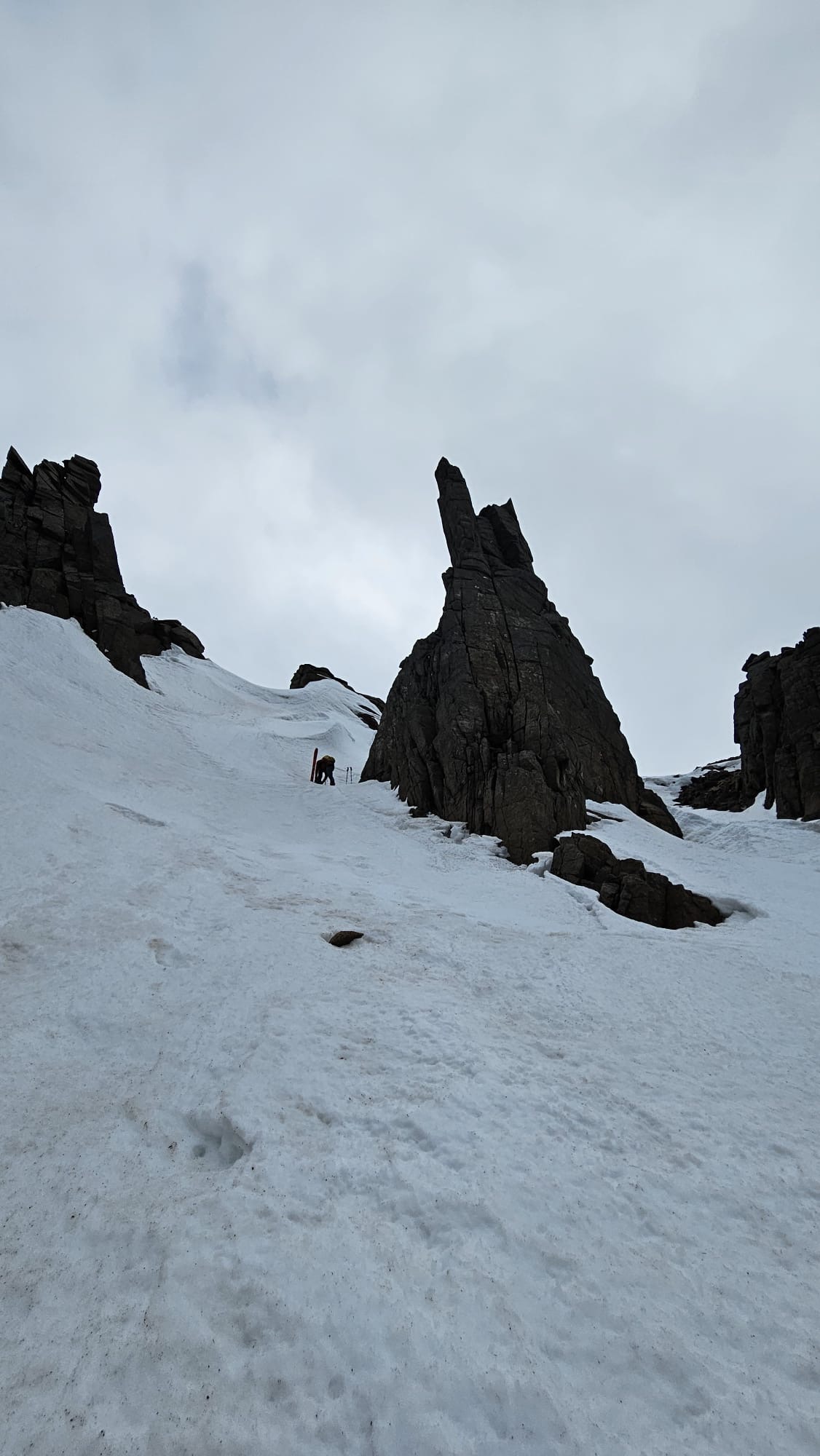
Curved Ridge on Ben Nevis is a good example. It's clearly a harder proposition than many of the easier lines you might pair with it in a single day, and you need to be comfortable on that kind of ground before you commit. Solo or roped, the question I ask is simple: could everyone in this party move safely on this exact ground if the snow was a bit worse than forecast?
Linking several routes into one trip sounds efficient. But you end up carrying the risk of every route, plus the time and tiredness spent moving between them, and that's where people start making mistakes. Honestly, I'd rather do one route well than three badly.
Pro tip: Before you commit, ask the group to describe where the crux is and what they'd do if it were iced over. If nobody has a plan for that, you're not ready for the route yet.
Choosing the Bailout Before You Need It
Every route has a point of no return, and a good plan names it before anyone is cold, wet and fed up. I want to know where we can leave the main line, which way the escape runs, and whether we'd still find it if visibility dropped to a few metres.
Set Your Turnaround Time in the Car Park
Pick a time and a height at which we turn around, and say it out loud before you start. Once you're on the hill, you'll want to push on because the top looks close. The turnaround time is your permission slip to stop, and it's the most useful habit I know.
If we're behind schedule by lunchtime, I'd rather take a smaller objective than squeeze the summit into a short window of light. Winter daylight in Scotland is limited, and a descent in the dark over unfamiliar ground is a real risk you don't need to take.
Escape Lines and Where They Start
An escape line is a way off the route that's shorter or less committing than the main objective. On Ben Nevis, I spend time before the day working out where these leave the main line, what they look like under snow, and whether they're steep or gully-filled. Knowing that before you need it is the difference between a calm retreat and a frantic guess.
Write the turnaround time and the bailout point on a card and keep it in your pocket. In the moment, a decision you made on the ground in daylight beats a clever idea you come up with in whiteout.
Team Strength and Who Actually Leads
The strongest person in the group isn't the one who sets the pace. The weakest link is, and a smart plan starts there. I ask everyone honestly what they've done, what they haven't, and where they feel uneasy on snow.
Solo Versus Roped Party
Going solo on winter ground is a different game. There's no partner to catch you, and every decision sits with you. Experienced winter walkers can sometimes solo moderate ground with confidence, but that confidence comes from years of time on snow and a feel for how it behaves. A one-day course gives you the basics. It doesn't give you that feel.

A roped party brings its own problems, like slower progress and the faff of managing rope on steep ground. Roping up doesn't make a route safe, but it can give you a margin on the steeper or more exposed sections. The question is whether that margin is needed for this team on this day.
An Honest Experience Check Before the Day
I ask a few plain questions. When did you last walk through deep snow with a full pack? Have you self-arrested on a real slope, not just a practice patch? Can you navigate with a map and compass in cloud? The answers rarely match what people assume about themselves. A short, honest chat in the car park beats a long apology halfway up the hill.
If you're new to winter, my advice is to do some winter walking first, then build up with experienced company before you lead anything yourself.
The route you can descend in poor visibility is the route you can actually climb.
Rope, Rack and the Kit Decision
Kit is where I see people overthink. Helmet, crampons and an axe are essential for most winter ground. Rope and protection are a judgement call that depends on the route, the team and the snow on the day.
When a Rope Earns Its Weight
A rope makes sense where a slip would be serious and there's exposure below. It also helps when someone in the team is less confident on steep snow or ice. I'd rather carry the weight and not need it than need it and not have it.
But I'm not going to drag a full rack up a straightforward slope with two people who can walk it comfortably. Some experienced climbers choose to go without a rope on ground they know well, and that's a legitimate view. It only works if you genuinely know the route and the snow.
Self-Arrest and Crampon Basics Come First
Before any kit debate, check the basics. Can everyone self-arrest on a slope you trust? Can they walk in crampons without catching one foot on the other? Are the straps and buckles sorted, and does everyone know how to fit the axe leash? Most small problems on the hill come from gear that isn't set up properly or skills that haven't been practised.
Honestly, if the team can't do the basics, no amount of extra gear will save the day.
Planning the Descent Before the Ascent
Most of my nerves are on the way down. You're tired, the light is going, and the route you climbed in confident daylight suddenly looks different. So I plan the descent before the ascent starts, not as an afterthought at the top.
Navigation When Visibility Drops
Cloud can wipe out every landmark in minutes. On the way up, I note compass bearings for the key legs and check the map for handrails like streams, ridgelines and walls. At the top, I take the bearing for the descent and check it against the map before anyone moves.
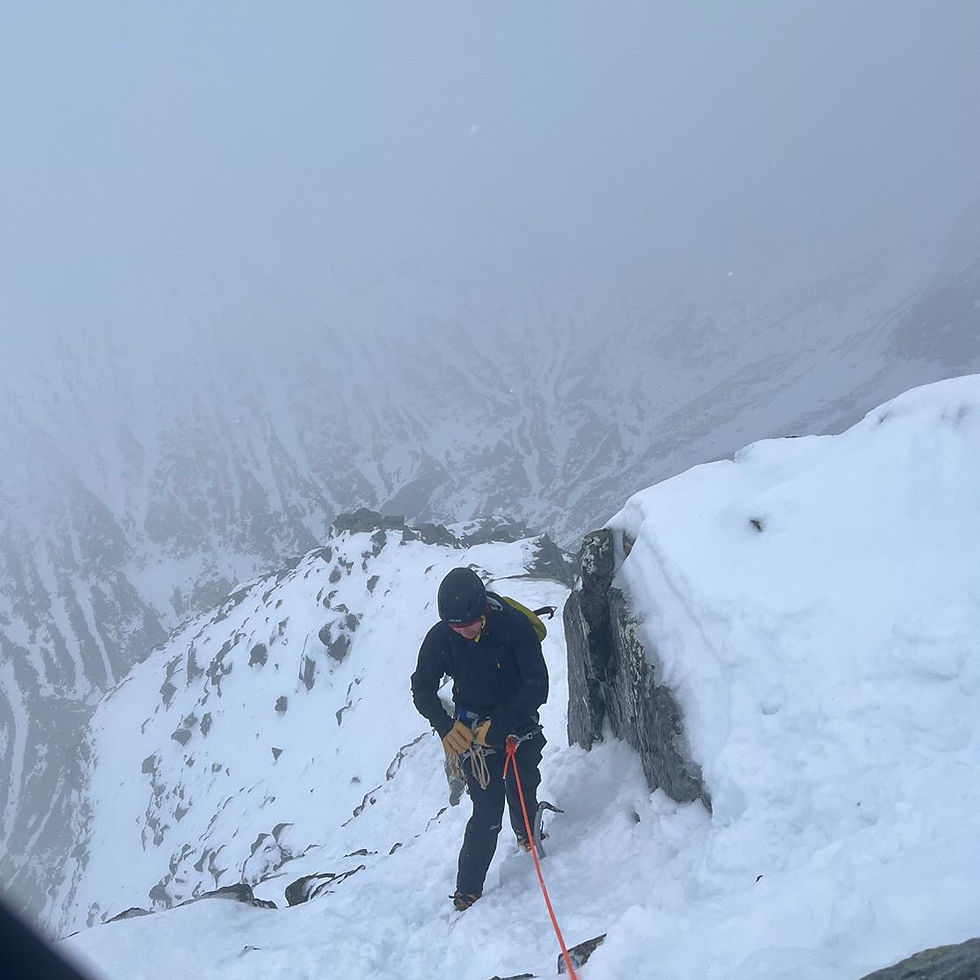
A GPS track is useful, but it's a backup, not the whole plan. Batteries drain quickly in the cold, and screens are hard to use with gloves on. Paper and compass still do the heavy lifting.
Timing the Light Properly
Work backwards from sunset. Allow time for the walk out, then add a buffer for the slow stuff, like rope work on steep ground or a tired team member who needs a rest. If you're not down by a sensible time, you're on unfamiliar ground in the dark, and that's when small mistakes stack up.
Pro tip: Set a reminder on your watch for the time you need to be moving down. It sounds over the top until the summit feels like it's just over the next rise.
Comparing Three Planning Approaches
There isn't one right way to plan a winter day. Here are three approaches I see people use, and where each one tends to go wrong.
Planning approach | How it works | Where it goes wrong |
|---|---|---|
Objective first | Pick the summit or line, then work out how to get there. | Pushes the team toward ground the snow doesn't support, and turnaround decisions get much harder. |
Conditions first | Read the forecast and the snow, then choose a route that suits what's actually there. | Can feel like backing off, and only works if the team is honest about what they can handle. |
Team first | Start with the least experienced member's ability, then choose routes and kit to match. | Can feel too cautious on a good day, but it's the most reliable way to get everyone home. |
My approach is conditions first, with team limits agreed in advance. A common mistake is letting the best day in the forecast decide the route. That window gets stuck in your head, and you commit before you've checked what the snow is doing.
Objective-first trips are where I've seen people end up with the wrong gear, the wrong timing and a group that's too tired to think clearly. Ben Nevis route planning works best when the route follows the conditions, not the other way round.
Frequently Asked Questions
Can I learn to plan a winter route without a guide?
Yes, but do it in stages. Take a winter skills course, go out with experienced friends, and practise navigation and snow assessment on easier ground before you lead anything. A guide can speed that process up a lot, especially for reading conditions you haven't seen before.
Do I always need a rope on Grade I ground?
Not always. It depends on steepness, exposure, the snow, and how experienced the team is. Carry a rope where a slip would be serious, and leave it at home where everyone can move comfortably on the ground.
When is the best time for guided winter climbing in Scotland?
The winter season usually runs from around the turn of the year into spring, but conditions can change a lot from one week to the next. Flexibility matters more than sticking to a calendar date.
Is Ben Nevis a good first winter mountain?
It can be, with the right planning and the right team. It's big, exposed and can change quickly, so many people build up on easier ground before tackling it. Going with a guide is a sensible way to learn the mountain.
What should we do if we get caught in whiteout?
Stop, reassess, and use the bearings and bailout plan you set before the day. Don't keep pushing into ground you don't know. Slowing down in cloud is almost always the right call.
How do I book a guided day with Atlas Mountaineering?
Get in touch through our website and tell us your experience, your goals and the dates you're thinking about. We'll talk through the conditions, the route options and the kit you'll need before anything is confirmed.
I'd love to hear how you plan your own winter days, so tell us what's worked for you and what's caught you out.


Comments