


Ski Touring Scotland: Terrain Reading Skills for Safer Days
Here's the thing about ski touring in Scotland. The hill doesn't care that you've got skins on your skis and a bit of confidence in your legs. Most people who get caught out on a tour weren't unfit or unlucky. They just misread the slope. Ski touring is one of the best ways to learn terrain reading, because every climb and every descent forces you to make a call. This article covers the skills it builds, what that looks like on real hills, and how to start building them without taking silly risks.
Table of Contents
Quick Takeaways
Key Insight | Explanation |
|---|---|
Slope angle matters more than the view | Check the angle of the slope you're on and the one you're about to cross. Don't just go by how nice it looks. |
Wind writes the snowpack | Lee sides of ridges load up with snow. They often look smooth and safe, which is exactly why they catch people. |
Route choice starts at home | Trace your line on the map the night before, mark the tricky bits, and pick a bailout before you leave the car park. |
Terrain traps hide in plain sight | Gullies, convex rollovers and flat-looking basins can turn a small problem into a big one. |
The snow gives you clues | Cracking, whumpfing and sudden changes in surface texture are signals to slow down and reassess. |
Set a turnaround time | Decide your stop point before you start climbing. Turning back is much easier when it was already part of the plan. |
Build judgement on easy ground | Practise reading and calling terrain on low-consequence slopes before you move up to steeper, more committing lines. |
Why Terrain Reading Matters More on Skis
Walking up a hill in winter is one thing. Touring up it and then skiing back down changes how you see everything. On foot you can stop, step back and rethink a line. On skis you're committed the moment you start the skin track. That's why ski touring is such a good classroom for terrain reading. It makes you decide early and it won't let you pretend you didn't see the slope above you.

I've watched plenty of strong walkers get caught out on their first tour. Their fitness was fine. Their boots were fine. What was missing was the habit of asking, every few minutes, what that slope will do if it lets go. Walking winter routes teaches you the mountain. Ski touring teaches you the mountain with the clock running.
Skis Change What You Notice
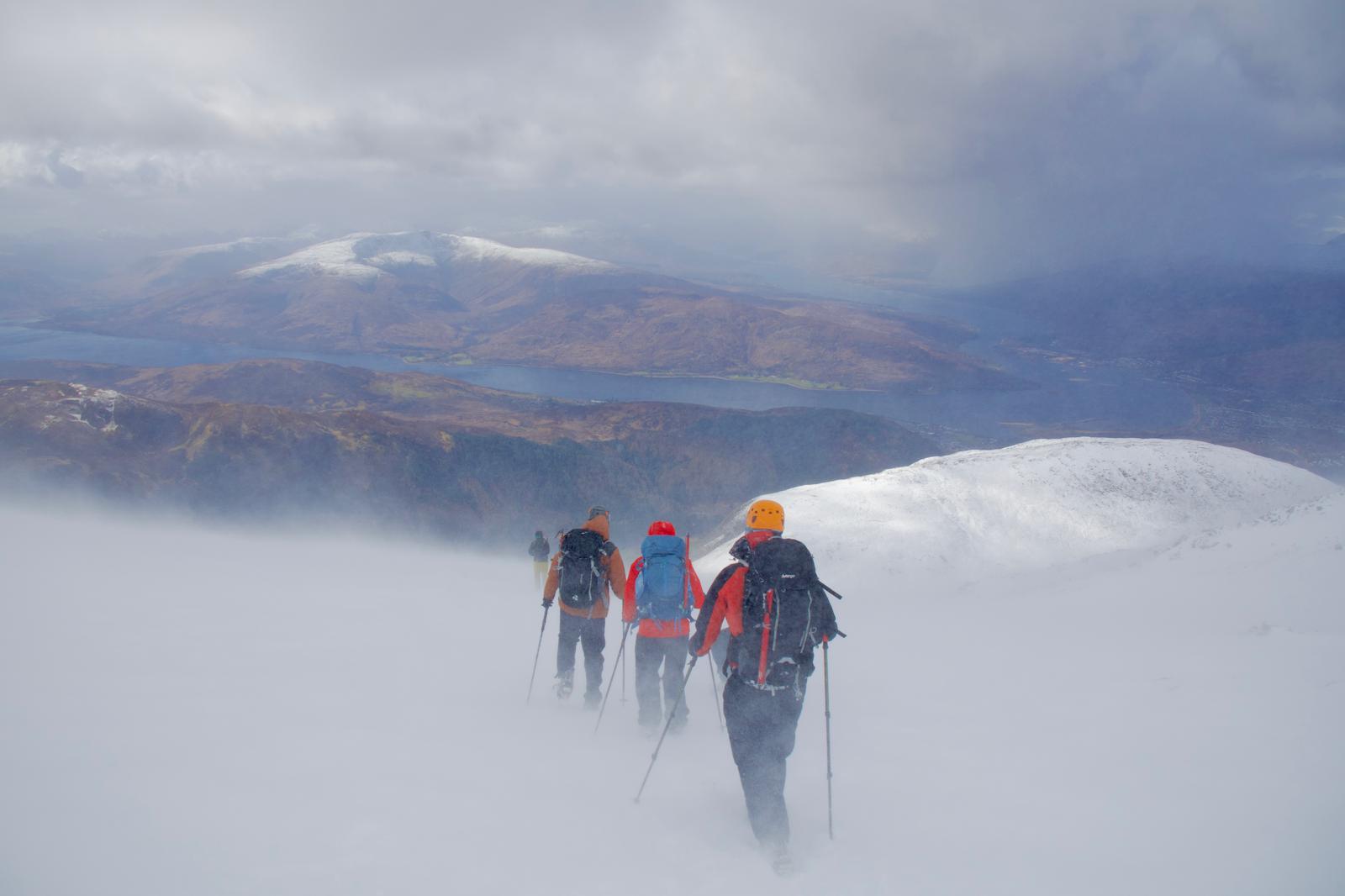
On a ski tour your eyes move differently. You're looking at the line you'll take on the way down, the speed you'll carry and whether a rollover hides a drop. You notice where the snow is smooth and where it's broken up. Honestly, most of the learning happens in the little moments when you stop and look instead of plodding on.
The skill is simple to describe and hard to do. Look at a slope the way you'd look at it on the way down, not the way you'd look at a photo from the car park. Trace the route, check the runout at the bottom and spot where the ground funnels into a gully. Do that before you start climbing and you'll be ahead of most people on the hill.
Why Flat-Looking Ground Lies
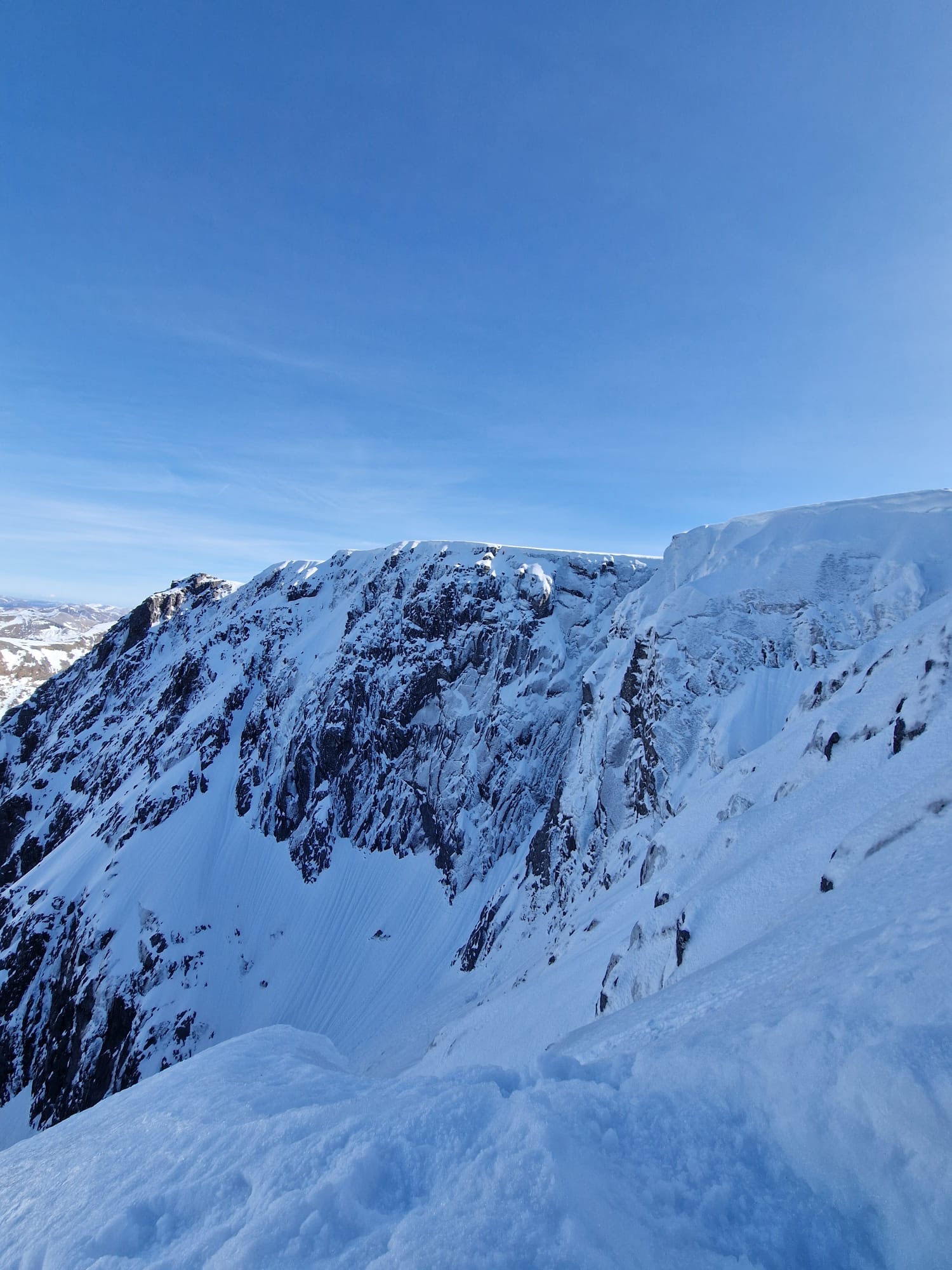
Flat ground is where people relax. That's the problem. A gentle slope above you can still release, and a shallow-looking basin can collect a lot of snow and funnel you into a bad spot. Terrain traps are the features that turn a small mistake into a big one, and they often look harmless from above. Learn to spot them in daylight, when the stakes feel low, so you recognise them when the weather turns.
Slope Angle and Aspect: The Two Numbers You Use
If you only learn two things about terrain, make them slope angle and aspect. Angle tells you how steep the ground is. Aspect tells you which way the slope faces, which is really about where the wind has been and where the sun has been working on the snow. Put the two together and you know a lot about what the snow is likely doing.
Measuring Slope Angle in the Field
You don't need a lab to get a rough angle. A basic inclinometer, or a phone app that uses the sensors in your phone, gives you a number you can check against your plan. Hold it along the fall line, the direction the water would run downhill, not across the slope. Measuring across the slope gives you a wrong answer, and I've seen people make that mistake on their first day with a tool.
The bigger skill is estimating angle by eye. Practise on slopes you can measure, and guess before you check. After a few weeks your guesses get sharp. That sharpness is what you'll rely on when you're on a slope with no clinometer and cold hands. Most avalanche guidance flags slopes around 30 degrees as the point where you need to pay much closer attention, so that's the number to keep in your head.
Pro tip: Guess the angle before you measure it. Compare your guess with the reading, and do it on the same slope a few times a month. Your eye gets better faster than you'd think.
Why Aspect Matters More Than You'd Think
Wind is the sneaky one. On a ridge, wind pushes snow over to the lee side, the sheltered side away from the wind. That side loads up, and the snow can sit there like a lid on a pan. Wind-loaded slopes can look smooth and inviting, which is exactly why they catch people out.
Sun matters too. A slope that's been baking can develop a crust and then weaken underneath, and the aspect decides how much sun it gets. Keep a note of which faces have been in sun and which have been in wind. Then put those two things together on the map before you set off.
Snow remembers the weather. If you want to know what the slope did overnight, look at which way the wind blew and where the sun hit.
Route Choice Starts at the Car Park
Here's where I see most people go wrong. They pick a route because it looks good on a map or because someone posted it online. Then they set off and make the terrain decisions on the fly, when they're tired and the light is going. Route choice is the first terrain decision of the day, and you can make it at your kitchen table with a cup of tea.
Pick a route that suits the conditions you actually have, not the ones you hoped for. A plan on Ben Nevis is a different beast from a gentle day in the hills around Fort William. Know what you're signing up for before you're halfway up.
Planning the Day Before
Plan the day the night before. Check the forecast, look at the wind direction and trace the route on the map with your finger. Mark the steep sections, the places where you'd have to cross a slope above other people, and the points where the ground narrows. Write them down. Future you will thank present you when you're cold and tired and can't remember which bit was the problem.
Also set a turnaround time. Pick a point where you'll stop, no matter how close the top feels. Most people who get in trouble on tour didn't have one. They kept going because turning back felt like failure, and that feeling is far more dangerous than a bit of cold.
Building in Bailouts
A good route has options. Look for lower-angle alternatives you can switch to if the snow feels wrong. Think about where you could drop out of a bad slope, and whether your planned descent still makes sense if the visibility closes in. If your only way down is the steep face you're worried about, the route needs another look.
In practice, I like plans where the group can split into a shorter loop without anyone feeling like they've lost. A bailout that's easy to take is a bailout people actually take.
Pro tip: Say your turnaround time out loud to the group before you leave the car park. Saying it makes it real, and it's much easier to stick to than a decision you make halfway up.
Snow Stability Clues You Can Read on the Move
You can't see inside the snowpack from the surface. What you can do is read the clues the snow gives you as you go. Those clues are often small, easy to ignore and very useful if you pay attention. The trick is to treat them as data, not background noise.
Signs the Snow Is Talking
The loud ones are obvious. If the snow makes a whumpf sound under your skis, or cracks shoot out from your feet, stop. Treat that as a warning, not a curiosity. It means the layers aren't bonded the way you'd hope, and that changes which slopes are worth touching.
The quieter clues matter just as much. Fresh drifts, smooth wind-scoured patches and sudden changes in surface texture all tell you something. Pay attention to where the snow is rough and where it's slick, because a change on top can point to a change underneath.
When to Turn Around
Here's the honest bit. You won't always know. Sometimes the clues conflict, and the forecast says one thing while the snow says another. In those moments, pick the more cautious option. Drop to lower ground, choose a line with an easy exit or simply turn around. Nobody I know has ever regretted skipping a slope that felt wrong, but plenty of people regret skiing one.
Before you go, check the local avalanche forecast and read it properly. Look at the danger level, the aspects and elevations it flags, and what it says about the snow. Then compare that with what you see on the hill. The gap between the two is one of the best learning tools you've got.
Comparing Ways to Learn Terrain Reading
There isn't one right way to learn this stuff. Most people end up mixing approaches. The real question is which option gives you the best return for the time you've got, and where each one falls short. Here's how the main choices stack up.
Approach | What It Builds | Where It Falls Short |
|---|---|---|
Self-study with maps and guidebooks | Route planning and a feel for the terrain shape | No feedback on your live decisions with cold hands |
Touring with experienced friends | Time on the hill and shared experience | Group pressure and uneven skill levels |
Structured course with a mountain guide | Live decision-making with feedback as you go | Needs planning ahead and a set date |
Self-study is cheap and fine for the basics. The trap is that books and maps don't push back. They can't tell you that your slope angle guess is off by ten degrees. Reading alone tends to leave gaps in the judgement part, the bit where you have to make a call on the spot.
Where Each Approach Fits
Touring with experienced friends works well once you've got the basics down. The problem is that friends can be just as unsure as you are, and group dynamics sometimes push people onto slopes they'd never choose alone. Ask who's making the calls and what happens when someone says no. If the answer is awkward silence, that's your warning.
A structured course with a mountain guide gives you a set plan and someone who's read the hill many times. You get feedback on your decisions while you make them, not weeks later. If you're just starting out, that's the quickest way to build a solid base. Our ski touring Scotland days are built around exactly this kind of learning on real terrain.
Building Terrain Judgement Across a Winter
Terrain judgement doesn't come from one good weekend. It comes from a season of small, repeated decisions. The trick is to make each tour a bit more deliberate than the last, so the learning stacks up instead of blurring together.

Start on low-consequence ground. A gentle slope with a safe runout is the perfect place to practise reading snow, measuring angle and making a turnaround call. Move up only when those calls start to feel boring. Boring is the goal.
A Season Plan That Works
Early in the season, focus on movement and route planning. Mid-season, add slope angle checks and aspect reading. Later on, pile in the harder decisions, like crossing a slope above a group or choosing a line on a steeper face. Keep the steps small and the debriefs honest.
If you're aiming for bigger days later in the winter, build up with easier outings first. Winter ground can change fast, and you want the habits in place before you're on the more serious terrain.
Keeping a Touring Log
Write down every tour. Note the route, the snow, the angles you estimated versus the ones you measured, and any moment you felt uneasy. Over a few months, patterns show up. Maybe you always underestimate angles on the way down, or you're too quick to commit when the group is keen.
Pro tip: After each day out, write down the one call you'd change. It takes two minutes, and it's the fastest way to spot a habit you didn't know you had.
Frequently Asked Questions
What does ski touring teach you about terrain that walking doesn't?
Ski touring makes you commit to lines and speeds earlier, so you learn to read the descent before you're on it. Walking lets you stop and rethink, but on skis every decision about route and slope carries more weight, which sharpens your judgement fast.
Do I need to be an expert skier to start ski touring in Scotland?
No, but you do need to be comfortable on skis in varied snow and happy moving uphill for long stretches. Most people start on gentle ground and build up. The terrain reading side can be learned alongside the skiing, and it's often the part people enjoy most.
How do I measure slope angle on a tour?
Use an inclinometer or a phone app, and hold it along the fall line rather than across the slope. Then practise estimating by eye before you check. Over time your guesses get closer, which is useful when you don't have a tool to hand.
What's the first thing I should check before a ski tour in Scotland?
Read the local avalanche forecast, then look at the wind direction and the route plan together. Decide your turnaround time before you leave. Those three things will shape most of your decisions on the hill.
Is a course better than learning with friends?
A course gives you structured feedback while you're making decisions, which is hard to get from friends. Learning with experienced friends is great once you have the basics. Many people use a course first and then tour with friends afterwards.
Can the terrain reading skills from Scotland carry over to other mountains?
Yes, the core habits carry over well. Checking angle, reading wind and snow, planning bailouts and setting turnaround times work on any winter mountain. The local conditions change, but the thinking stays the same.
What's one terrain call you've changed your mind about on a tour, and what made you change it? I'd genuinely like to hear your story.

Comments